Thursday, July 28, 2011

Breaking out of my comfort zone

These days, I haven't been really interested in finding out in detail about my personal financial statements. I mean I do record all my expenses in excel in my hp and track my cash in and out of my account but I do so out of habit and discipline. This is rather different in the past. Instead of feeling the passion and excitement whenever I tallied up the numbers at the end of the month, these days, I'm barely interested in even transferring the information in my hp to my computer. I wonder why there's this sudden disinterest in doing this...okay, maybe it isn't sudden at all. Afterall, I've been tracking it since 2008 - a total of 4 yrs - so it isn't exactly 'sudden'.


I can think of a few reasons why I'm no longer so excited about filling up my personal financial statements. I think the most important reason of all is that things don't move that fast in my life. I track my expenses every month but there isn't much changes from month to month. With the exception of a few months where I've to pay a lump sum (usually insurance payment, or some one-off items), my expenses are nearly the same. What about savings? I used to transfer any excess immediately whenever it drips into my account. However, I realised this is a waste of time, so when I have a bigger sum of money, then I'll transfer them over another account. I still remember me being so anal about meeting that monthly savings target (I broke up my yearly savings goal into monthly targets and since my income varies per month, the savings goal also varies per month) but I no longer do that. I also used to compare my monthly income with past years to see if I've been slacking but again, I no longer do that.


I stop being so obsessive about such things because I've never failed to achieve the monthly saving goals I set for myself. I may struggle over some months but I've never failed to achieve the target. So either my target are too low for me now or I'm getting comfortable with this level of 'tightness' in my belt. Or both. I stop being obsessive about meeting my monthly income targets and bench marking against my past 7 yrs of income (broken up into months) because I've never slacked. The income I get is either the same as the yr before or more. Thus, I think I've reached a level of comfort in my current level of work. Of course, I complain now and then about my harsh work schedule but overall, there's less complains about it now then before because I got used to it.


This is rather scary, even to myself. I know I'm a slavedriver and all, so working hard for extended periods of time can slowly become comfortable for me. I know I can handle that. I remember that when I started working, my hours are like 20+ hrs per week. Now? It's 40+ hrs per week, including sat and sun AND I'm getting comfortable with this?? Something needs to be done to get me out of this 'hardwork cycle'. Yes, I earn more now than before, and that's because I work longer and harder than others. That's nothing to be proud of.


It is possible to work less and earn more. I will have to believe and do it. I want to reduce my working hours to low 40 hrs per week, then 30+ and finally 20+. That would mean breaking out of my comfort zone, even though my comfort zone is actually more work. The big irony is that in order to break out of my comfort zone (which is doing more hours of work - remaining status-quo), I've to put some work now in order to reduce my working hours. Maybe then, I'll have more time to enjoy the excitement of tallying up my personal financial statements again.


I need to be challenged constantly to feel alive.

Tuesday, July 19, 2011

The 2% / 6% rules

I was reading my usual diet of blogs when I chanced upon OT's comments on this article, regarding Elder's rules in his sell and sell short book. It mentioned that there are two important rules to follow when trading:


1. Limit your loss on any trade to 2% of the equity in your trading account


2. Whenever the value of your account dips below 6% of the closing value at the end of last month, stop trading for the rest of the month.


The 2% / 6% rules are designed to prevent two kinds of ways that the market can kill you. I've written about piranha bites and shark bites before here, and the idea behind these two rules are based on these two ways too. The first way that the market can kill you is to kill you quickly and taking a big chunk of your capital in a single trade. That is why we have to limit the loss on any trade to 2% of your equity. I was reading the comments in OT's post and realised that there is a misconception regarding the 2% rule. The 2% rule is to limit your losses to 2% of your equity, and that is not the same as cutting loss if the shares drop 2% in price. What's the difference?


Before you begin a trade, you should have an idea of where you need to cut loss. Let's say you have $50,000 cash and you wanted to buy a stock priced at $1.00. Suppose that the cut loss for that stock is at $0.90. The potential loss is $0.10 (1.00 - 0.90). Since 2% of your equity of $50,000 is $1,000, you can at most lose $1,000 on any trade. We can thus calculate backwards to determine the position sizing of this particular trade in order to limit the loss to a maximum of $1,000. We'll take $1,000 divided by the potential loss of $0.10, and we get 10,000 shares, or 10 lots.


So take a look closely - if we buy 10 lots of the stock at $1.00 and if the price drops by 10% (0.1/1.00), the loss is just limited to $1,000, which is just 2% of our total equity. Thus the 2% rule is not a cut loss rule. By following strictly to the 2% rule, you'll prevent any one trade from wiping you out. In fact, you'll need 50 such trades before your whole capital is wiped out, if you un-wisely choose to enter 50 positions in one go.


To make it clearer, suppose that instead of buying the $1.00 stock with a cut loss of $0.90, you decided to make the cut loss level tighter at $0.95. The potential loss is now reduced to $0.05 but the absolute loss is still 2% of equity, which is $1,000. We can calculate the new position sizing for this particular trade - which works out to be 20 lots. You find that this rule allows you to vary the position sizing or the cut loss, but keeping the absolute amount of loss per trade at 2% of your equity. This means that if you're more confident of the trade, you can increase the position sizing but you have to tighten the cut loss. If you're not too confident of the trade, you can reduce your position sizing but you can also slacken your cut loss. The absolute amount is the only constant here.


The 2% rule can be implemented with sector allocation / diversification rules too. Suppose out of the $50,000, you only want 10% to be in this $1.00 stock. Having a cut loss level at $0.90 will allow you to have a position size of 10 lots of shares. However, having 10 lots of shares means that you have 20% of your equity in that position, which may be risky in terms of portfolio diversification. Since using the 2% rule allows me to have 10 lots, I'll reduce the position size to just 5 lots, so that I'm only 10% into this trade. When I reduce my position size, I have the liberty to slacken my cut loss level to $0.80, which would limit my loss for this trade to be $1,000 (2% of my equity of $50,000). Actually, I wouldn't even slacken my cut loss level, which is silly. But this is based on a maximum loss basis - meaning that you can lose up to $1,000 but not more than that. Again, I must also remind readers that the 2% rule does not mean that if the price drops by 2%, you'll cut loss.


After discussing at length about shark bites, there's still a problem about piranha bites, which is the second way that the market can kill you. If you keep limiting each trade's losses by 2%, you won't get killed by any particular trade but you might be wiped out if you made a string of small losses. So to prevent you from bleeding to death by a thousand small piranha bites (instead of a single shark but heavy shark bite), we have the 6% rule. The 6% rule is stop you from trading whenever you make too big a loss accumulated from many small losses. There is something obviously wrong if you keep making losses - either your method doesn't work in the present conditions or you're getting more emotional about your trades. Whatever it is, the 6% rules stops you from continuing to do silly things.

Saturday, July 16, 2011

Difficulty of arriving on time

Recently, I had a class which I arrived earlier than the scheduled time. I was early by 10 mins but the parent questioned me on why I was so early. In the end, the parent told me a whole lot of story about how the child had to rush back from school and had to run back and that it was so worrying and all that. After all that, she reminded me to try my very best to be on time.


Maybe that parent had been too used to driving, because if she had taken public transport (like I do), the frequency that the bus arrives is hardly something that can be controlled by me. If I didn't come before time, I'll most likely arrive later than scheduled. Long ago, I had been late 15 mins before (to the same parent), but she called me and asked me where I was and that the child was waiting for me. Seriously, some people are just hard to please. I think it's easier to be late and easier to be early but it had to take a lot of luck to arrive just on time. A lot of factors had to be just right in order to arrive at the appointed time.


I think the same thing goes for people in the market who wants to get the peak or the trough of a market movement. Aiming for the bottom-est price just before it reverses is a fool's game. You can aim for the region but if you really get the lowest price, it's more a matter of luck than skill. As you narrow down the time frame, the price movement gets more and more random. Likewise, it's a fool's game to aim for the peak before selling. You can sell a little earlier or a little later but to hit the highest price before reversal, you need lady fortune on your side. This doesn't mean that TA fails - it just shows the limitation of what timing the market realistically can be.


Psychologically, I think it's better to sell earlier and buy earlier, since we cannot sell at the peak and buy at the trough consistently. Selling earlier means that you'll always see the price go up higher after you had sold the stock. Selling later means that you'll see the price go downhill after hitting a maximum. Chances are that after you've seen how high the stock had risen, you've already anchored that particular price in your mind. You'll be less reluctant to sell and you'll end up hoping that the price will still rise up to that particular level. I don't like that and I had several experiences of me ending up turning a profitable positions into a neutral or losing position. Likewise, buying earlier means that you'll see the price go down lower after your purchase, but I feel that this beats seeing the price goes up higher after hitting the lowest price, anchoring that particular price in your mind and missing the whole boat altogether while waiting for the price to come down to that level again.


*This article is contributed to IM$avvy financial portal, which is managed by Central Provident Fund Board and supported by MoneySense. This site has a noble aim of promoting financial literacy to the general population.

Tuesday, July 12, 2011

Charts with potential for reversal

Listed out some charts that have the potential to reverse. It's okay to buy when it's expensive, just make sure it's reversing when you buy them.


Noble is showing my favourite setup - breaking downtrend line combined with an impending bullish divergence on macd histogram. I'll look at it when the time is ripe.


** Updated on 12-July after market close:


NOL is dropping too fast. Let's see how it finishes its divergence before deciding on what to do with it. The downtrend line is going to make it hard to rise up, even after its reversal. If I enter this, it'll be a quick one.


I'm always looking to get more of this. The charts show that there's a very high chance of it going down. The question is till where? I'm wiling to get a batch near 1.46, regardless of divergence or not.


It's important that in the heat of battle, we do not fire recklessly. Bullets are always always in short supply, so it's better to wait patiently for the enemy to come closer before firing a shot. Even if there are 3 enemies coming my way, likely I'll just choose the one that I'm most confident of sniping. Going by the seasonal nature of STI, August/September might have a wave of enemies swarming over, so it's better to keep my powder dry and high.

Thursday, July 07, 2011

First reit

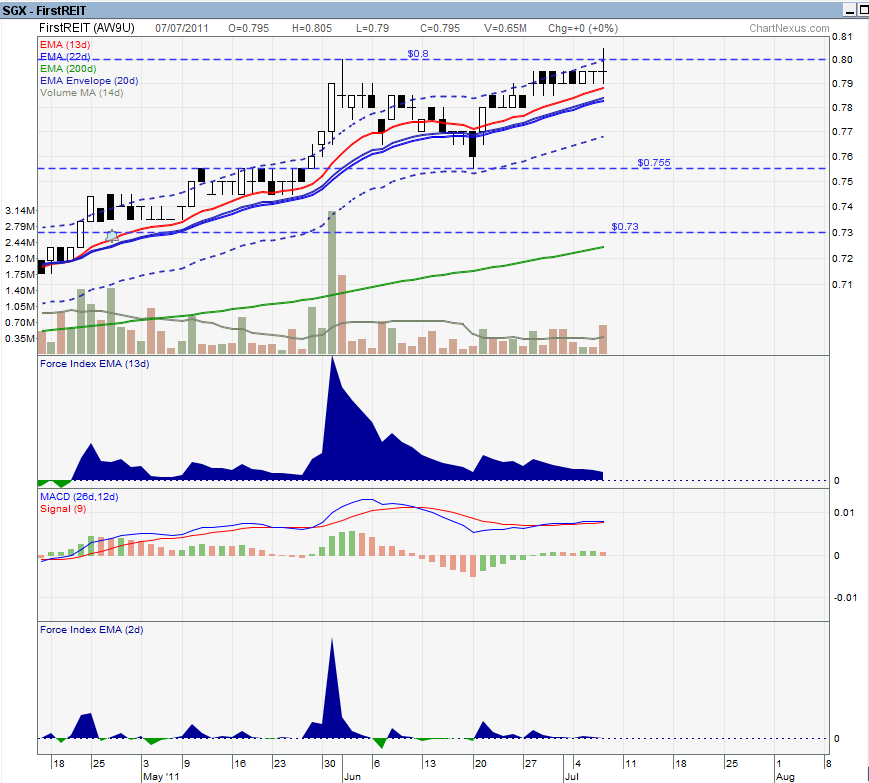
First reit weekly:


Daily:


First reit had been very good to me, with its high dividend yield and the very low capital cost after the rights exercise. But I had parted ways with it for the time being. The charts both at weekly and daily level doesn't look good. Both weekly and daily show a bearish divergence with today (7th July 2011) showing relatively higher volume plus a doji (you candlestick experts might have a different name for it, pardon me).


I've been doing partial divestment of first reit since June to reduce my position, but it went up and up. It's ok, I don't have to capture the peak and I'm super happy with the returns. Will get it back at another opportune timing again.

-----------------------

As a sidenote, after weeks of queuing everyday after market hours to sell, the queue finally hit around afternoon today. Why today? Perhaps it was after a lunch treat by CJ at his family's Hainanese curry rice stall at Maxwell food centre, no. 68, that brings the luck to me! After eating it, sure 1-6-8 (say it in Cantonese)! In my line of work, I've eaten all the nonsense curry rice all over the eastern part of Singapore, so trust me when I say that CJ's brand of curry rice is among the best. If you intend to beat the lunch crowd and try, do order the curry chicken wings and especially the pork chop. Especially especially the pork chop. The curry is thick and fragrant, and all the dishes are not very oil at all. I'll go back again one day for sure if I've need to make sure money in the market, haha!

Monday, July 04, 2011

Mentor-student relationship

I was thinking to myself about my motivation to share with people about my little knowledge in the stock market. It takes time, energy and effort to go back and fro in the cbox after working for a good part of the day. The time spent could be used to do the things that I like - reading, watching drama series, playing games and to basically relax, so the opportunity cost is actually quite substantial considering that after the whole exercise, I ended up not indulging in my own relaxation time and actually feeling more tired and drained. But don't get me wrong, it's utterly satisfying to do so, which is why it puzzles me. I'm left wondering what motivates me to spend time, energy and effort to share with others.


I think that the reward of teaching people comes not from the money, or from the lunch treats but for the satisfaction of enriching an eager, humble and open mind. I can't say the same for others, but that is what I know of myself. I don't think it's altruistic in nature - I'm not lawfully good in alignment (I'm lawfully neutral). Perhaps when the satisfaction that I desire is not 'repaid', then the satisfaction of getting paid for my time, energy and effort will be somewhat used as a replacement reward. Why is sharing such knowledge satisfying? I think I've this phenomenon I call "teacher's complex" that gives me the kick when sharing about things that I am passionately involved. Perhaps in the beginning it's like a mentor-student relationship, but when the student gets equal or better than the mentor, it'll become more of a two like-minded people who share the similar view of the world. I find that idea immensely satisfying, and I would conclude that this is ultimately the reason why I would forsake immediate gratification of spending my own time to hopefully spread what I know to people who do not.


But do notice that my criteria of teaching is towards someone with an eager, humble and open mind. What is meant by an eager mind? It is the willingness to learn and this can be exhibited by how much effort the student puts in with reference to how much effort the mentor puts in. I think an eager student would put in much more effort than the mentor. I suppose a mentor wants their student to at least show a certain standard of effort before he would willingly spend more time on his part. It's really a relationship marked by reciprocity. Nobody is willing to give and give and don't take. Such relationship would never be sustainable. What about humble and open minded? I think if a student's mind is fixated on an idea and he is very sure that he is right about that particular idea, it's not too incredible to deduce that the person do not have an open mind (at least with regards to this aspect of thought...I do realise that people can be open in one aspect but closed in others).  I think showing a mentor that you have a open mind and is willing to try out new ideas is one of the main reason why the mentor would even want to share with you in the first place. If you insist that you're right about certain things, I don't think anybody would approach you to share with you what they knew.


Thus in discovering my reasons for sharing with people my knowledge in the stock market, I've also uncovered how to find a mentor in different aspects of life. I've a few mentors whom I model after. They might not even know I'm their student, but I am indeed modelling after their thought process and how they behave in different circumstances. But that is being a silent student, quietly observing his mentor at work. If you want to find a mentor in life, or want mentors to approach you to share what they know, remember the three criteria as a student - eager, humble and an open-mind. Only then - and here I would like to paraphrase bro8888's words - would a master come down from the mountain to impart his skills to you.

Monday, June 27, 2011

Financial freedom tag-team

It's important to choose a spouse carefully, it seems. According to the book that I'm reading, "The Millionaire Next Door", it mentioned that for a large proportion of the millionaires that they had interviewed, their spouse are more frugal than them. The constant complain about their spouse is that they can't get them to spend money!


The book mentioned about having quality offense and quality defense when playing this game of financial freedom. One of the couple, usually the male, would play good offense. They would go out and earn a lot of income. It's mentioned that most of these millionaires interviewed have higher household income than average too - so that's the offensive side. The spouse, usually the wife, would stay at home and play quality defense. They are the ones who would manage the household, making sure that as a whole family, they not only stay within budget but way below their income. That's the kind of tag team playing that I found it interesting.


It's hard to say who is more frugal - me or my wife. For the little things (those that cost less than $50), I'm the more frugal ones. I always have to remind my wife not to overspend on such things. However, for big ticket items, my wife is the more frugal one. She would have to remind me that even though I have the means to afford, we should still be careful on how we spend it. For the recent resale flat purchase, I have to convince and reassure her that the 40k cov is worth the money. Same thing goes for the renovation. I guess my wife and I are not spendthrifts and each of us are more frugal than the other depending on the amount spent! That makes us a compatible tag team partners because we defend each other weak points, haha!


Nacho Libre - I absolutely love the movie!


On the flip side, it's very hard to be financially free if your spouse do not support the idea. The journey towards it involves making sacrifices now so as to enjoy greater rewards in the future. Not everyone wants to reach the end point, that I understand. If one of the couple wants to climb a mountain, the other has to belay the ropes and egg each other on, supporting and encouraging each other along the way. If there is only one person actively climbing the mountain, the other would drag along and act as a complaining dead-weight behind you as you climb. It's still possible to make it to the top, of course, but it makes the journey unbearably difficult.


Thus for those of you who so desire to reach the top of the mountain, choose your other half wisely. Pick the characteristics of the person that you think would aid you, for I believe that a marriage is like a partnership - it should benefit both parties, and not just to one only (or worse - none). Choose a tag team partner that you can synergise with - if you play quality offense, pick someone who play quality defense for instance. You can't pick both who play good offense (because you might spend all that you earn), nor both who play good defense (because playing defensively all the time might take too slow to reach the end). When all the beautiful face and great body fades away with age, what is it that still endears you to your spouse?


*This article is contributed to IM$avvy financial portal, which is managed by Central Provident Fund Board and supported by MoneySense. This site has a noble aim of promoting financial literacy to the general population.

Thursday, June 23, 2011

The little boy and the dollar notes

A stranger walked towards a small little boy whom he met along the streets. The man told the little boy that it is most fortunate that fate had brought them together, hence he is going to bestow a gift to the little boy. He can have a choice of a $100 note or a $10,000 note, with no strings attached. He can just take the money and go, with the knowledge that on this particular day, a kind stranger had chosen to bestow a great gift to an unknown boy. By the time the man told the little boy about his choices, a crowd grew around them, eagerly trying to find out what was causing the commotion in the streets. Some of the people in the crowd began to advise the boy, telling him that it is stupid not to take the $10,000. It doesn't even require simple maths or quantitative analysis to figure out which choice is the most rational one to take. There's only one solution to this happy problem, and that is, rationally, the boy should take the $10,000. Such an obvious choice do not even require any thinking at all, some of the people in the crowd thought aloud.


The moment of truth arrived for the boy to pick his choice. The boy took the $100 note instead of the more rational $10,000. Those who had advised the boy scolded him profusely. They told him that he is stupid not to take the $10,000 note. How can anyone be so irrational when it comes to making such decisions, they bemoaned. As the smarter and more rational crowd dispersed in disgust, an old lady walked towards the boy, who was holding the $100 note and positively beaming with joy.


The old lady asked the boy gently why he had not taken the $10,000 note, as advised by the other more savvy crowd. The boy smiled brightly and explained that he took the $100 note because he wasn't sure that the man would really give him such such a great sum of $10,000. However, he was sure that the man wouldn't mind giving him a smaller sum, hence he took the smaller $100 note. 


The old lady smiled at the little boy's train of thought, surprised by how wise this boy is beyond his years. The boy, among all the crowd that gathered around them, is about the only person who had analysed the problem differently from the rest. 


There are often many ways to analyse a problem, and focusing on numbers is just one aspect of the analysis. Why should we be trapped by such quantitative analysis? Is it irrational to place greater emphasis on the psychological aspect of this problem - that is, whether the man is really going to give the $10,000 to the boy? Likewise, is it rational that we focus solely on numbers to analyse a problem? To place emphasis on numbers as the only way to solve a problem seems unrealistic to me. If I'm extreme in advocating moderation, does that make me an extremist too? Sometimes I wonder...

Wednesday, June 22, 2011

Market warning bells

Market bells are ringing softly....can you hear it? When will the bells ring louder? You don't need to know how to read charts or value companies to know that the market is overheated. It can be as easy as paying more attention to the surroundings and people around you. These warning signs might not tell you the exact date in which the market will crash, but a rough estimate is better than none, so that you can make preparation in case it happens. Here's a few points that I can think of:


1. When newbies that comes to the market and start to make a lot of money without knowing anything at all, that will be one sure danger sign. In the market, newbies are supposed to lose money. If they earn anything, it's more by luck and only a handful of these newbies will survive because of their skills. Thus, when you see a lot of newbies who don't know how they made money, it's a sure sign that the market is overheating. If even the newbies are in the market, who else is going to buy the shares from you?


2. When the uncles and aunties you meet on the streets are talking about buying this stock and that stock, you'll hear the market bells ring louder. During the peak market, you can see actors and actresses busy buying stocks. People are talking about stocks in the lifts. Taxi drivers are also talking about them when you took the cab. Thus, when people who ordinarily have no interest in the market start to talk about the market, be careful.


3. When the analyst start making more calls to buy, it'll be another sign. The reports will be glowing with optimism and ever increasing target price (the target price are met so they have to upgrade again and again). Another thing I noticed is that they would shift the valuation benchmark to PE based, instead of asset based ratios like PB.


4. When the newspaper start to talk positively about the market and stories about people who made a lot of money from the market, it'll be one of the last warning signs. Newspaper are usually reactive, and they would not make a bold statement about the market unless the trend had been going on for a long time. This last ditch attempt to lure more sailors to the sirens would propel the market to ever greater heights, eventually capitulating and start the bear cycle.


5. When speculative counters (think ass-shares and warrants) chalk up the top volume, be careful. Usually the newbies that enter the market have little capital, so the only way they can participate in the market is to punt on penny stocks. Most of the blue chips have done its part to bring the index to new heights, so the last to run are usually the pennies. Many stocks that are rubbish will have extreme optimism attached to it, because of the belief that a greater fool will buy it from you. Be careful that you are not the last fool holding the hot potato, if you choose to play this game.


Can you think of other signs of market overheating?


*This article is contributed to IM$avvy financial portal, which is managed by Central Provident Fund Board and supported by MoneySense. This site has a noble aim of promoting financial literacy to the general population.

Saturday, June 18, 2011

How good are you at accumulating wealth?

I'm currently reading a book titled "The millionaire next door". From the few chapters that I gathered, the book is about the characteristics of wealthy people. As I read it, I am keenly aware that while wealthy people have certain characteristics that make them wealthy, it's not true that by following such characteristics, I'll be wealthy too. This logical flaw is similar to this: It is found that all cancer patients drink water, so drinking water will cause cancer. Basically, it's a mistake on causation and correlation. Correlation does not imply causation. I think it's important to have this principle in mind so that when I'm reading this book, I won't be unduly swayed by these characteristics and start to follow them, thinking that it'll lead me to wealth.


There is, however, one thing that I found quite interesting as I was reading the book. It's a heading about how to determine if you're wealthy. As described in the book, you can determine this by this rule of thumb:


Multiply your age by your realised pretax annual household income from all sources except inheritance. Divide by ten. This, less any inherited wealth, is what your net worth should be.


Let's say a 30 yr old person earning 50k a year and having an investment return of 10k a year, will have a calculated net worth of 180k. If that person has a networth of less than 180k, he is a UAW (under accumulator of wealth). If he has a networth of 180k, he is a AAW (average accumulator of wealth). If he has a networth of twice the calculated amount, that is 360k, he is a PAW (prodigious accumulator of wealth).


I found this idea rather interesting. Based on the rule of thumb, I'm considered a AAW because my networth is around that value calculated. For computation of networth, I included all my cash, cash equivalent and investments (marked to market), cpf and the cash value of whole life insurance. I did not include my house since I treat the asset value of the house at cost and that will be balanced by the liability of the loan in my balance sheet. I guess the reason why I'm not a PAW is because my investments are not returning a fantastic return to me. That is something that I would have to do about in the future.


You'll realised that you cannot just pluck the numbers and key into the formula straight away. You'll need to find out how much you earn per year (that is usually easy for salaried workers). You'll also need to know your assets and liabilities and calculate your actual net worth so that you can have something to compare with. I think by doing this little rule of thumb exercise, you can get to know more about your own financial status.


So go on, try it and tell me if you're a PAW, AAW or UAW.


*This article is contributed to IM$avvy financial portal, which is managed by Central Provident Fund Board and supported by MoneySense. This site has a noble aim of promoting financial literacy to the general population.

Thursday, June 16, 2011

Thoughts on dollar cost averaging

There's a lot of talk about using the standard chartered bank trading platform to do averaging down. The reason is because the platform offers a very cheap way to buy small lots without the penalizing minimum trading fees, which is usually $25 ++ minimum. What's averaging down actually? It's just a way to reduce the emotional part of investing by buying at suitable time interval using a fixed cost, regardless of the price. By doing that (you can do the math), when the prices are low, you'll end up with more shares and when the prices are high, you'll get lesser. Averaging out, you'll get a lower price, which is the whole point of doing dollar cost averaging.


I assume that those who are doing dollar cost averaging are those that do not have an interest in the market, hence buying a blue chip counter (generally, these people will get index instead of individual counter because index cannot go bust but a million other things can happen to individual counters, no matter what the colour of the chips are) will be safer for the longer run. I also assume that people who does dollar cost averaging do not believe in timing the market, just time in the market. The reason is that if you can time the market, it'll be better to just buy at the right time instead of whacking the counter every suitable interval.


Hence, it puzzles me that in the cbox, there are people who wanted to do dollar cost averaging using the cheap transaction cost offered by scb trading platform, but keeps looking at the market for the latest quote. The point of doing dollar cost averaging is to reduce the emotional part of investing, and also the labor of active investing, by buying at a fixed interval using a fixed cost. If I'm doing that, I'll just be looking at the market once every quarter or so, put in my transaction and carry on living my good life without the market interfering my peaceful existence.


But I'm not doing that, not in the traditional sense of averaging, no. I'm doing a TA-based averaging.


The idea is simple. You buy only when the charts show you that it is okay to buy. If the signal don't work out, I don't cut loss. I'll wait for the next point where the charts say it's okay to get and buy in another bullet. Each counter has a limit of say 2-3 bullets, and the amount for each counter and each bullet follows strict money management rules. For instance, I won't be averaging down non-stop and getting all my money stuck up in a single counter. Oh, and I only do this for fundamentally sound counters too. Averaging down on ass shares is a lesson I hope I will never have to re-learn again. Conversely, I'll do the same when selling. When I see a short signal on the chart, I'll sell a portion.

Wednesday, June 15, 2011

Are you surviving or living?

In thinking about our wants and needs, conventional literature always advise us to concentrate on our needs and forgo our wants. Resources are limited, hence we should ration the things that our resources can exchange wisely in case it runs out. We should budget what little we have and try to scrimp and save to make sure it last long and good. Excess and frivolous frills should be trimmed, reduced and eliminated. Get the smallest house that you can afford, do not overspend and buy a huge house. Get the cheapest furniture and get the barest renovation so that the money can be saved up for investment.


That is a way to survive, but is this the way to live?


I understand totally that all of us have different standards of living. I'm not advocating that we should model our standards of living after others, but we should really figure out what we want to achieve in our financial goals. If accumulation is the end by itself, then that goal can never be accomplished. There's simply too much to accumulate and accumulation as an end will never end.


There must be a balance between the two extremes - spending too much and saving too much. I know which side I'm on and which side I should be working towards. Finding that sweet spot that balances the two extremes will be a unique journey for one to discover. What is the right way to live? There isn't a right answer nor a wrong one, though there is a sustainable or an unsustainable way of living. In the face of such open ended possibilities that is inherent in life, what then should we do?


Walk the middle path, for the answer lies somewhere in between the extremes.


*This article is contributed to IM$avvy financial portal, which is managed by Central Provident Fund Board and supported by MoneySense. This site has a noble aim of promoting financial literacy to the general population.

Friday, June 10, 2011

My personal financial goals

I need some long term plans to have an idea of how I should allocate my resources, and if that proves to be insufficient, to step up my effort to get more income and hence more savings. The biggest financial bomb so far is my resale flat. I got a loan of 501k from HDB, with a monthly installment of 2k over a period of 30 yrs. Let's do some math:


Loan amt: 501k
Total amt paid at the end of 30 yrs: 2k x 12 x 30 = 720k
Interest: 219k


Due to the curse of compounding, even at a low interest rate of 2.6%, over a long period of 30 yrs, the original loan amount of 501k becomes 720k. The total interest paid to them is 219k, which is almost half the original loan amount. 


I wanted to reduce my monthly installment to less than 1k per month, and in so doing, it will reduce the total interest paid for my loan amount too. My plan is to do aggressive down payment of the loan in the first 5 yrs and see how it goes after 5 yrs. A lot of things are varying over the next 5 yrs, so there's no point in coming up with a precise plan. Time should clarify my plans further. 


Each year, based on the minimum monthly payment, I will have to fork out 24k (2k x 12). I should aim to double that payment per year to 50k. Without touching on the complicated maths and just doing simple calculation, since I'm paying twice the amount of the required yearly payment (I'm paying 50k instead of 24k), I should reduce my loan duration by at least half. That means instead of clearing the loan in 30 yrs, I should be able to clear in 15 yrs and probably shorter than that due to compounding again. Let's take it as 15 yrs to clear the loan.


To clear the loan in 15 yrs (based on the above simple calculation), I will need to pay off 4k per month. Let's add 4k expenses (my average expenditure inclusive of everything is 2.8k monthly). 4k loan payment plus 4k expenses is already 8k, and I don't want to have zero savings at the end of the whole thing, so I've to factor in another 4k of savings per month. 4k of savings per month would roughly translate to 50k per year, which is my usual savings target. This means that my minimum income should be 12k per month.


This would also tie in with my 100k savings challenge per year. 50k of savings would be set aside, another 50k of savings would be used to pay off the housing loan. At the end of 15 yrs, I would have finished paying off the housing loan and end up with a sizable amount for retirement (50k x 15 yrs = 750k). I would be near 50 yrs old too. 


This is an overestimation of the figures. But I like to overestimate figures. I rather end up on the wrong but comfortable side of the error at the end of the whole thing. A few things can derail me off:


1. Children - as of now, there isn't any plans to have kids. Should that come in, then retirement have to be pushed back. My wife's savings and income per month, which had not been factored into the entire equation so far, would have to be considered. 


2. Inability to work due to illness - I'm covered by suitable insurance coverage for such events. If that happens, I'll have a monthly payment of around 2-3k per month. It's barely enough to cover my own expenses and so it's quite impossible to finish the payment early too. This is actually the worst case scenario, because if I've TPD or just plain ol' death, the home mortgage insurance would kick in and would ensure the house is fully paid up. My whole life insurance and term plans would also kick in so money shouldn't be a concern in that event. I can't increase my disability income benefits without exorbitant cost, so I just have to have enough savings. A backup plan would be to liquidate my stocks, but I'm not sure by then how long it can last. Well, every drop will have to count.


3. Parents - they do not have whole life plan nor term plan at all. At this stage, it'll be too exorbitant anyway. They do, however, have H&S plans, so the problem is thus TPD or critical illness that is not hospitalised. They have some savings, not much, but it can be the first line of defense. I've a elder brother too, that'll be the second line of defense. And I'll be the third line of defense. How much this event will affect me depends on how prolonged the illness will be. My guess is that everything would have to be delayed by an indeterminate period of time. 


4. Retrenchment - or simply drastic changes in my career environment that can greatly reduce my income earning capability. This is possible but improbable. I can't be retrenched easily so the problem is about finding more work. This would have to be sorted out in the next 2 years (I give myself 2 years to sort out this). Career backup plans? MOE teacher. I hope that with my academic qualifications, they would at least grant me a teaching position without even considering my experience in teaching. Passive income would have to come from somewhere to offset this risk of loss of income too. This stream of income will progressively be more important as I age. Have to work on this too.


I do not have to finish paying by 15 yrs of course. I would like to have the ability to pay off, or rather take it like this - I want to have an option but not the obligation to pay off my loans early. I can see the possibility of investing the amount saved to have a bigger amount in a shorter period of time instead. In short, my goals are:


1. Monthly income of 12k 

2. Savings target of 100k per year, or around 8k per month

3. Option but not the obligation to pay off my housing loans in less than 15 yrs


So there, I've listed out the rough plans for the future. They are related to each other, so most likely hitting one would also be hitting all at the same time. What's my next step? Go ahead and do it.

Friday, June 03, 2011

Old MacGrath and his bucketful of milk

Old MacGrath owned a farm in a countryside where he kept a few cows for dairy milk. In one particular milking session, the cows gave him a huge bounty of milk. Usually, Old MacGrath will have two full buckets of milk on average, so can you imagine his wrinkled but beaming face when after milking all his cows, he realised that he had not two, not three and six buckets of milk!


Old MacGrath was full of joy, and on the way back to the farm, he was already thinking of what to do with the milk. Oh, how his mouth salivate when he thought of the many milk products that can be made from the six full buckets to feed himself and his family! He can make cheese, butter and all sorts of delicious products from the milk. After making so many products, he couldn't possibly finish all of them by himself, so he can even sell it to the market or barter it for some other goods. How fortune smiles upon him! 


But on the other hand, he could also sell the extra milk to the market so that he can have some extra money immediately for him to buy some seeds for the summer planting season that is to come in a few weeks time. With the new seeds, he can plant more crops too! Oh decision decision decision...what should Old MacGrath do with his six buckets of milk? It was such a heaven-sent gift, but for hellish reasons, he couldn't make up his mind on which options he could best utilize this 'windfall'.


So, being unsure of himself, he called for a quick meeting among his family to discuss the matter. His wife told him to sell it to the market for some quick cash so that he can buy more seeds for the summer crops. His eldest son told him it's wiser to keep the milk and turn it into dairy products for their own consumption. His daughter told him that he should use 3 buckets of milk for their own consumption and sell 3 buckets of milk to the market. After a whole day of discussion, Old MacGrath was still unsure of what to do with his milk because everyone makes perfect sense.


Tired of all the heated discussion, Old MacGrath thought that he should take some of the milk to quench his thirst. Taking a ladle, he scooped up a cupful of milk from one of the buckets and took a deep sip, wishing the refreshing taste of milk to sooth his throat. He spitted it out immediately! It was so sour! Looking closely under the dimming light, he realised that almost the whole day had passed since he last milked the cows and the buckets of milk had turned bad!


Oh horrid horrid fate, he cried out loud, totally inconsolably by his family who crowded beside him. His indecision had caused nature to take the decision off his own hands! On hindsight, any decision made on his part seems better than the one that nature had forced upon him unwillingly. Oh horrid horrid fate....


----------------------------------

Special thanks to SMOL for teaching me the value of story telling. Stories are wonderful wonderful way to impart values and at the same time, because of their ambiguity, it is also timeless and borderless. Reading the same story at different times of your life will elucidate different aspects of your life. Reading the same story by different people will teach different things to them too. Like the Rorschach ink blot test, the variance in interpretation varies across time and space. That is also the reason why I like reading children's story books. 


Good children's books are meant for children to read, but for adults to understand.


---------------------------------------


*This article is contributed to IM$avvy financial portal, which is managed by Central Provident Fund Board and supported by MoneySense. This site has a noble aim of promoting financial literacy to the general population.

Monday, May 30, 2011

Lessons learned from cboxers

Just by looking through the cbox history, one can learn a lot of lessons from the actions (or sometimes the non-action) of people. I'll just list them out objectively,  not to ridicule but rather to reinforce the lessons in me again. I must have done it many times in the past, but hopefully not ever again.


1. Buyer's remorse (or seller's remorse)


This is when the queue that you had put in place had been hit, but instead of having feelings of joy and jubilation, you are feeling unhappy because you now really own the shares at the price. This is actually quite similar to seller's remorse, where you sold at a certain price but again instead of feeling happy, you actually regret selling at the price. These are just basic emotions of greed and fear at work. For buyer's remorse, it's the fear that after you key in a (hopefully) cheap price, the price will tank further. For seller's remorse, it's the greed that makes you want to earn more after seeing the stock rise up higher than the price you just sold.


Do I have this kind of remorse? Of course I do. It's hard to eradicate it, so it's better to think of ways to manage it. First of all, you really have to want the shares you want at that price. Only after the intent is clear will I queue for it. I don't queue for 'fun' because if the queue is really hit, it's not very funny. As for seller's remorse, I think setting a specific target price and sticking to it (and really, be content with it) is the key. Of course, selling slowly in batches is also a good way to alleviate that emotion if you have more lots - sometime like averaging up your selling price.


These days, after I sell it, I no longer look at it until perhaps a few weeks later. This is more as a post action review on how I can perfect my exit technique rather than to see if I had lost out on any potential future gains.


2. NATO (no action talk only)


I think to make money in the market, it's better to do more action rather than talking about it. Talking (to the right people) will help you understand certain aspects of your intention but beyond that, when it comes to pulling the trigger, you're all on your own. If you do not exercise your own judgement, it's really hard to pull the trigger. When the market is up, you'll be hesitant to buy because you think you can get a cheaper price. When the market is down, you'll be hesitant to buy because you're afraid it'll go down lower. So pray tell, when is the best time to buy? Perhaps talking about it will dissuade you from really doing something about it.


It might be easier if you have conviction behind your buying/selling thesis. There's a reason why people do fundamental analysis and technical analysis - the reason is to discover the value of the underlying stock. 'Discover' is used with deliberation, because I really think that's the way it is. You go around exploring, finding out a range in which the current valuation of the stock is, and you go and make your decision based on that conviction. For those without proper understanding of FA or TA, or those without strong conviction, I think the chances of NATO-ing is pretty high.


3. Too emotional over noise


I hate being manipulated like a ragdoll toy by market physics. It's something that I felt intensely when I was gambling with HSI warrants in the earlier part of my stock market journey and later on during the index futures phase. As I reflected on these emotional roller coasters, I realised that the only thing that make me emotional over such price fluctuations actually stems from money management, rather the lack of it.


If I've 50k and I put 40k into a counter, making it 80% of my entire portfolio, how can I not be emotional? If I earn 60k in a year and I put 40k into a single counter, how can I not be emotional? On the other hand, if I've 100k and I put 10k into a counter, making it 10% of my entire portfolio, would I be bothered if the price tanked? If I earn 150k in a year and I put 10k into a single counter, would I similarly be bothered by market fluctuations?


Feel free to change the percentages to suit your individual requirements - it's the idea that matters.


4. No exit strategy


Most books that I read about stock market focuses solely on how to buy correctly. Seldom do I find one that talks about exiting. I believe that even if you want to keep a stock for long periods of time, there is still a need to get in and out at opportune times to get the best out of the investment. It's best to look at different scenarios before you buy in so that you have a impartial view of the situation. Just by asking yourself questions starting with 'what if', you can clarify your thought process. It's important to have a clear strategy, be it based on specific target price or a particular value thesis, because it allows you to act when the time comes and not freeze like a animal looking straight at the headlights of an incoming car. Think about the cut loss levels (if you have one) and the % returns that you are after before buying it. If you think it can reach the % returns that you are after, then go for it. No point hoping and waiting for a miracle in a stock that just cannot move so much in the timeframe of investing.


5. Improper money management


I think this can be a post by itself because there are just so many points to talk about. I'll just talk about a few pertinent points.


a. Limit your counter to a certain percentage of your portfolio, even if you think the counter is 'guaranteed' to make money. In the face of unknown probabilities, invest in preparedness.


b. Limit the amount that you can buy in a single transaction according to portfolio size. This means that if you have only 100k of investible cash, you don't whack 50k in one single transaction. This ties in with part (a).


c. Bro8888's advice always ring true - buy and sell slowly


d. If you have a losing streak, stop yourself from buying anymore. Give yourself a time to reflect and gather your thoughts and think about why you are losing money. When starting up again, reduce the amount invested again, only increasing it after you've proven your worth by making a winning trade.

Thursday, May 26, 2011

More artwork ...

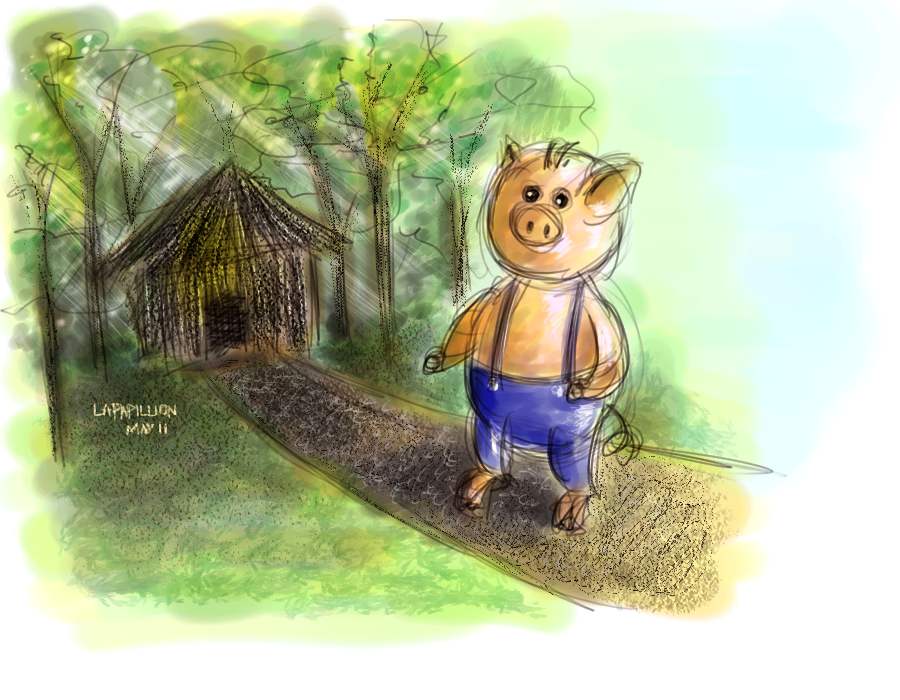
Here's a few more sketches coming from my Wacom tablet. I am really beginning to get a feel of how to work around this gadget. Unlike sketching on paper, where you can see exactly where you draw, this tablet works more like a mouse. You move the stylus one the tablet but your eyes are fixed on the cursor on the screen. It takes some practice to get the hand eye coordination perfect, but once it's settled, it's like sketching on paper.


The above sketch is me trying to recreate the innocence of childhood sketches. I used to doodle a lot on crayons and coloured pencils when I was a kid.


This one is a helm from a Greek Corinthian era. I was just trying to test out the effects of recreating the hair like plum on the helm.


This is Brie-boy. It was from the book from my favourite director, Tim Burton, called the melancholy life of oyster boy. The accompanying poem goes like this


Brie Boy had a dream he only had twice,
that his full, round head was only a slice.


The other children never let Brie Boy play....
but at least he went well with a nice Chardonnay

Tuesday, May 24, 2011

Life in Singapore

Have you heard about the financial bombs in life? These are the obstacles, the road bumps, along your road to accumulate wealth. It seems unavoidable especially if you want to follow the typical model family in Singapore. Of course you can also choose to lead the estranged and socially divorced life of Diogenes, but his is an extreme life. Let's talk more about these financial bombs.


Firstly there is the extravagant wedding. For Chinese couple, it would entail the customary wedding banquet in some posh hotels that would set you back by a few tens of thousands. For me, I kept it to a respectably 30k by keeping the banquet tables smaller and removing a lot of unnecessary (in my opinion, of course) frills that are just icing on the cake that we can do without. We got back in terms of the ang bao money given by generous guest and relatives, so it was really kept at a pretty low cost. It was a good thing too because on hindsight, the extra cash that we can save is really dumped into the next financial bomb....


...Housing. The second financial bomb that comes along will be one of the biggest purchase anyone in Singapore would have the misfortune or fortune (depending on how you see it) of experiencing. I got a resale HDB in a matured estate and a 5 room one too. Things are all well and kept within plans but the funny thing is that when the plans collides with reality, all your well laid plans might just fly away in the face of reality. I know the ideal home for me when I see it, the perfect location, the ideal setting to set up my family and a good location to set up my work at home plans...the only problem was that the property is a 5 roomer but the 'planned' property is a 4 roomer. Some had said that it was lunacy buying at such a high price with such a high COV to boot, but I think it was a period of rare sanity amidst my usual well organised but ultimately sterilized 'insanity' that is so characteristic of my life. Whatever you call it, it is a done deal now so I'll have to make the best out of it. After settling the downpayment and the necessary fees, the next financial bomb comes ticking in.


Renovation. I was searching around for renovation ideas and went to the recently held fare at Expo to take a look at the packages and quotations offered by the various interior designer firms. I think from the mind draining and sleep inducing talk by the various companies, it would seem that the renovation costs alone for my property might go up to around 50k. There are some serious questions to ask myself and my wife: Will we really enjoy the marbled living room floor instead of the cheaper homogeneous tiles? Are we paying good value for the parquet instead of focusing on, again, cheaper alternatives? Is a feature wall necessary in the living room? What is the focus on the living room - is it a place where different minds meet together in jovial conversation or where different eyes meet in the lively pixels of the latest LED tv?  Many more questions bombarded us as we go from company to company, seeking that elusive interior designer to help us discover what we really wanted in our hearts when we have not a clue to what we wanted. I think with furniture thrown in, it might really escalate the entire cost to the range of 60k plus. Oh well... so be it then.


If you've still survived all these three financial bombs, there'll be a fourth one - kids. Since I've not been hit by it, I'll not talk about it now. But seriously, it makes me think what I really wanted in life. It seems like either we have a pretty high standard of living or simply that we are not earning enough money. Money seems to drain out from our coffers like a fully running tap ever since we got married last year. Mind you, the proverbial tap is not dripping water, it's gushing water and for years to come too! I guess I'm just at the wrong place at the wrong time, but such talk do not make me feel better nor does it improve my situation, hence it's ultimately demoralizing and pointless. Let's just bear with it and shoulder on.

Friday, May 20, 2011

Black Swan Theory revisited

I hear a lot of talk about Black Swans in my cbox these days. It's getting to be pretty cliche because of the constant usage. Just what is a Black Swan? Black Swan theory (capitalized to avoid the reference to actual swans that are black) is a phenomenon, popularized by one of my favourite author, Nassim Nicolas Taleb. Black Swan theory is characterized by 4 things - it's an event that is highly improbable and incalculable probability, highly consequential and finally the event can be rationalized by hindsight after the event.


There's a lot of interesting things about Black Swan theory that I've already talked about when I read the books a few years ago. I thought it's a great idea for readers to read it for themselves. Nassim Nicholas Taleb wrote two books on his pet topic, "Fooled by Randomness" and "The Black Swan". I think that the first book is a better read than the second one, though the second one is laced with more substance. It's the easy readability of his first book that endeared me to his astute observations about the world we lived in.


Here's a few links that I wrote in my past entries:


The black swan

 Fooled?

 Living life in an uncertain world


 There are a few things that I'd always remembered after reading his books. A good book will make always leave some indelible marks after reading, such that you can never see life again in the same light. Here's a few thoughts that still stick to my mind:


Incalculable, improbable, consequential & retrospective


1. Do not confuse absence of evidence for the evidence of absence.


It's hard not to mix up a rare and low probability event by a non-event. Not seeing a swan that is black (absence of evidence) does not mean that there are no black swans (evidence of absence). Well, it could be that there are really no black swans in the entire universe or simply that you haven't come across it yet. Likewise, a 100 yr old man who had never died before (absence of evidence) cannot proudly boast that since he had not lived a day where he had died in the past 100 yrs, he's going to live for another 100 yrs (evidence of absence). Here, a single occurrence of a rare event will render all theories that came before it totally flabbergasted, thus the management of rare events plays a highly important role in everyday life.


In essence, we have to be open minded and embrace possibilities instead of being trapped in the framework of the past.


2. It is impossible to tell in advance whether an event has yet to happen or it can never happen.


This is linked to the first point because it's hard not to get mixed up between a zero probability event and a event that has low probability. As the local posters by the police had mentioned, low crime doesn't mean no crime. If we have a pack of 500 cards, and after drawing 499 cards, we are still drawing to get a queen of hearts, do we say that there isn't a queen of hearts or simply that it has a low probability of occurrence? It's just impossible to tell in advance whether an event has yet to happen or it can never happen.


Again, this calls for one to be open minded and really requires one to have the ability to accept possibilities, even strange ones that nobody had thought about. As Albert Einstein put it so succinctly, a genius is a person who dreams of snow while living in a desert. 


3. Black Swan events have positive AND negative connotations


A lot of people attributed a negative connotation to Black Swan events. It can be the financial crisis (bad), it can be a spate of natural disasters in Japan (bad) or it can be a sudden diagnosis of cancer (bad). However, if you go by the definition, highly consequential events can either be good or bad. If you feed a chicken all the way when it's just a little chick, the chicken will learn to trust you. It may learn that you are its provider of food and you will take care of it. However, when the chicken is of age, you slaughter it for food. To the chicken, it's a negative Black Swan event.


(This brings to mind another interesting aspect. A Black Swan event is a relative term. If you're the person who reared the chicken for food, there is no doubt in your mind that once the chicken reaches a certain age, you'll slaughter it for food. However, in the eyes of the chicken, nothing is further from the truth. The many years that the chicken has lived peacefully without you slaughtering it cannot be misconstrued as the evidence of absence of slaughter.)


Similarly, I can give other examples of a person striking it rich with a ticket lottery. Or a chance encounter with someone who loves your singing so much that he's willing to sign you up as a singer.


To prepare for Black Swan events, we must be prepared for both the good ones, as well as the bad ones. The key is to limit exposure to the bad ones while maximizing exposure to the good ones. We should all work hard to expose ourselves to opportunities, even those that looks like opportunities (again, I cannot seem to emphasize this enough - be open minded!). You'll never know if your next break may come from helping an innocent bystander to pick up the book that he dropped on the floor, or to strike up a conversation with the person sitting next to you on the lonely road to the office during peak hour (interestingly, a crowded MRT can be a very lonely journey).


To prove my point, I wish to highlight the fact that many of the world's greatest discoveries or inventions are made when the person involved is not actively searching for it. Penicillin, the wonder antibiotic, was discovered by a very open minded researcher in a very fortunate accident. America was discovered when a trip was made to look for India (trivial: hence Native Americans are called Indians). A way to measure the density of irregular objects was likewise made when a certain someone is relaxing in a bathtub, possibly after trying to solve a problem deliberately.


So there, that's something to digest and think about.


*This article is contributed to IM$avvy financial portal, which is managed by Central Provident Fund Board and supported by MoneySense. This site has a noble aim of promoting financial literacy to the general population.

Wednesday, May 18, 2011

STI

For self reference:


I see a few things - a downtrend restricting the upward movement stretching back in Nov 2010, heads and shoulders (though with no volume confirmation), strong support at 3120 level and the significant recent low near 3078 (which is also near the ema 200d).


Sell in May and go away?

Sunday, May 15, 2011

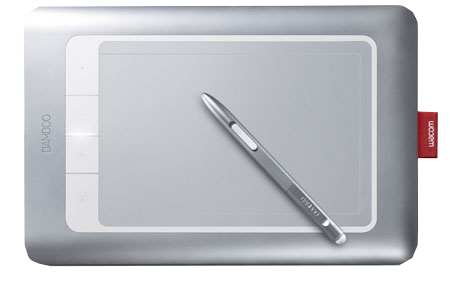
Wacom Bamboo Fun pen and touch tablet

I got a new tech toy recently - it's the Wacom Bamboo fun pen and touch tablet. It's primary function is to serve as an pen and touch input, not unlike a touch screen phone. I've been delaying the purchase for a few months, trying to decipher within myself if this is an impulsive buy or something that I really wanted to have. The cost of this is not exactly cheap (retailing at 329 SGD), and with that cost, I could have gotten one of those wifi enabled tablets or even an ipod touch. But I guess I really wanted this.


The trigger for the purchase came ironically because of ipad2. I was playing around with an app, called zen touch and was immediately impressed by it. I was having so much fun that my wife had to pull me away from the apple store. If I really got an ipad2 there and then, it would have been because I wanted to explore more on the zen touch app. So this lead to that, and I found a pre-owned Bamboo tablet selling for 250 SGD and I grabbed the opportunity. I guess I never looked back since.


I cropped away the edges...okay, I admit, it was a bullshit job. I'm quite inept at photoshoping or gimping. Yet.


It was such a pleasure drawing and painting and sketching and experimenting. There are a few things about drawing digitally that is so vastly different from drawing physically:


1. There is no lack of paints or paper or the right kind of equipment. With a proper software (included in the package), you can form amazing rendition of any sort of painting. You are only restricted by your imagination and skills, not by lack of equipment or constrained by cost. I think in the past, where I'm too pai seh to ask my parents for yet another box of coloured pencils, had doomed me to sketch with just a single 2B pencil. As a result, I'm much more inclined to do monochromatic sketches rather than using the full spectrum of colours that are available.


2. I can undo multiple times digitally, but I can't do that physically. Undo is such a godsend! I can experiment with different techniques without risk of spoiling the overall picture. When drawing physically, there's always the risk of erasing more than I can handle. It's even worse when painting, because the botch-up might not be always recoverable and it'll definitely leave a mark. Not with the magic 'undo' button.


3. The ability to draw on layers is a concept that is pretty new to me. On paper, everything from the form sketches to the colours to the shades of colours are done on a single layer. Digitally, you can break out a project into multiple layers overlaid on each other, so that you can do edition on one layers independently without affecting the others. It makes a other 2D project three dimensional, so to speak.


I'm like a child magically teleported inside a candy store - suddenly I've so many tools to play with and I don't know what to start with. As a result of this endless permutation of tools to play with, I'm addicted to doing some art project daily. Sometimes I just have to wean myself off the screen and take a break, because staring at the screen for extended periods always tire my eyes (another good reason why for serious readers, you should get a kindle instead of the more popular ipad - it's that different).


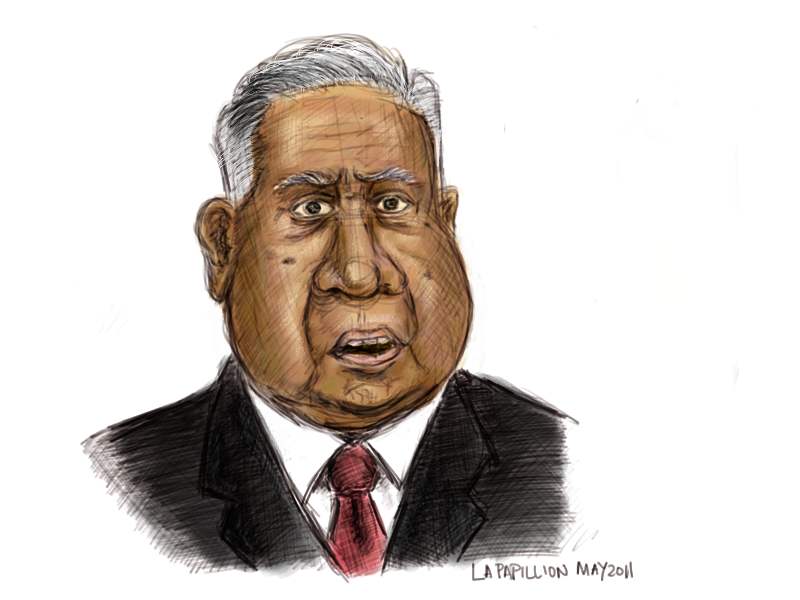
Here's some of the projects I've done. I've conveniently removed the more amateurish attempts when I first tried playing with the bamboo. I censored the clumsier attempts all for your viewing pleasure of course, not for my ego, haha :)


Wholly inspired by SMOL's latest post, of course


If you don't know who this this, don't ask


This is still work-in-progress...been 3 days already. One of my longest project on Bamboo


-----------------------------------

I've finally completed this after 3 days. The hard work is well worth it because I know the tool so much better than just a few days ago. I'm ready for more challenging projects :)


There is a story behind the picture. It'll set the mood and the feelings for this project:


Urthadar of Clan Hunting Wolf stands alone, in the wretched rain. The storm clouds darken much of the sky, as if foretelling his dire circumstances now. He alone will guard this only bridge to his homeland, if none others would volunteer. No, they have a much more important task at hand - to warn the others of the coming of the impending Plague that comes from the north. The ominous sound of a horn is heard, and is rapidly followed by many others, forming a cacophony that heralds the coming of the cursed orcs. Calling upon Tempus, his god of war, he gripped the handle of his battleaxe with renewed determination and roared defiantly.