Showing posts with label Parenthood. Show all posts

Monday, March 22, 2021

Closing techniques applied to Parenting

Recently I read a book on sales, called SPIN selling by Neil Rackman. It's a pretty good book that talks about the differences between the traditional methods of selling low-value items and high-value items. I read such books because ultimately, we all need to be good salespeople. Either we need to tout our own horns or persuade someone to do certain things, we ought to be able to sell off an idea to anyone. 


These days, my young boy starts to get a mind of his own. He seems to realise the theory of the mind, where he discovers that he can form ideas and decision of his own that can be different from others. More and more frequently, he starts to assert his decision onto us, like the times when he doesn't want to go to school or don't want to brush his teeth. That's when I realised that I need to level up my selling and motivational skills. Young children are the worst kind of client because they are irrational, emotional based and acts on instinctual whims. They can be very hard to persuade, so we must resort to trickery lol


I learnt 4 closing techniques from the book. They are:

1) Assumptive closes - this assumes that the sale has already been made, so we ask questions like "Where would you want this product to be delivered?"

2) Alternative closes - this technique reduces the choice of a buyer, both of which are acceptable to a seller. It goes something like this, "Do you want it to be delivered on weekdays or weekends?"

3) Standing-room-only closes - this is the classic scarcity scare tactic. "We only have the last set left and that I have people on the waiting list waiting to buy."

4) Last chance closes - similar to standing-room-only closes, except that it is scarcity principle used on time. Early bird discounts are based on this principle. "The discounted price is valid till today and will go up tomorrow."

5) Order-blank closes - Fills up the customer's answers on an order form even though the buyer didn't indicate that he is buying yet.


The book says that all these tactics work on low-value sales, so it's a kind of pressure closing techniques. Wouldn't work for high-value sales, because those are based on relationship and that's what the rest of the book talks about. But as a parent, I think most negotiations are low-value type, so these should work well. I'll illustrate how I used some of these tactics:


1) Assumptive closes

When my boy doesn't want to go to school. I took his snack box and milk packet to show it to him. I told him that he can eat this in school later in the afternoon. This assumes that he has agreed to go to school, which he hasn't.

2) Alternative closes

When my boy doesn't want to brush his teeth, I'll ask if he wants to brush his teeth here or there. Both options are perfectly acceptable to me, but giving him a choice will allow him to commit to it. He doesn't know that there is another choice, which is not to brush. Fingers crossed if that happens.

3) Standing-room-only closes

When my boy eats too slowly or is distracted by other things when eating, I'll create some competition by trying to steal a bite. That usually creates a sudden urge to eat faster because the food is not only for him, there's another person waiting to eat it (that's me). I know it's evil, stealing food from young children, but hey, it works :)


This can be manipulative, I understand. There is a blurred line between manipulation and motivation. I do that to my students when I teach them too. Basically, the role of a tutor is also to persuade them to do something that they dislike. If I can't make them do that, nothing much can be changed. I see manipulation as changing the behaviour of others in order to gain from it, while motivation is changing the behaviour of others so that they themselves will gain from it. The difference lies in the intention behind the push for behavioural change and who benefits from this change. 


It might not be so evil when you know that children also employs such tactics to manipulate parents into doing things that they want!


Thursday, March 18, 2021

Richness far beyond that of Silver and Gold

During CNY, I went to my mum-in-law home for dinner. My son was offered 3 ice-cream cones, of which he was to choose 1 for himself alone. But he quickly grabbed all three and passed one to my wife, one for me, and one for himself. I wasn't really interested in the ice-cream so I wanted to pass it to another person, but my son took it back and pressed it in my hands. 


It's quite sweet actually that he thought of his family first. It's not the first instance when he did that. There was a time when we went up to take an MRT ride somewhere, and there were only 2 seats left. Usually, I'll just stand, so I told my wife and son to just sit at the two empty seats. They did, but when my son realised that I wasn't seated, he rushed out to grab my hands and pull me towards the seats. This is an indication that I should sit down together. Then he proceeded to squeeze his big butt in between the two of us, lol


Is my son selfish? 


Can't really say so, because usually selfish is reserved for people who think for themselves alone. But is caring only for your immediate family considered selfish behaviour? I will say that it is. But it is less selfish than those who cared for themselves only, obviously. It's just that I think the sense of 'self' should be defined a little broader. What if we treat 'self' to be inclusive of the weak and the defenceless? What if we include all other humans? Other species? The world at large? Some religious texts will say that the self is a self-construct and an illusion - everything is really just one.


I know that is an ideal case, but it's really a good goal to aim for. If he can include his 'selfishness' within his tribe, and we work to enlarge the size of the tribe to include more and more sentient beings, he will be more compassionate and empathetic. That is a far fetched goal but nevertheless a good value to inculcate to the next generation. As parents, I think it's our sacred responsibility to bring up kids that will make the world equal or better after they leave, rather than worse. I understand that as a single child, my son might inherit some characteristics associated with that status, like selfishness, self-centred, entitled etc. I'm quite determined not to make that happen.


If my son grows up well and becomes a positive contribution to the world, that will be a richness far richer than that of gold and silver. Live long and prosper.

Thursday, February 25, 2021

How to save time?

To save time, there are really just three ways. The first way is to make our usage of time more productive, hence we use less of it, thus saving it. If instead of accomplishing just 1 thing, we aim to accomplish 2 or more things at the same time. That's saving time. The second way is to change our perception of how we utilise time to 'save' it. If we hate reading and doing any reading is perceived as a waste of time, then changing our attitude towards reading will make our usage of time more productive. Not doing something you dislike is time saved. Nobody wants to save time when doing something that they like. The third way is to spend other resources to save time. Usually, that means spending money to save on time, but not always. I can use relationship points to save time too. If I've accumulated many points to strengthen my relationship with a friend, I can ask my friend to help me to do something that saves me lots of time. 


This post complements the previous one. There are so many things to do and so many projects to accomplish that you might ask how can anyone do that? Here, I will share how I handle some of these tasks. It's easier to give examples:


1) Laundry/folding

Nobody I know likes doing laundry and folding clothes. You either outsource this to a domestic helper or you do it yourself. I like to do chores in front of my kid. Doing so will accomplish two tasks - firstly, I can teach my kid to do chores and not to take such things for granted. I believe in teaching young children without explicit instructions through modelling and setting good examples. There's no formal instructions or a PowerPoint presentation on folding clothes - he sees me doing it, if he shows a little more interest, I'll guide him and let him help me in what ways he can. So far so good. Secondly, I get to change my perspective on folding clothes, from an unpleasant but necessary task to a teaching moment for my kid. Thus, I saved time by accomplishing more things in the same duration (completion of chores and teaching kids) and also remove the unpleasantness of the task. Two birds with one stone.


2) Blog articles

I mentioned in the previous post that I give myself a quota of writing 2 articles per week. Until the experiment ends, I'm going to have to squeeze some time out to brainstorm for ideas and also to write/edit the articles. How to find the time for this? For the creatives out there, you should know that brainstorming is not something you can force out in a scheduled time. Just feed brain food (aka reading) then hopefully something good will appear at random when you're doing something else. So, the brainstorming part is already a time-saving activity, because it can't be scheduled anyway. When I shower, or when I'm falling asleep, some good ideas for an article pop up in my head, then I'll just quickly jot it down in my phone for future reference. What about the actual writing? This activity takes about 2 hrs, and I usually do it while working. There are some lull periods when students are doing work, so I'll just flesh out the articles (like now, lol). 


3) Reading

To reach my goal of 52 books a year, I have to read ebooks on my mobile phone. I very much prefer paperbacks, followed by a dedicated ebook reader like Kindle, but I've no choice. With a kid, I just don't have the time to sit down to read 1 to 2 hrs in one sitting. I've to do stealth reading - stealing minutes here and there to read. Quite irritating at first, but I get used to it by now. If I can, I'll also borrow a paper version of the same ebook that I am reading. I like to read in front of my kid, to let him see me reading. These days, I can see him picking up books to flip through and pretend to read, so I know it works. It's quite charming actually. Again, I want to stress that I'm trying to tick as many things as I can while focusing on one thing. 


I think giving three examples should be good enough to illustrate my point. I want to highlight the fact that I'm not multi-tasking. I'm just doing one thing at a time, but accomplishing many goals at the same time. Research shows that multi-tasking is not possible - what we're doing is actually just switching tasks frequently to simulate the appearance of doing tasks simultaneously. I don't recommend that because we'll end up doing things half-heartedly or absentmindedly. 


Live long and prosper.

Monday, January 18, 2021

Big fish small pond OR small fish big pond?

 If you have to choose, would you rather be a small fish in a big pond or a big fish in a small pond? 


I ask this question because my students just had their O'lvl results. After so many years in this line, I tend to get less excited about their results. I fully understand how getting a great result will lead to undesirable consequences in life. I don't know whether to be happy about good results or be sad about bad results anymore. I'll explain more.


This student of mine, let's call him John, got a fantastic result of  L1R5 of 8 points. That is a freaking good showing in the O'lvl. It means almost all the subjects scored an A1 (the highest possible grade), except for 2 subjects which are A2 (the second highest possible grade). Fantastic right? So naturally, John will want to go to the best JC. But I know John since primary school; he's quite a nervous wreck and will often breakdown due to stress. As in, really breakdown, go nuts, need to visit psychiatrist kind of break down. If he goes to an elite JC, I'm worried about whether he will suffer another depression episode because we all know how crazily hard Singapore A'lvl JC course can be. 


So the question again: is it better for John to be a small fish in a big pond and go join a more neighbourly JC and be the top dog there? Or is it better for him to be a big fish in a small pond and go join that elite JC and possibly be crushed by the competition there and suffer any mental breakdown?


I tend to favour the small fish big pond idea, especially since I know John's 'pattern'. The education system is not worth shedding tears and blood, with the real cost of having a mental breakdown. I think the most important thing is to survive the education system with your confidence level intact. You do not want to come out of your schooling year thinking you are not capable of success. I've spoken to some NA/NT students and it's quite sad. After years of being hammered by the system, they have a tendency to think that their lot in life is only this high. They don't want to aim high because 'people like them' can only get this far.


In the past, I've seen a very clever and bubbly girl who got 250+ for PSLE, went to a top integrated programme school and got crushed alive. Does it happen to everyone? Of course not, but as parents, you really have to know the personality of your own children and most importantly, how they handle stress and adversity. Some will crumble and avoid stressful situation, while others will fight even harder. Choose carefully. Being in a top school does not guarantee anything with regards to grades. From what I've seen, most of the elite school assumed that the students have outside help (aka tuition) and so will go at breakneck speed.


For John, I've spoken to the mum about all these issues that worry me. She knows it too, so we'll be keeping tabs on him (if I'm still tutoring him, that is). I don't know which type of fish he'll choose to become, but I sincerely hope it'll be a salmon that swims against the current, jumps repeatedly over white waterfalls, in order to reach their destination. Because that is one fish, big or small, that is a real survivor. 

Friday, January 08, 2021

The competitive edge that my parents imparted to me

Having written about how my competitive edge as a parent is in my last post here, I now flipped my perspective around. What skills or values had my own parents imparted to me so that I gain something that will help me in my life?


When I first thought of this question, I wondered how to answer this. I don't really know the answer right away. As I am writing this post, I still don't know how I'll answer, so this exploratory writing will hopefully shed more insights. One of the most important reasons I came back to blogging is that writing allows me to converse with myself, thus clarifying my thoughts. 


My parents are atypical. They don't work in offices and hold no titles, and had been self-employed a large part of their life. My dad stopped working when I'm very young because of health issues and it's my mum who had to put food on the table, so to speak. So she hustled and done many kinds of gigs, all the while taking care of the family. A large part of my character is moulded just by observing and seeing how she handles the adversity of life.


One of the most important things she imparted to me is about money. She didn't sit me down and lecture me about finance 101, so what I learned was by purely by observation and inference. My mum gave me a very little amount of pocket money so I had to be careful with my money and I guess I've always been careful with money since young because of that. She did something right (and I'm going shamelessly copy her when teaching my own kid), which is to give a whole month's worth of pocket money to me. If I didn't keep a watchful eye and did not budget my pocket money carefully, I'll have more days than money near the end of the month. I'm proud of the fact that this had never happened to me before in my many years of experience as a 'money manager'. I think it's because I've been handling my own money pretty young and I've learnt to budget at a young age, albeit unconsciously, that this habit gets stuck throughout my adult life. There are some money lessons that I have to unlearn in the course of adulthood but the foundation of spending less than what I earn is like engraved in me.


My parents work from home and it's not often that they are not around. So I get to see them very often. I used to hate it that my parents are always around at home when I was younger because I don't like that my parents are constantly watching and nagging me in a way that parents always do. But when I'm older, I realised this arrangement is not common at all. Most parents are working in offices and are not around. I guess I learnt two things from here. Firstly, it's okay to work from home. I've no bias against people working from home and had no wish for any bombastic official designation, like directors, executives etc. These empty titles hold no meaning to me. Hence looking back, it seems that I'm primed to be a full-time tutor. The similarity between my parent's stay-at-home self-employment and doing their own hustling is too uncannily similar to mine as a tutor. Secondly, I can take care of my family and work at home at the same time. I don't have to follow the traditional gender role of a father earning money while the mother takes charge of the family. My mum pays the bills AND take care of the family, as such, I have an excellent role model to follow. So I shall and so I did. 


It's not all roses though, so where are the thorns? I made a wishlist of things that I hope my parents could have imparted to me but did not. However, this is not an exercise to find fault and assign blame. I take full responsibility for my own personal development. Still, I could have shaved a few years off my own circuitous road to learn the things I know now. Here's the list:


1) How to grow my money besides working and saving hard. It took me a long time to know such a concept. Things like property investment, stocks investment, or any other kind of investments.

2) The concept of insurance. Again, I took a circuitous, probably expensive route, to learn about this

3) Career advice, including what areas of study and what are the career prospects. There weren't many resources back then (internet was just a fledgeling in those days) and most of the time, I'm like blindly following others, who are probably equally blind too. I am an excellent student, and I probably could have taken a scholarship or two, but I wasn't aware and wasn't pushed. Who knows where that could lead me to?


Again, I stress that this is not a fault-finding exercise. I can totally understand how my parents are occupied with day to day survival issues and wouldn't have the energy or time to worry about future thriving issues. So, being a parent myself now, I will learn and correct from the 'mistakes' my parents made so that the next generation will be even better equipped.


We can see further only because we're standing on the shoulders of giants that came before us.

Tuesday, January 05, 2021

What's your competitive edge as a parent?

 As a parent, I always wondered what I can pass down to my kid in order that they have an advantage later in life. I have a student who works as an occupational therapist. She has a kid (yes, I know I'm super old because even my students are married and have kids of their own!) and I saw from social media that the kid can walk, squat and crawl, plus all the daily activities at a younger age than my own kid. That makes me think that the special skill that she can impart to her kid is somewhat related to her own career.


There are some parents who are rich and I hope what is passed down to their children will be about having a rich mindset and how to start businesses and so on. Not money. I think having too much money passed down to the next generation can be debilitating and demotivating. The right amount of inheritance should be an amount small enough not to make a huge difference to their life decisions, and at a time when they don't need it. I can fantasize just how nice it'll be if my parents are super rich, and my car and property are fully paid by them. But that's just it... a fantasy.  I don't think I'm that rich, neither am I a business owner, so what exactly can I pass down to my own children?


I hope good values and character will be one of them. I will be more proud of him helping others and having a heart, rather than being the top of his cohort (of course, it'll be best if they have both hahaha). And yes, that includes picking snails off the pavement on a rainy day in case someone runs over it. How do I ensure that? I think a lot of lessons, especially those involving values, are taught to children without specific instructions. You don't need to have 1 hour of moral & civic lessons every week to teach values to them, because they will learn based on how you act, rather than what you say. Hence, if I want my children to have good character, I must be exemplary in conduct 24/7. If saying thank you and please and helping others in need is as natural as breathing at home, I'm sure my children will absorb that and see this behaviour as normal.


The next important trait to pass down is how to learn anything independently. I believe strongly in this because I think in my kid's generation, the new illiterates are those who finished their learning in formalised institutions (like schools). To be able to learn anything requires a loop of trying and failing and trying again until success is achieved. Hopefully, my years as a tutor can be an advantage in this aspect. I also intend to show my kid that I'm learning all the time. Either reading, or practising on the piano, or whatever else might interest me in the future. I can't expect my kid to be a life-long learner, yet I'm slacking and watching TV on the couch every day, can I?


The last thing I want to impart to my kid is about health - both physical health and mental health. Health is the underlying foundation upon which all other things are built on but is often taken for granted. At the earliest possible age, I'll introduce meditation to my kid. I know it'll be a great tool to manage mental health and I wished I had been introduced to it sooner. Regarding physical health, my child is a very active person, so I hope I can very easily introduce him to regular exercise. I think starting a life-long habit of exercising will be a superb habit that compounds greatly for my child in the future.


Am I going to send my kid to enrichment camp for robotics and coding? Very unlikely. If I have it my way, I'll rather send him to a meditation camp or a sports camp, rather than a coding workshop. But I reserve the right to change my mind later, hahaha

Friday, August 09, 2019

National day as a parent

Normally, as a jaded adult in Singapore, you don't give two hoots about National day. I haven't been watching the parades since aeons ago, and I definitely do not wear red and white this day. Every time I hear the National day songs (except Home by Kit Chan), I cringe. I  might even escape the festivities by going for a short trip, especially this year when there is such a long weekend. Perfect for a short getaway to Bangkok or Phuket.


All that changed when my son was born. Who would have thought that I would play Mari Kita on YouTube just to watch him stand erect with hands straight down beside his body? Who would have thought that I would sing along the lyrics of our National song in order to inculcate some sense of patriotism and gratefulness for our homeland in him? Certainly not me 2.5 years ago.


But as I decked him in red and white, with his shirt showing the crescent moon and the stars, watching him wave his little hand-held Singapore flag excitedly whenever he spotted those big Singapore flags that dotted our neighbourhood, I can't help but feel a sense of belonging too. Before being a parent, I'm here but my heart is not here. I'm merely a participant but I'm not involved. After being a parent, I'm fully invested here.


It's a strange feeling. It's not the I ate the wrong thing and my stomach felt strange kind of strange. It's a warm fuzzy feeling that tingles down my spine kind of strange. I still don't wear red and white and I would rather die than be decked in those 2 colours to parade around the streets today. But I would teach my son to love his country religiously, to say the pledge, to sing the song and to be grateful for everything we have here. He might be a jaded old man in the future, aware of all the nationalistic brainwashing, cringe at all the national day songs he hears on the radio, but that can wait.


Who knows? Maybe his journey will be the same as mine, especially when he has his own kid who waves his little flags excitedly whenever he sees the bigger flags that dotted our neighbourhood.

Wednesday, January 02, 2019

First day in childcare

Today I sent my boy to the childcare centre. He's about a month shy of 2 yrs, so it's his first experience going to a proper school environment, hence his crying is all expected. But I left the childcare centre, being all warm inside and proud. Why?


I think it's important to establish a very strong emotional link between the child and the parent. With this strong emotional link, you can motivate the kid to limits beyond the wildest expectations from the parents. There are times when we brought my son out for walks and after an hour or so, he starts to get tired. We don't ever have a pram, because my thinking is that we (as parents) either grow stronger by carrying him, or my son will grow stronger by continuing to walk until the destination is reached. So when he is really tired, he will want us to carry him, right? That's normal. But what we will do is to tease him a bit. When he runs towards us, we'll run further away and he'll laugh and continue running after us for a little bit more. We can drag this 'game' for another 30 mins or so, pushing him beyond his own perceived limits. And he'll do so because he trust us completely.

In essence, we're using this strong emotional link between the child and the parent to do great things together. This is what the book by Dr. Petunia Lee, Internal drive theory, had mentioned. I quote these from the book (I might have paraphrased it when I took down notes from the book),


"A child might give up in the face of difficulties, but if he can draw upon someone else’s emotional energy, they can still stay on the course. Hence it is a strong motivating force."

"This is so important that if emotional connection is not there, the first thing to do is to fix it up. That will make all the other motivation strategies more powerful."


Aha! Now I finally join the dots and link the connections. Initially when I first read the book, I was just knowing. Now I really understand. It is the same motivating force when my tutee likes me, and do not want to disappoint me, hence with the strong emotional bond between us, I as a tutor can push the tutee beyond his/her own perceived limits. And that's how a real change can be observed.

So, what happened at the childcare centre that had me beaming with pride? My wife stayed on with him, while I left the room. Only one parent is allowed and we decided to have my wife accompany him, at least for a while, to calm him down. Initially my son was inconsolable. After a while, he started being his jovial playful self again. When my wife gave a firm goodbye, he was still smiling, and I knew it's going to be alright.

Seriously, I've never had a prouder moment as a parent. It's a great start to the year 2019!

Friday, November 23, 2018

Children as great teachers

I used to hate putting my child to bed. It might take anything from 1 hour to 2.5 hours. You might want to have your child sleeping at 8pm sharp, but that will never happen. He'll toss and turn, he'll play around, he'll do anything except sleep. In the past, this used to vex me, because I was mentally counting the personal time that I had left. I love my kid, but hey, I've been looking after him for the good part of the day, and daddy needs some personal time alone to be 'myself' again. Out of 12 waking hours, surely having 2 hours alone is not an unreasonable request?

Apparently so. Just 5 mins ago, my son finally fell asleep. We tried putting him to bed at 9pm, so that was 1.5 hours of trying hard not to doze off while trying to make him doze off. It was only after a few months of dreading this nightly routine that I came to the realisation that it was not him who needed to sleep on time, but me who needed to let go of whatever is on my mind and live at the present with him. That thought freed me from the shackles of a regulated schedule and made me fully enjoy being with him. Yes, even those fussy moments when he just didn't want to sleep.

That's the essence of being a parent. It's not so much about the kid who needs to adjust to you, but more about you adjusting to the kid. If you see children as spiritual mentors who are here to educate you, then things are much easier. What have I changed to adjust to my child?

1. I started reading more physical books. I have a few e-book readers but in order to inculcate the habit of reading to him (or perhaps the culture of reading), I've been borrowing more physical books from the library. If we're not reading to him, we'll be reading in front of him. I seldom see a child that is a voracious reader and the parents are not. Not impossible, but it's just less likely.

2. I'm using an electric toothbrush for almost a year now. I wished I had it when I was much younger because it was such a great cleaning tool. But it seems I will now have to switch to analogue toothbrush now because I need to teach him how to use a toothbrush real soon. There are reports of children having very bad tooth decay at a very young age. As a compromise, perhaps in the morning when he's up I'll use the analogue one, and when at night after he fell asleep, I can use back the digital one. At least with that, I won't have to sacrifice my tooth for his!


There are many such incidents but I think I'll not bore readers with such mundane details. Suffice to say, before you want your child to change, perhaps you as the parent should begin and lead the way. Children are super sensitive towards double-standard. You smart, but they are not stupid too.


Tuesday, August 21, 2018

17 months of being a father

After nearly 17 months of being a father, I think I have that little bit of experience to talk about the changes that happened to me. The changes are significant enough that sometimes me and wife will say BC and AC, which stands for Before Child and After Child.

"Oh, we used to be able to watch movies in the cinema BC 2012...", laments the wife.

"This is AC 2018, I don't think we can afford to have a late lunch at Tim Ho Wan at 2pm anymore...", I complained.

Of course, mothers and fathers experienced the changes differently, but I think we seldom hear about the fathers' side to the story. I'm here to share.

1. I am much more expressive now. I didn't know I can smile so much. This little boy of mine is like a second ray of sunlight. The first is, of course, my wife. I think my life will be so much blander without them.

2. I didn't know I can survive so long without proper sleep for so long. After a few days of less than 5 hours of sleep, every day starts to feel the same. Everything is like the copy of a copy of a copy. In my line of work as a tutor, I sometimes feel the merging of weekdays and weekends. I might be eating lunch and I'll suddenly pop a question, asking which day it is today. This effect seems to be exacerbated by lack of sleep. On the flip side, I think my insomnia is cured temporarily.

3. Before having a kid, I thought my life was very good already. I don't think how having a child can make my life any better; I seriously thought so. After having a kid, I didn't know how I could live my life without one. Every little thing seems to take in more meaning. I think my life before having a kid seems too indulgent. Too much time wasted on frivolous things. Of course, back then, it didn't feel like that.

4. I never stopped worrying for my kid. Before he was born, I'm worried he might have genetic flaws. After he was born, I'm worried that his hearing might have some issues. After a few months, I'm worried about his jaundice. When he still hasn't started crawling, I worried maybe there are some issues with this mobility. Up till now, he is a little slower than the median month where kids are already speaking, so I'm worried if there is anything wrong.

So you can't imagine how relieved (and proud) when he started calling very clearly, papa and mama, just a day ago. I think I'll never stop worrying about him. That's parenthood.

5. I don't know how to fly a kite, but I think it's similar to parenting. There are times you must let go and times you must rein the kite in. Hold too tightly, the kite won't fly high. Held too loosely, the kite will drop too quickly.


Is it all worth it? I guess that question depends on how quickly you shed your role as an individual or as a couple living together. The sooner you accept that your life will never be the same again, the faster you can adapt to the new one that is thrust straight to you. I think it'll be a very long time until I can sleep for 8 hours, or I can just go out on a whim around midnight to Mustafa to go grocery shopping. Those times are fun and memorable, but they are over.

A new season dawns on me, and I think it will also have its own beautiful scenery to admire.

Saturday, August 04, 2018

On why we do anything

There are 3 reasons why we have to do anything:

1) We want to do it
2) We have to do it
3) We do it so others don't have to do it

Reason (1) is more ego-centric, where we focus on the needs of ourselves. Reason (3) is more focused on the needs of a larger community of which we are a part of. 

This concept came to me when I observed my 17-month-old child transition from (1) to (2). Initially, all the things he does is just because he wants to do it. As he slowly understands our household rules, and later, the rules of the society of which he is a part of, he starts doing things because he has to. He might not like it and it might not be what he wants to do, but he will have to do it. I have not seen him doing things because of reason (3) and hopefully, that will come when he gets older.

I have an example that illustrates these 3 reasons - that of clearing trays in hawker centres. Usually, nobody wants to do the dirty work of clearing trays. In Tampines, at the site of the old Tampines stadium, there is a food court when there is an automated tray clearing thing that looks somewhat like those conveyor belt system carrying plates of sushi around. I thought that was pretty cool, so I really wanted to clear my trays just to see how it works. I guess the novelty wears off after a while. But when do we really have to clear trays? Maybe when they start charging a fine? Or giving an incentive? In another perspective, the cleaner is the one who has to clear the trays, because he/she is employed for that purpose.

The really interesting part comes when we talk about clearing our own trays so that others don't have to do it for us. Or we clear trays left by others that are not even on our table so that a person carrying a tray of hot food does not have to clear it. I thought that idea really gels with the philosophy of leaving the place better than when we came in. I think the Japanese are really great at this. We always read reports of Japanese football fans picking up rubbish and clearing the place after the event ended.

I also realised that after having a kid, I tend to do things based on reason (3) more often. My wife and I are the primary care-takers and we have no domestic helpers. After work, I'm usually tired and what I really wanted to do is to have my own me-time to recuperate. But I have to do some baby stuff so that my wife doesn't have to do it. I mean there's only me and her. If not me, then who? Perhaps I can also extend this idea to the larger society, treating them like my family. If I don't do things, then who shall do it? If I see a piece of rubbish on the streets, and I didn't throw it there, so while I don't want to pick it up, neither is it my responsibility to pick it up, I should pick it up so that others don't have to do it.

That should make Singapore a much better place to live it for everyone, yes?

As such, I strive to teach that to my kid. I want him to take care of himself first, then take care of others. He cannot be doing things mainly because of reasons (1) and (2) alone. He exists in a larger community of which he is a part of, and he ought to do more things out of reason (3). For him to do so, I must also show him that I am doing so. I need to be a good role model for him to follow.

Thanks, son, for making me better than I am now.

Thursday, June 28, 2018

Evolution of worry

Before my kid is born, I am worried about whether he will have genetic faults. The worry is real so both of us went to do some checkup to see if we have any hereditary illness that might be passed down to the next generation.

Then when he is born, I'm worried about whether his hearing is alright. He initially failed the test, but was okay after a second try the following day. When he is still crawling, I worry about whether he can walk. When he starts walking, I worry about when he will start talking.

Basically the worry is always there, just that the thing I worry about changes. That itself is a good thing because the nature of my worry evolves as we grow and mature. It'll be a problem if we keep worrying about the same thing over and over again, because that will mean that we never grow bigger and thus our problems remain the same.

It's interesting being a parent to a growing kid, because you start to see things from its very basic form, evolving to become more complex, and I hope that in the future, it'll become simpler again. A to B and back to A, isn't that back to square one? Isn't that a waste of time? No, I believe the journey itself is the point, not the end point.

My student is sitting for his common test these few days. He worries about whether he will complete the exam on time. But not too long ago, he was worrying about whether he will even pass his O'lvls. I reminded him of it, and he smiled. I also smiled. At the same time, I worry about whether my income can feed the family. Maybe in the future when my health deteriorate, I will worry about whether I can still see my family in the next hour.


While I worry about when my son will start calling me 'papa', I think back about the time when my biggest concern is whether he will be born healthy. All in due time.

And I smile.

Monday, June 18, 2018

Easier to be a good dad than a good mum

When I go out, I always see wives scolding or complaining that their husbands are doing a super bad job taking care of kids. The husband literally just stand there and suck it up while their furious wife is pouring out all her troubles in public. I ever asked my wife if she'll do that to me in the future, and she asked if I'll do that to her instead.

The truth is that it's easy to be a good dad. In fact, it's easier to be a good dad compared to a good mum. The standard of a good dad to hurdle over is way way lower than that of a good mum. I mean a dad just needs to do a little housework, maybe cook a little, wake up at night perhaps once a week and change the diapers once in a month, and he'll be hailed as a national hero to be lauded with praises. "He's a good catch!", says random friends and relatives.


But the mum, despite having to work, look pretty, do housework, cook daily, do night duty almost every day and change the diapers almost every time, will still fall short of expectations. "How come you're still so fat 2 yrs after giving birth?", asked concerned random relatives during family gathering. "How come the baby is waddling in the mud, tsk tsk...the mum is not doing a good job", says observant random passerby.

I see it and I try my best to correct the inequality and unfairness in the whole dynamics. I did my fair share of work, but due to conflict of interest, perhaps only my wife can comment on whether I am really fair and equal in sharing the duties of child caring between ourselves.

To all the fathers who are ticked off by their wives in public, I wish I can help you deflect some of the attention, but you know I can't. The best thing you can do is to step up to the challenge and start being a good dad, by living up to the standard of being a good mum.


Happy Father's day.

Wednesday, April 25, 2018

Did you give away your equity freely?

I wanted to share this idea regarding child caring. The default way these days is for both parents to work while hiring a foreign domestic worker (or two) to take care of the kids. That is the most economic and financially savvy way. Hiring a domestic worker is much cheaper than going to infant care or child care, and have more utility. That is also the reason (I suspect) why my mum-in-law insists on wanting us to hire one. I vehemently refuse.

I seek to explain why here. But let us go to a separate domain of raising capital for companies first. I'll show you why knowing that stray bit of information is important in understanding my decision in not hiring a domestic helper.


HOW TO RAISE CAPITAL 

There are two ways in which a company can raise capital. Either give up some ownership by selling equities or retain ownership by borrowing money using debt. Most companies do a mix between these two extremes because there are some advantages and disadvantages for doing so.

If a company raises capital by selling equities, they lose ownership in the process. Future profits might be more but the original owners will get a lesser cut out of it. On the other hand, they don't have to pay anything now (let's exclude the fees to raise the equities now to simplify matters). The 'payment' is taken from the potential future profits of the company, which may or may not materialise. The company essentially raises cash in the present by paying from their future. Examples of raising capital by issuing equities are issuing new shares, rights and ipo.

If a company raises capital by borrowing money, they lose money right now in the form of interest paid on the borrowed sum. On the other hand, they retain full ownership and they don't have to pay any potential future profits to their debtors as the interest is fixed at the time of borrowing. The company is essentially raising cash in the present by paying right now. Examples of raising capital by issuing debts are loans from banks and bonds.

I want to highlight that neither methods are superior in itself. It's all based on circumstances. However, there seems to be a bias against borrowing money. Well, don't be. Borrowing money is perfectly fine, especially if you didn't over leverage and have the means to pay off. Businesses borrowing money to earn a greater profit by taking on projects that they can't otherwise undertake, is perfectly normal.


HOW TO RAISE HELP FOR CHILDCARE 

There are two ways to do this. You can ask someone to do it or you can do it yourself. When I mean someone, I mean anyone other than the parents. It can be a foreign domestic helper, a nanny, your mum in law or any of those commercial child care services.

If you raise help by asking someone else, you are like a company issuing equity. You are giving up ownership of your child to them. That someone else have a claim on the future relational profits that came from taking care of your child. Some parents are afraid that their hired helper (or mum in law) is getting too close to their child, to the extent that they prefer to be with the helper rather than the parents. This is a good example of a future claim on relational profits. The disadvantage is that you can't control formation of habits and values because transmission of such things are formed through daily contact, and you had already given up ownership on this.

If you raise help by doing it yourself, you are like the company borrowing money by issuing debts. You have full ownership of your child, and what values and habits you want to inculcate. Any future relational profits will be yours to gain. The drawback is the time spent and the potential income lost from doing it yourself. That is the interest you have to pay for 'borrowing', but you retain full ownership of any relational profits (or losses) yourself.

Most parents do a mix between these two extremes. Some activities they choose to do it themselves, while others they choose to seek help. The actual percentage varies according to circumstances, just like how the companies will choose their own debt/equity ratio. I've seen extreme cases too, where a household hires a foreign domestic helper while both parent works. Maybe a grandma stays in to watch over things. This is nearly 100% equities already. Another extreme case is where father works, mum quits her job to be full time housewife. She takes care of home matters all by herself. That's like a 100% debts scenario, based on my definition.


CONVERTIBLE BONDS?

This way of looking at child caring in household leads to interesting situations if we take the model of raising capital by companies to the extreme. Let's take a look at just one funny case.

Companies sometimes issue convertible bonds, so it's a mix between debt and equity. It's initially a bond paying fixed interest until a certain call date where the holders of the debt can convert it to equities, thus having a partial ownership of the company's future profit. If we extend the concept of convertible bonds to raising help in child care, then it's like a household hires a nanny to take care of the child, then after a period of time, marries the nanny into the family and thus the bond becomes an equity! Sacrilegious!

I'm sure readers can think of even more ridiculous application, so do share at the comments below.
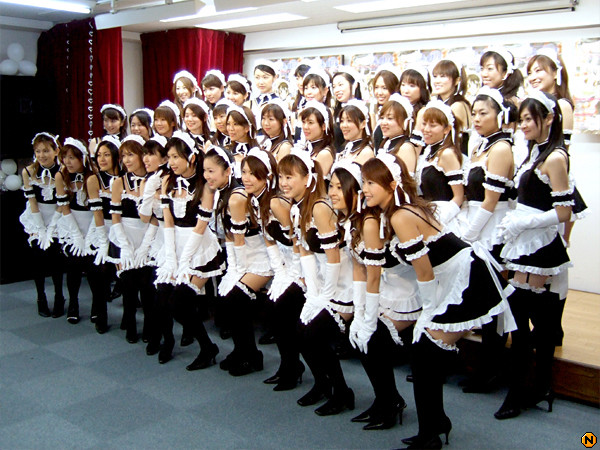

I've seen a family with a household of 3 maids. One to cook, two to take care of household chores because the home is damn damn big. He is one of the bigshots of a media company living in the heart of Orchard road. Of course, this suaku Singaporean that is me is stunned like vegetable. Still yet to see a house filled with a harem of manga inspired 'maids'. That will be a sight to remember, haha


MY HOUSEHOLD

I work at home, so do my wife. Sometimes we have to go out for work, but that's just a few hours. My mum comes over to help out during the day, but leaves at night, so we take over the night duty. It's my wife who mainly handles the night part while I'm the backup because I have more work than her so I can't rest during the day time while she can (when my mum takes over). Selected activities are done by my mum while the rest are taken up by both of us. So, I'll say for my household, we're like 40% equities, 60% debts. Remember? Equities mean giving up ownership by asking for help, while debts mean retaining ownership by doing it yourself. So, I'm about 60% hands on and 40% outsourced.

My brother does quite the opposite from me. He hires help and outsourced the work to my mum who stays for about 6 years at his place. Both wife and himself are working full time, so it's a 100% equities for his household. I can see that the child is more attached to the helper and my mum, and there are periods of tension between my brother's wife and my mum because of this relational profits issue. They should have known better I suppose, because by issuing equities, they are giving away future relational profits to the very people who took care of the child. It's unavoidable - we like people more if they spend time more with us. Being a parent is not a right, it's something you have to spend time to grow into. Learning from this experience is also why I am a bit more cautious in giving away equity so freely.

Not wanting to hire help is a personal choice and personal preference. To be honest, I've seen families work well too with both parents working and the kids are taken care of by foreign domestic workers. But take note, usually the success cases I've seen are where the helpers are staying with the family for prolonged periods of time. 5 to 10 yrs? The helpers are not the come and go type. And there must be a family member at home together with the helper, so it's usually the grandma from either side of the parents. There is also a critical period too, usually before the kid enter primary school. Hence the first 6 years is the most important part of the kid where a lot of things are set right or failing which, it'll be hard to reverse.

Dad working + mum working + helper - family member at home = High chances of failure. Not going to take the chances after seeing what I see.


FINANCIAL SENSE NOT EQUALS COMMON SENSE

You are losing common sense if everything fulfills financial sense. These days, everything seems to be poisoned by financials. If it doesn't make sense economically, it's a bad decision. You weigh the decision of whether to have a child by looking at money. You weight the decision of buying a car by looking at money. You weigh the value of a university degree by looking at money. It's not wrong to make a decision by analyzing it financially; it's wrong if you make a decision only by analyzing it financially.


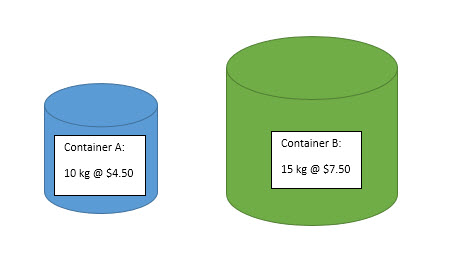
Look at a typical school based question. Container A has 10 kg of say milo powder selling at $4.50 each. Container B has 15 kg of the same milo powder selling at $7.50 each. The typical question is, which of the two containers should a fictitious person, say Mary, buy?

The unit price for container A is $0.45/kg, and that for container B is $0.50/kg. If you did not choose container A because it is cheaper per kg basis, I'm quite sure you'll be marked wrong. A more clever question is this: given that container A has a lower unit price, why should Mary buy container B instead?

a) Mary needed between 10 to 15 kg but not more than 18 kg, so 2 containers of A will be too much but one container of B is just enough

b) Mary needed the size of container B to store things

c) Container A has an expiry date that is nearer than container B

d) Mary likes the green colour of container B. She hates blue.

Must everything be in dollars and cents? That's just one perspective, isn't it?

Financially, it's better for both parents to work to earn the income, hire a foreign domestic helper with the earned income, take care of the kids and settle everything. In reality, it doesn't work as nicely as it should be. I've seen a lot of cases where the parents did not build a strong foundation with the kid, and when the kid starts to have behavioral issues (especially when they started school and mix around with others) and the parents start realising something is wrong. One of them, usually the mum, quits her job to oversee things, but it might be too late. If the parent did not reach a certain level of trust in the relationship, he or she can't start issuing advice. The kid just won't be able to accept. This is especially so for boys, because I think they are genetically programmed to rebel against his parents in order to forge his own sense of identity.

Parents, don't just be an ATM to your kid, please.

Monday, March 26, 2018

Feed the fish, or fish to feed?

Ever since I became a parent, every day I have to think about choices and its implication. I often wondered about my role as a parent, and thought about whether I am making the right choices right now that might affect my son in the future. So sometimes, I feel guilty that I am relaxing in front of the tv, instead of teaching some stuff to my kid. You know, stuff like that.

As a parent, my role to my son is two-fold:

1) Make sure he survives, so that will include feeding, bathing, changing his diaper and be safe from harm.
2) Make sure he survives without me around.

The first goal is easily done. You can do it with a foreign domestic helper. You can do that with any grandparents around. You can outsource it to a childcare center or infant care center. It took me a few months to get to a stage where it became routine for me. Me and my wife knew what to do everyday and we can do this all the time without much disruption to our own personal lives.

But the second goal...that is something. If the first goal is to feed the fish, the second one involves teaching my son how to fish. This will broadly encompass education, including teaching of moral values to the alphabets and the plus minus times divide, to learning how to pick up after himself, feed himself and so on.


I have a feeling the second goal is a goal that will take me all the way up until my grave. It is never ending, and in a good way too. I hope I am wise to always have something to teach my son too. But it is so hard. Say for example changing his clothes. It's so efficient to just take it off him, whether he is struggling or not. A few things will go through my mind: do I involve him in the process, no matter how clumsy or how distracted he will be? Or do I quickly go through the routine without his involvement so that I can move on to the next task at hand? I know what I should do, but sometimes the mind is willing but the body is weak. And I suspect these kind of choices are making me guilty every now and then.

I think my job as a tutor is the same. Student asks a question. I can answer it straight away and we can move on to the next agenda. Or I can take the time to make him understand, so that the next time he encounters such questions, he don't have to ask me again. While it is right to always do the latter, sometimes circumstantial time constraint means that I have to make a judgement of whether to feed him or to teach him how to fish. It's a balance between the two. If I keep feeding him, he won't be able to survive without me (hmm, that's a evil thought as a per hourly paid tutor). If I keep teaching him to fish, he'll starve to death right now, nevermind the future.

Balance, balance, balance. Everything in moderation.


Tuesday, January 30, 2018

1 yr of parenthood

My son is almost 1 year old now and we had a small celebration over the past weekend with family. I thought it's a great time for me to reflect on life as a parent in the past year or so. Here are some thoughts about it:


1) Loss of control of personal time

When we go from one stage of life to another, there will bound to be inevitable changes. From singlehood to dating couple, to married couple and eventually to parents...all these are major milestones in life. As a married person without a kid, I think it's basically an extension of singlehood. I had been in that phase for a very long time and had grown used to doing my own things, and spending time with my wife. With a kid in tow, all the energy and attention is now focused on the kid. There is very little personal time. Whatever time there is, usually it's spent resting or just doing some low energy work like watching tv.

Took my some time to get used to the new routine. There's even some frustration built up in the earlier part of the year when the baby is just born. I think a huge part of that frustration comes from the transition in roles from a husband to a father. I'm glad that phase is over, but I guess it can be a root cause for depression episode. The feeling is like you have things to do and yet the baby still refused to sleep or eat or just disrupts your flow.

How I got over it is to live in the present. Once you have a time limit in baby activities, like wanting to have only 30 min to tuck the baby to sleep, or 15 mins to feed the baby, the frustration builds up. It's just not going to be that structured anymore.


2) Introduction of randomness to life

Having a structured life means there is less randomness involved. Day to day living becomes very routinized and there's not much surprises or shock. Without randomness, my mood is just a flatline; there's no extreme unhappiness or extreme happiness. Is that a good life?

With a baby, everything is turned inside out, upside down. You are reading a book, quietly enjoying a cup of tea. Suddenly you hear a wail and you look around and see the baby had fallen. OR you are tired from a day's work, wanting to just have dinner and go to bed early. Suddenly the baby crawls over and hugs your leg, tried saying dada and gives you a megawatt smile. All your tiredness and fatigue instantly vanished.

I'm not saying structured life isn't good and a life full of randomness is bad. I'm just noting the difference before and after baby. I think having a structured life as baseline is good psychologically. You can't keep on doing greater things if you can't be sure whether there is a roof over your head or wondering whether you'll have something to eat for dinner. Upon that structured life, build in some randomness to it to disrupt your life, to jolt it out of becoming a living dead.

Mindfulness helps me in handling the downside of the randomness, those disruptions to my flow or those sudden rush to settle the wailing baby. Just concentrate on the task at hand and don't think of putting a time limit to the task. As for the upside of randomness, I'm enjoying every little moment simply by observing the little developments that is happening to my baby. That's how I handle the randomness.


3) Changes in life reveals character

I think I'm a better person after being a father. For one, I'm much more patient. I thought I'm already very patient but apparently that's just a self limiting belief. That, combined with the new perspective that every one started off as a cute baby, makes me infinitely more patience with my students. So that's something good that spills over.

I also realised that I have a lot of love to give. I thought I'm the deadpan emotionless engineer kind of person, but I'm surprised that I feel chirpier and a little crazy when I see my baby. I think my wife is also surprised how come her husband is like that. Now when I see a baby while outside, I'll just shout out to my wife and perhaps make some funny noise to make the baby smile. Little things like these makes me realise I'm happier with a kid than not.

I already had the epiphany that money is not the most important thing in my life way before being a parent. Now, that idea is reinforced further. It was unheard of for me to put aside time for family, because as a self employed that means I will lose income. I wasn't as shocked that I did that, but more of how I didn't even think twice about it. And of course, there's always things to buy weekly and monthly, like diapers and milk powder and such. While I try to take advantage of discounts and all, generally I don't really bother about the increased expenses. That sounds sacrilegious as a financial blogger haha


4) Practicality trumps over idealism

There's a lot of fantasy involved when rearing a child. Firstly, I thought I wanted to initiate a rule that they should not be anyway near hand phones and tablets. There's not happening. It's a war of attrition out there to see who have more energy. Sometimes I'm so tired and drained out, that switching on a tablet and letting my baby listening to some songs is a good way to distract him. At least I'm not using the tablet while feeding him. Yet.

Secondly, I don't want him to sleep in those baby sarong; those automatic vibrating net that the baby sleeps in so that he can sleep longer. I thought it's dangerous and not needed. But I caved in eventually and my life is much better because of it.

Those are the battles that I had lost over practicality. But there are some that I won, at least up to today. I didn't want a pram, and I don't have it. I didn't want to buy him excessive stuffs, so most of my things are hand me downs. Probably only bought him 1 or 2 pieces of clothings. The rest, like the baby cot, clothes, toys, books, containers...all these are hand me downs. 

I think the issue here is that we can read all the books that you want, but until you actually do the deed, you don't know shit. Be open minded and get ready to change when the facts change.


5) My zen master

I'm a disciple of my zen master. Who is he, you ask? It's my son! I've learnt so much about life from him. Here's a few lessons:

This is back a few months ago

a) How to let go: He shits even in his sleep, you try letting go while lying down.
b) Move on from set backs by look forward: He knocks his head and cries, but when a toy comes along, he stops crying and starts playing and enjoying himself
c) Never hold grudges: I knocked his head, he cries. I mock 'throw' him up and he giggles. I don't ever think he hold grudges
d) Focus on humans relationships, not material goods: I'm very proud that between a tablet and humans, he chose humans. At least for now
e) Communicate without language: A look on the eye, a smile, a hand to hold, a warm heart to beat. That's all. You don't even need to speak a single word.


Overall, it was the best thing that happened to me. Yet I wouldn't wish I have a kid earlier. Why? Everything that happened, happened for the best. I don't think I'll be that ready for the kid until now. I could be a very kan cheong parent that will relocate the entire family to move to a property near Bishan in order to secure a great primary school for the kid. But now? I'm too chill about this. Once upon a time, I'll be happy that there's no genetic defects and the baby is born healthily.

Let me not forget that simple contentment.

Monday, October 23, 2017

Debut of the Wizard and the Fighter-rogue

The four of them stood at the cavern entrance to the mythical beast. They had sailed great oceans and climbed ragged mountains to reach where they are standing now. The wizard took out his spellbook and did some last minute memorisation of the needed spells, while the fighter-rogue adjusted her utility belt, double checking that all the tricks of her trade are right where they are. Both of them are anxious. They looked at each other’s eyes, thinking of the day where they got married and had marched down the aisle, hands held together. The feeling is much the same – a mixture of fear and anticipation. The other two fighters – both sisters – drew out their swords and tightened the leather strap of their shields. The husband and wife team are level 10 while the two sister fighters are level 1. The latter are recruits from the tavern at the bottom of mountain and they joined the party without hesitation when they learned of their quest.


Out of the cavern came a deafening roar. As the party forms a semi-circular formation at the entrance, a furry creature came out of the entrance. It was a kitten, complete with its big eyes that can melt a thousand hearts and more.


The two sister fighters laughed at the ‘beast’. So this is what they had been toiling for the past week? They unsheathed their swords and walked towards the kitten, which is now rolling on the ground, innocently licking its paws. The wizard shouted out a warning to both of them, but they seem enchanted by the cuteness of the kitten. The younger of the sisterly fighters squatted down to pat the kitten. Before she even touch it, she was gone. A distant shout can be heard echoing down the mountain. A swipe by the beast, too fast for the naked eye to see, and too sudden for the mind to phantom, had thrown the fighter off the cliff! The elderly sister was stunned by the sudden attack; the beast had drawn first blood! She tried to unsheathe her sword but before an inch of the sword is lifted out of the scabbard, she too was gone.


The fighter-rogue had sneaked behind a boulder while all this was happening, and was disappeared in plain sight from the beast. Crouching and moving as silently as her training allowed, she opened her utility belt and threw a potion at the beast. It contained all 120 ml of pure holiness from the twin peaks of Breastopia and it is said to induce sleepiness in the beast. As the glass vial breaks and the white liquid spills out, the beast lapped up the liquid. The beast seems to be satisfied. But with a loud and sudden burp, and the beast screams out a deafening cry again.


As the fighter-rogue was covering her ears to block out the noise, the wizard gripped his staff and shouted a word of power. With a bright flash of light and smoke, he had summoned the ancient guardian spirit “Grandma” to deal with the beast. As the smoke dissipates, a silhouette can be seen. An elderly figure walked out of the smoke and smiled a toothless grin. Grandma did not wait; she waved her hands and cast Taunt on the beast. It worked! The beast was eyeing Grandma with its big beady eyes, and ignoring the rest of the party. The fighter-rogue took the chance to quaff down a potion of recovery while the wizard prepared another spell. Everywhere Grandma moves, the beast followed it like the little kitten that it appeared, but it seems that the spell is going to end soon. The beast can be seen fighting off the spell as it struggled, shaking its head occasionally to somehow shake off the enchantment.


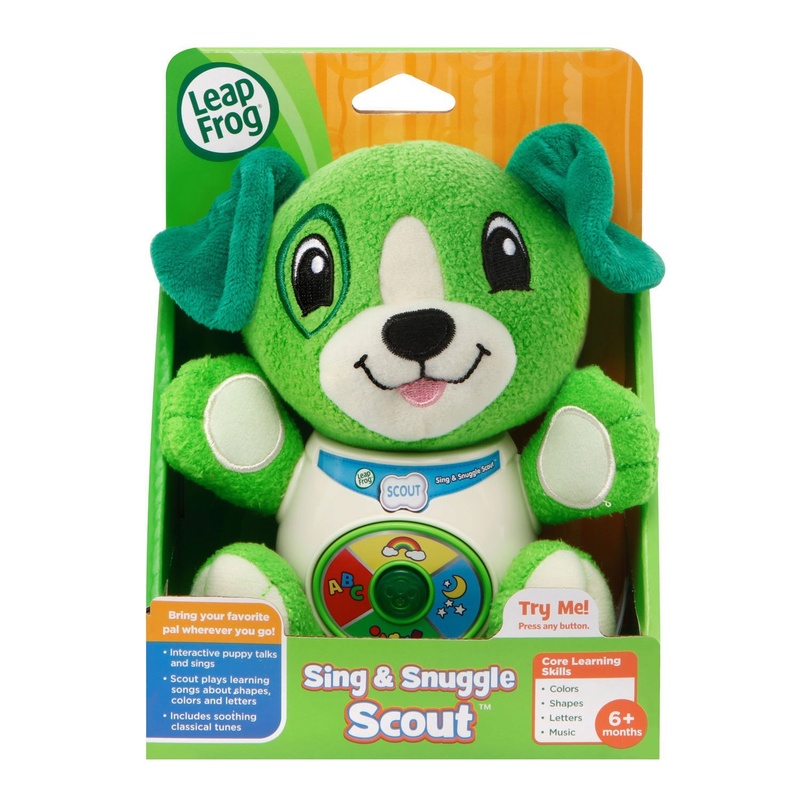
The fighter-rogue opened her utility belt again and took out a pacifier of ease from the Forest of Avent. By then, she has sneaked close enough to the beast to push it straight into the mouth, and it was just in time as well because Grandma dissipates like a smoke and fades into thin air, just like the way it had materialised into this plane. The magical pacifier seems to work; the beast quietened down for a while. The wizard waved his hands in intricate patterns of power. At the right moment, he threw a figurine of a green dog and soon another guardian spirit was summoned. It’s the fearsome Scout the green hound.

This is the figurine of Scout the green hound, needed to summon the guardian spirit

The hound howled into the cold mountain air and magical notes can be heard. The wizard shouted to the fighter rogue to cover her ears, because the howl can cause an 5 by 5 area effect of sleepiness. As for him, he is immune to sleep spells; he had problems sleeping as it is. With the pacifier of comfort and the sleep spell howled by the hound, the beast appeared lethargic and slumped on the ground.


The battle is over, at least for tonight.

Sunday, August 20, 2017

My little life coach

Time flies. My son is nearly 7 months old now and personally, it feels like I've had him for like 7 years. They say that the day passes slowly, but the years spin by fast. I totally agree. Each day leads to night and the night merges into day again, so while you're doing your routine and trying to get by each day, you'll realise that months or years had gone by without you noticing.


Now that the 'honey moon' period for being a first time father had died down, it's all about the daily grind. I think I spend a lot of time with him, but it's always not nearly enough. From a needy and helpless baby, my son has grown to become opinionated. If the milk is not nearly warm enough, or if you didn't hug him in a way that he is accustomed to, he will make his displeasure known to all within a 500 m radius. He is getting harder to take care, because he is less like a rag doll and more like a human now. When the day is bad, I'll remind myself this: would I rather a listless, unresponsive child for me to assert my will onto, or a cacophonous crying baby that is alive? Easy choice there.


He is getting heavier with all the tonnes and gallons of breast milk, expressed so painstakingly and patiently by his mother, and sucked through his tiny toothless mouth. My arms and back muscles are also getting stronger in order to carry him for longer and longer periods of time. The journey thus far might be difficult, but I always remind myself that my son will not be a baby forever. One day, he will grow out of hugging his not-so-cool parents and not wishing for one more kiss or one more bed time story. Everything has his own time and season, so dance in the rain while it's raining.


On reflection, I think everything about having a kid is antithesis to being financially free. Here's a list of things:

1. I get to work lesser hours because I need to spend more time on family. Less work less pay less savings. You can compound the lost savings @ 5% over 30 yrs and see how much you actually 'lost'.

2. My electricity and water bills rose up faster than STI over this year. It used to be about $100 to $120 per month, but now it's dangerously hovering around the range of $180 per month. That's like a 50% increase.

3. I'm such a shopper these days that I qualified for GOLD member for qoo10 for several months now. To qualify for a GOLD member, you need to spend certain amount and consistently. And that cost money. Babies consume a lot of disposables. I'm sure all the diaper, wipes and milk formula companies are smiling all day because they are earning money while my son eats, poops and sleeps all day.


The 'baby monster'

But these things no longer concern me. Loving and nurturing my son concerns me. I think if you're thinking about me, me and me, you're not ready for a kid. It's nature's way of doing a filtering and selection process for parents, sussing out those that are not ideal to take care of the helpless, pinkish little humans. Only crazy irrational people who don't mind delaying their financial freedom plans by sacrificing their income and ramping up their expenses will want a kid. And most importantly, those same irrational human being must have a spirit of self sacrifice for something other than yourself (you can argue that your kid is but a vicarious extension of yourself, of course, but that's a different fight for a different day). But now and then, nature screwed up and let certain people slip through the cracks, to the detriment of their child, and perhaps their parents as well.


If you can survive the financial bombs that are sure to hit in your general direction, and also survive the daily grinds of taking care of the kid, you get to taste the sweet fruits. You get to see the world in the eyes of the child again, but this time, with a matured and hopefully reflective mind. You will join your child to giggle at ordinary things viewed with extraordinary innocence. Every sunrise marks a brand new exciting day of discovery and adventure, shortened only by sun set. You'll see the really important things in life - a heart to love, a hand to hold and a warm megawatt smile. Those simple things will take you all the way up the highest mountain and down the deepest sea and back.


Come to think of it, I think it's a fair trade. I feed, shelter and nuture my son, and he in turn teaches me life lessons.


Thursday, July 27, 2017

A second that lasted for eternity

There's so many things to take picture of and to take videos of, especially when you have a kid. There are kind advice to take more videos and pictures so that you can remember those special 'first' that happened for your child. I remembered that when I was younger, I don't really have much photos to show for. But at the very least, I have some photos to show for. My parents had a lot lesser, and my grandparents even less so. Perhaps each major milestone, they will have a family portrait or so. Those formal, all suited events to commemorate someone's wedding or graduation. Significant events. These days, we take pictures of every little inane thing that happened in our lives. More is not more. As we have more pictures, each picture takes a smaller share of the significance of the collective pictures taken. It's like the last squeeze of the water colour pastel; it's not enough, so you add more water to dilute it so that you can paint the sky blue. But you ended up with a shade of blue so diluted that it's like a copy of a copy of a copy of the real azure sky.


Does having more pictures mean that the next generation will have much more things to remember their childhood? Not necessarily so. A picture or a video can sometimes distract us from enjoying the moment as it happens. Imagine you are looking up the night sky to watch the national day fireworks. In order to enjoy that ephemeral moment for an eternity, you look away at your pocket, whip out your phone, turn to the camera app and look at the fireworks through the filtered lens of your hand phone screen. That picture you took of the fireworks is not the fireworks you actually experience without the distraction of taking a photo. First of all, it's a series of static pictures and is no where near what you can observe directly. Secondly, even if it's a video, there's the missing boom of the fireworks and the accompanying echoes that reverberate through your whole being, or the strange mix of your sweat and the smell of the smoke as the fireworks explodes up, lighting the night sky. Or the feeling of holding the hands of your loved one as you share this special moment together. It's just different from watching a grainy video taken from your phone.


Before my son was born, I was musing over whether to get a good camera to take pictures and videos of our shared experience. I decided not to, because I know I'm not such a person. In retrospect, and on hindsight, I think I made the right choice. I'm know that I'm not such a person, and I also know that I don't want to be such a person. The former is who I am, but the latter will define my future self and chart my destiny. Choice is important. Even if the everyone is doing it, doesn't mean that I should do it too. Why? Choice.


I'll still take my videos and pictures of my son, who is getting more vocal by the day. I'll still take pictures of his silly grins and videos of his funny times. But those are insignificant moments. For the really significant moments, like watching the fireworks with him under the night sky while holding his tiny hands, and watching his bright brown eyes brighten just as the fireworks exploded into a dizzying display of lights and sounds, I know I won't be whipping out my hand phone. I'll be busy enjoying the moment, soaking in the sight and the sound, and committing it to memory.


When I'm old and my vision fades together with my hearing, I know I'll still be there, holding his tiny hands, watching and hearing the fireworks together, like it's my first time.

Monday, May 15, 2017

The evolution of needs and wants

My baby is slightly more than 3 months old now, and I learnt a lot from the experience of being a first time father. One of the first things I get to observe is how the needs and wants of the child develops as he gets older.

When my son is less than 1 month old, the term 'needs' and 'wants' are interchangeable. You can even say that the needs and wants are indistinguishable from one another. The default mode of the baby is sleep. If he is not sleeping, it's because of the following reasons:

1. Food
2. Change of diaper
3. Hug

Took us a few weeks to get it right, but once I thought I mastered the art of baby soothing, the baby evolves. After 1 month to 2 month, the needs and wants changes, so we have to adapt to them again. Here are the needs:

1. Food
2. Change of diaper
3. Hug in the right manner
4. Rock

Okay, it's still alright, I thought to myself. I can't hug it anyhow, because the baby needs to feel right. I also have to rock the baby to quieten it down. Thankfully I have a gym ball that my wife uses pre-child, and we can sit on it while hugging the baby and bounce up and down on it. That makes the rocking part manageable, because at this point in time, we're holding a 5kg weight that can scream, puke, cry and smile.

Around 2 to 3 months, just as we thought we got the hang of it, the baby evolves again. They say change is the only constant, and I say the person who came up with that saying must have been parents. So their needs/wants became:

1. Food, but must be of the right temperature
2. Change of diapers, but must be fast
3. Hug in the right manner, but must change position every now and then
4. Rock, but only after doing all the above
5. Temperature - must be cooling enough
6. Play - you need to spend time interacting with me!
7. Sleep in the right position

Wah, suddenly as the baby's sight improves and the brain functions start to whir in action, there's more and more things that we need to do right. If the past history can be extended to the future, there'll only be more needs and wants, and soon there will be a differentiation between the needs and the wants. Then what happens?


Depending on individuals, there'll come a inflection point where the needs and wants stop increasing. It starts to stay constant, then decrease as we age further. All the wants are removed, leaving only the bare basic needs. And when we're on our dying beds, I suspect strongly that the following needs are as follows:

1. Family
2. Happiness
3. Free of suffering

I've mentioned earlier on in the article what my son's 1st month needs are. Let's review them again:

1. Food
2. Change of diaper
3. Hug

Hey, isn't that the same wish list as that in our dying beds? It's of a different form but it's essentially the same theme. Food, change of diapers and hugging is the expression of the same values as family, happiness and free of suffering, but specifically exhibited by a baby. Food and change of diapers is the baby's equivalent of 'free of suffering'. Hug is what the baby's equivalent of 'family'. I've always said that a child is like a buddha-baby. A child is extremely enlightened in what the important things in life are, and we, as adults, can take a leaf out of his/her book.