Thursday, April 26, 2018

11 questions from Tribe of mentors

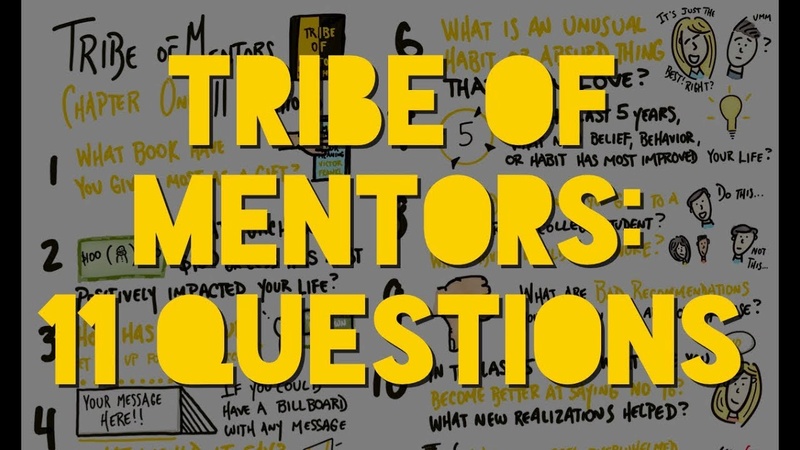
I'm about to start reading on Tim Ferriss's Tribe of Mentors. If Tools of titans is a great encyclopedia of self help knowledge, I think tribe of mentors wouldn't do much worse. Tim went ahead to ask several people the same 11 questions, which are listed down below. Since I haven't start reading, I thought I will try to answer them first so that I get more out of reading what others have to say. So, here's my answers to the 11 questions:


1, What is the book (or books) you’ve given most as a gift, and why? Or what are one to three books that have greatly influenced your life?

Without any doubt, the most given book is The Giving Tree by Shel Silverstein. It's a children's book, and I love it because it has deep meaning for an adult to take home and reflect too. I've given it (together with my wife) to at least 3 different people. It just takes 5 mins to finish reading from cover to cover, but the lessons stay.

Which 3 books greatly influenced my life? This is a hard one for me, because I read so much. To just pick 3 is going to be really difficult, so I'll just pick the first 3 books that comes to mind. They are:

a. Trading for a living - Alexander Elder

It changes the way I look at charts. I'm still using the techniques first espoused in the book. I read this every now and then to refresh the knowledge.

b. E-squared - Pam Grout

Wow...this book changes the way I think about reality. How to convert thoughts to reality is what this book is about. It seems like pseudo science and magical mumbo jumbo, but I don't care. If it works for me, it's good enough for me.

c. The miracle of mindfulness - Thich Nhat Hanh

This is the first book that I've read about meditation and mindfulness. Greatly changes the way I handle my emotions and it profound effects on me. Even started a 30 days mediation practice that still affects me till now.


2. What purchase of $100 or less has most positively impacted your life in the last six months (or in recent memory)? My readers love specifics like brand and model, where you found it, etc.

The one thing that comes to mind is the Oral-B genius 8000 electric toothbrush I bought from Amazon during a discount. After shipping, it works out to be about $140, which I shared with my wife. It started as an experiment to see what is the fuss about electric toothbrush. I was against it in the past, because I thought it was such a waste of money. What can an electric toothbrush do that a normal sub $10 can't do? After using, I though it was the best thing I ever upgraded in my life. You don't spend $140 on an electric toothbrush, you spend $140 to have the feeling of having visited a dentist to wash your teeth every night.


3. How has a failure, or apparent failure, set you up for later success? Do you have a “favorite failure” of yours?

A hard question for me. I was racking my brains to think of a major failure...then I thought of my stock investment 'failure'. I had my stint of value investing, went deep into longcheer thinking that it's a value buy, averaging all the way down until I capitalised and cut loss. What a loss it is. Looking back, it's just 20 to 25k max, but it was a lot of money to me back then and it's a big part of my networth. I went into depression, at a point even having weird thoughts about jumping off. It's that bad.

I self healed after a month or so of hating everything, especially myself. Work brought me out of the misery. No matter how angry and frustrated I was, I'm never angry with my students. They are innocent. So after every lessons, I felt a little better. It was then that I discovered work is more than about making money to me. As much as I am making a difference to my student's grades, they are also making a difference to me. It's an epiphany.

After that bout of depression, I grew much stronger mentally. I grew a lot more chillax about life and money especially.


4. If you could have a gigantic billboard anywhere with anything on it—metaphorically speaking, getting a message out to millions or billions—what would it say and why? It could be a few words or a paragraph. (If helpful, it can be someone else’s quote: Are there any quotes you think of often or live your life by?)

This is on my whatsapp profile for a while already:

"You may shoot me with your words,  You may cut me with your eyes,  You may kill me with your hatefulness,  But still, like air, I’ll rise."- Maya Angelou

It's a sort of resilient guai-lan-ness that I like. I strive on your negativity and your discouragement. There is a very strong motivation to prove naysayers wrong. But these days I'm not so angsty anymore haha


5. What is one of the best or most worthwhile investments you’ve ever made? (Could be an investment of money, time, energy, etc.)

It has to be my blog called Bullythebear. From it, I derived so much things out of it that it's just ridiculous. Here's a list of what the site did for me:

a. Met a group of close like minded friends. Some of them I knew for over a decade already!
b. A place to crystallise my thoughts. I don't know what I know until I type it out and see for myself
c. Some cheap thrills like ad money that I collected over the years. Not a lot but still thankful
d. Opportunities opened up for me, like a few business ideas, recommendations for tutors etc
e. Tremendous improvement in writing skills and editing
f. Leads me to learn blog related things like digital art, image edition etc

I've been writing on this blog since 2006, so it's nearly 12 years of writing and finding my writing voice. Hands down one of the best thing I've done for myself.


6. What is an unusual habit or an absurd thing that you love?

I have a little bolster that I've been using since I was a kid. It's still with me, and I still hug it to bed every night. I call it some name that I'm too embarrassed to say, so don't ask me. I love it because it's an 'old thing', and it reminds me of a lot of things. It's sort of like a memory time capsule, except it's soft and hug-able. And I've threatened a few people who wanted to throw it away.


7. In the last five years, what new belief, behavior, or habit has most improved your life?

I've a few systems that I've set up that greatly improves my workflow:

a. I'm a tutor. After each lesson, I will write what transpired during the lesson and the reflection, and putting it up on evernote. I used to do this by memory, only writing it fairly recently on my notebook and even more recently, 'upgraded' to put it on cloud via evernote. This way I can take it everywhere I go.

b. Started doing homework on charts using investingnote. I used to do it on an infrequent basis, but I ended up missing some of the things that fit my system. These days, I spend like 10 mins or less running through the whole watchlist, and put those under close watch for needed actions within a week. This means that during a week, I will just focus on those under close watch. It improves my workflow and lets me know what to do if it happens.

c. Writing a diary. I started this habit last April and had been jotting down my daily affairs almost every day since. I use an app on my handphone and I will take a few minutes just before I sleep to 'close off' for the day. Not sure what benefits it brings to me yet, but when I do, I'll let you know through an article. This is still an experimental habit to see if there's improvement in my life. Still work in progress.


8. What advice would you give to a smart, driven college student about to enter the “real world”? What advice should they ignore?

Advice: Unlearn everything you learn in school. Don't think that having theoretical knowledge beats practical skills. It doesn't. Be humble, be curious and learn how to take shit. Say yes to everything because you're not ready to know what's not a 'no' for you yet.

Advice to ignore: Go for passion over money. You need both, probably more of the latter than the former.


9. What are bad recommendations you hear in your profession or area of expertise?

I'm a tutor. I've heard many people saying rote learning is bad. They should learn smart. It's bad recommendation because while we have all the information we want at our fingertips, if you don't memorise certain things, you won't be able to use them. I've students who don't want to memorise formulas, saying that there is a formula sheet given during exams. But if it's not in your mind, it's not going to get used, that's what I always tell them.


10. In the last five years, what have you become better at saying no to (distractions, invitations, etc.)? What new realizations and/or approaches helped? Any other tips?

I've becoming better at saying no to projects that doesn't excite me and doesn't make me want to wake up in the middle of the night to think about it. If it's not hell yes, then it's a no. I get better at saying no because I realised that I'm at this age where I don't have to live other people's dreams and aspirations. It's time to live for myself. It might be a little selfish, but not now then when. There's also much more clarity in knowing what you want to do in your life.


11. When you feel overwhelmed or unfocused, or have lost your focus temporarily, what do you do? (If helpful: What questions do you ask yourself?)

I think the first thing is to be aware that I'm actually losing focus. It's not always apparent. Once I know it, then it's much easier. I can either tell myself I will do it anyway because of constraints, or say that I will come back to it when I have more will power and energy. A lot of time and energy is wasted when I wasn't even aware that I'm not focused...you sort of just drifts along without that realization.

I don't ask questions to myself. Usually I'll just tell myself mentally, or voice it off silently, "Okay, I can do this, I can do this".
Wednesday, April 25, 2018

Did you give away your equity freely?

I wanted to share this idea regarding child caring. The default way these days is for both parents to work while hiring a foreign domestic worker (or two) to take care of the kids. That is the most economic and financially savvy way. Hiring a domestic worker is much cheaper than going to infant care or child care, and have more utility. That is also the reason (I suspect) why my mum-in-law insists on wanting us to hire one. I vehemently refuse.

I seek to explain why here. But let us go to a separate domain of raising capital for companies first. I'll show you why knowing that stray bit of information is important in understanding my decision in not hiring a domestic helper.


HOW TO RAISE CAPITAL 

There are two ways in which a company can raise capital. Either give up some ownership by selling equities or retain ownership by borrowing money using debt. Most companies do a mix between these two extremes because there are some advantages and disadvantages for doing so.

If a company raises capital by selling equities, they lose ownership in the process. Future profits might be more but the original owners will get a lesser cut out of it. On the other hand, they don't have to pay anything now (let's exclude the fees to raise the equities now to simplify matters). The 'payment' is taken from the potential future profits of the company, which may or may not materialise. The company essentially raises cash in the present by paying from their future. Examples of raising capital by issuing equities are issuing new shares, rights and ipo.

If a company raises capital by borrowing money, they lose money right now in the form of interest paid on the borrowed sum. On the other hand, they retain full ownership and they don't have to pay any potential future profits to their debtors as the interest is fixed at the time of borrowing. The company is essentially raising cash in the present by paying right now. Examples of raising capital by issuing debts are loans from banks and bonds.

I want to highlight that neither methods are superior in itself. It's all based on circumstances. However, there seems to be a bias against borrowing money. Well, don't be. Borrowing money is perfectly fine, especially if you didn't over leverage and have the means to pay off. Businesses borrowing money to earn a greater profit by taking on projects that they can't otherwise undertake, is perfectly normal.


HOW TO RAISE HELP FOR CHILDCARE 

There are two ways to do this. You can ask someone to do it or you can do it yourself. When I mean someone, I mean anyone other than the parents. It can be a foreign domestic helper, a nanny, your mum in law or any of those commercial child care services.

If you raise help by asking someone else, you are like a company issuing equity. You are giving up ownership of your child to them. That someone else have a claim on the future relational profits that came from taking care of your child. Some parents are afraid that their hired helper (or mum in law) is getting too close to their child, to the extent that they prefer to be with the helper rather than the parents. This is a good example of a future claim on relational profits. The disadvantage is that you can't control formation of habits and values because transmission of such things are formed through daily contact, and you had already given up ownership on this.

If you raise help by doing it yourself, you are like the company borrowing money by issuing debts. You have full ownership of your child, and what values and habits you want to inculcate. Any future relational profits will be yours to gain. The drawback is the time spent and the potential income lost from doing it yourself. That is the interest you have to pay for 'borrowing', but you retain full ownership of any relational profits (or losses) yourself.

Most parents do a mix between these two extremes. Some activities they choose to do it themselves, while others they choose to seek help. The actual percentage varies according to circumstances, just like how the companies will choose their own debt/equity ratio. I've seen extreme cases too, where a household hires a foreign domestic helper while both parent works. Maybe a grandma stays in to watch over things. This is nearly 100% equities already. Another extreme case is where father works, mum quits her job to be full time housewife. She takes care of home matters all by herself. That's like a 100% debts scenario, based on my definition.


CONVERTIBLE BONDS?

This way of looking at child caring in household leads to interesting situations if we take the model of raising capital by companies to the extreme. Let's take a look at just one funny case.

Companies sometimes issue convertible bonds, so it's a mix between debt and equity. It's initially a bond paying fixed interest until a certain call date where the holders of the debt can convert it to equities, thus having a partial ownership of the company's future profit. If we extend the concept of convertible bonds to raising help in child care, then it's like a household hires a nanny to take care of the child, then after a period of time, marries the nanny into the family and thus the bond becomes an equity! Sacrilegious!

I'm sure readers can think of even more ridiculous application, so do share at the comments below.


I've seen a family with a household of 3 maids. One to cook, two to take care of household chores because the home is damn damn big. He is one of the bigshots of a media company living in the heart of Orchard road. Of course, this suaku Singaporean that is me is stunned like vegetable. Still yet to see a house filled with a harem of manga inspired 'maids'. That will be a sight to remember, haha


MY HOUSEHOLD

I work at home, so do my wife. Sometimes we have to go out for work, but that's just a few hours. My mum comes over to help out during the day, but leaves at night, so we take over the night duty. It's my wife who mainly handles the night part while I'm the backup because I have more work than her so I can't rest during the day time while she can (when my mum takes over). Selected activities are done by my mum while the rest are taken up by both of us. So, I'll say for my household, we're like 40% equities, 60% debts. Remember? Equities mean giving up ownership by asking for help, while debts mean retaining ownership by doing it yourself. So, I'm about 60% hands on and 40% outsourced.

My brother does quite the opposite from me. He hires help and outsourced the work to my mum who stays for about 6 years at his place. Both wife and himself are working full time, so it's a 100% equities for his household. I can see that the child is more attached to the helper and my mum, and there are periods of tension between my brother's wife and my mum because of this relational profits issue. They should have known better I suppose, because by issuing equities, they are giving away future relational profits to the very people who took care of the child. It's unavoidable - we like people more if they spend time more with us. Being a parent is not a right, it's something you have to spend time to grow into. Learning from this experience is also why I am a bit more cautious in giving away equity so freely.

Not wanting to hire help is a personal choice and personal preference. To be honest, I've seen families work well too with both parents working and the kids are taken care of by foreign domestic workers. But take note, usually the success cases I've seen are where the helpers are staying with the family for prolonged periods of time. 5 to 10 yrs? The helpers are not the come and go type. And there must be a family member at home together with the helper, so it's usually the grandma from either side of the parents. There is also a critical period too, usually before the kid enter primary school. Hence the first 6 years is the most important part of the kid where a lot of things are set right or failing which, it'll be hard to reverse.

Dad working + mum working + helper - family member at home = High chances of failure. Not going to take the chances after seeing what I see.


FINANCIAL SENSE NOT EQUALS COMMON SENSE

You are losing common sense if everything fulfills financial sense. These days, everything seems to be poisoned by financials. If it doesn't make sense economically, it's a bad decision. You weigh the decision of whether to have a child by looking at money. You weight the decision of buying a car by looking at money. You weigh the value of a university degree by looking at money. It's not wrong to make a decision by analyzing it financially; it's wrong if you make a decision only by analyzing it financially.


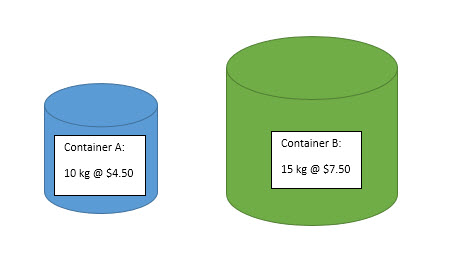
Look at a typical school based question. Container A has 10 kg of say milo powder selling at $4.50 each. Container B has 15 kg of the same milo powder selling at $7.50 each. The typical question is, which of the two containers should a fictitious person, say Mary, buy?

The unit price for container A is $0.45/kg, and that for container B is $0.50/kg. If you did not choose container A because it is cheaper per kg basis, I'm quite sure you'll be marked wrong. A more clever question is this: given that container A has a lower unit price, why should Mary buy container B instead?

a) Mary needed between 10 to 15 kg but not more than 18 kg, so 2 containers of A will be too much but one container of B is just enough

b) Mary needed the size of container B to store things

c) Container A has an expiry date that is nearer than container B

d) Mary likes the green colour of container B. She hates blue.

Must everything be in dollars and cents? That's just one perspective, isn't it?

Financially, it's better for both parents to work to earn the income, hire a foreign domestic helper with the earned income, take care of the kids and settle everything. In reality, it doesn't work as nicely as it should be. I've seen a lot of cases where the parents did not build a strong foundation with the kid, and when the kid starts to have behavioral issues (especially when they started school and mix around with others) and the parents start realising something is wrong. One of them, usually the mum, quits her job to oversee things, but it might be too late. If the parent did not reach a certain level of trust in the relationship, he or she can't start issuing advice. The kid just won't be able to accept. This is especially so for boys, because I think they are genetically programmed to rebel against his parents in order to forge his own sense of identity.

Parents, don't just be an ATM to your kid, please.

Tuesday, April 24, 2018

FIRE

Wanted to share my thoughts on what is meant by FIRE. I've a disclaimer here - I've not read a single piece of literature on this subject matter and I'm simply deconstructing the word based on what I've read about the components and piecing it up together. So, if I'm wrong, don't get so hot and start flaming me and set me on fire for anyhow firing an article on fire.


FIRE does not mean financially indebted, retired early. It stands for financially independent, retire early. Let's break up into the two parts : financially independent and retire early.


FINANCIALLY INDEPENDENT

Financially independent really just mean that you have an option not to work for money ever again. To be financially independent, we can go through 2 extreme models. Usually people take a path somewhere in between these 2 extremes. The 2 extremes are the networth method and the cash flow method.

The networth method is to have enough liquid assets after accounting for all debts, such that it can last you until you leave this place permanently. Let's say you know your annual expenses  and you project that you have 40 years from now till you expire. After taking into account inflation and money to pay off all your debts, you saved up 50 times your annual expenses. I think you are financially independent already. Most people can't do it this way, because the mathematics is just brutal. To pass the criteria, you either have to be an extremely high saver, be extremely low maintenance, have an extremely reduced life expiration date after retirement (either by delaying retirement age or die early), or all of the above.

It's not easy to do, but it's the most Conservative way because there's no reliance on any investment returns. Just hope that there won't be hyper inflation for extended periods of time and that the currency you saved in is still legal tender. But those are risk everyone will have to par take, not just you.

The other method to be financially independent is to go through the cash flow method. This means that whenever the income you generated passively, equals or exceeds your expenses, you are financially independent. There's a lot of negative connotation to the word 'passive', so let's elaborate on that. Passive does not mean lying on the beach, drinking cocktails while waiting for bags of money to drop at your lap. Passive means that you don't have to be actively present at the source where your money is made. Passive does not mean that there is no active involvement in the generation of income. It just means that you don't have to be there in order for the money to be made. With that out of the way, will the cashflow method be easier to achieve?

I think definitely much easier than the networth method. If I spend 3k a month, or 36k annually, and assuming I've a constant investment returns of 5% pa, I will just need 720k to fulfill the definition of being financially free, cashflow wise. On the other hand, if I'm doing the networth way, assuming I retire at age 60 and expire at age 90 (a good 30 yrs of life), I will need a comparatively larger amount of 1.08 million. And I haven't even included inflation.

But the relatively simpler status of being financially independent by the cash flow method has a drawback. It is very dependent on external  market factors, like the returns of your investments for example. I suspect people might hop between being financially independent and not financially independent in stretches of say 5 to 10 years. This method is obviously less conservative, unless u choose a very low investment returns, maybe to the tune of 2 to 3% pa, but correspondingly, the amount to cross the hurdle becomes larger. Interestingly, if you choose an increasingly lower investment returns, the cashflow method approaches the networth method. An investment return of 0% pa means that your passive income generated is simply the money you hide under the bed that u are withdrawing every month for your expenses. Not any different from the networth method.


RETIRE EARLY

To retire early, we must first know what is meant by early. Earlier than what? I think it's compared to the retirement age. Locally, that's like 65 years (maybe that is slowly being pushed later to 67 now, if it had not been done already). This means that as long as you are retired before age 65, you are considered early compared to others.

But is retire early the same as retired early? 'Retired' suggest the status is being forced onto you, while 'retire' suggest you actually force it on others. If you retire early, you force your boss to look for another replacement. If you are retired early, your boss forces you to look for another job. Crudely put, it's a matter of whether you got fucked or you fuck someone. Seldom do we see a situation where both the boss and the employee are on the same wavelength at the same time, with regards to the topic of early retirement

What are we retiring from? Not from life, hopefully, though it could be another morbid interpretation. Retire early from work most likely. Why retire early from work? Many reasons, and I list some below, non-exhaustively :

1) poor health, either personal or of closed ones
2) freedom to pursue other life goals
3) sucky work environment
4) for family

Because modern work entails being stuck in a work environment for maybe 70 to 80% of your waking hours, retirement from work means a lot of time is liberated to do other hopefully more interesting and worthy things. Unless, your work is interesting and worthy and pays reasonably well, so you don't mind spending close to 80% of your waking hours being stuck in a work environment. In fact, you might not even notice your environment, or the time spent, because you are constantly in a state of flow - that nice spot where challenge, skill and creativity all come together in a mass orgy that you can't help but stare continuously, oblivious to anything else.


PUTTING IT ALL TOGETHER - FIRE 

To reach FIRE is quite different from just FI. It's like you have 250 for your PSLE and feeling quite good about yourself, until you realised that everyone gets around 265. To retire early and also to be financially independent is like the top of the food chain, the king predator. You have to be so good at personal finances, managing your investment returns and also likely having a good career paying top dollar while living like Diogenes. Simply put, it's not for everyone, and you don't have to jump on this bandwagon because everyone else wanted to do it.

To see how hard it is to achieve this, let's just use a simple example. Say u stop school at age 25, and wanted to retire early and be financially free at age 40. I'm a soothsayer so I know you will expire at age 85, so that's a good 45 years of life after retirement that had to be funded by 15 yrs of work life. You also have to feed yourself during the 15 yrs of working life, so during that precious 15 yrs of income generating period, you have to earn enough to feed yourself for 60 years. In other words, every 1 yr of work you'll have to save for 4 yrs of non-work. That's a 80% saving rate for the 15 yrs of work that you do. How many can save at 80% rate for 15 years?

I can, if I'm single, lives with my family, eat simply, and life simply. Harder to do with a family, esp in Singapore. Not impossible, just very hard to do. That's why I say it's the elite of elites that can truly reach FIRE.

Even though FIRE might be hard to achieve, but we can always strive to reach FI. Interestingly, in the past when FIRE is not known yet, it's just FF (financial freedom) or FI (financial independence) here and there. So I must conclude that the retire early part is a pretty new addition to the personal finance jargon. Who knows maybe in another 5 or 10 yrs, we will be seeing people wanting to get FIRED. What's FIRED? Financially Independent Retire Early Debtfree.

But wait...isn't the purpose of being financially independent to actually pursue what you want to do? And what happened to the independence part? How come after achieving FI or FIRE or FIRED, we are still following the conventions set up others? Isn't it jumping from one corporate rat race to another financially free rat race? I admit these are different races altogether but you are still a rat if you're racing with each other to an arbitrary end game, not set by yourself. When your choices and happiness are dictated by others, you are not free at all. At best, you are less chained but still chained nevertheless.


WHAT ABOUT ME?

You'll notice that I never said I wanted to retire early, so that's never a goal of mine. I'm happily and purposefully driven in my job and will be happy to continue working as long as others would have me. But I do intend to reach financial independence years down the road. Maybe when I'm 55? It's also never a hard target, more like a personal milestone or achievement if I can do it. If I can't do it, so be it.

That's why I hate it when people start to do competitive financial goals. Oh, I saved 100k when I'm 25. Nah, that's nothing, I saved 200k when I'm 20. I'm better, I saved 300k when I'm just 5. If you find yourself doing that, you have to reflect whether this is what you want. Is it any different from running the corporate rat race that you're so dying to escape from? I realised I'm part of this game somehow, so I stopped putting up a single post on my savings every year. If I ever do, it's more for my personal accounting (so that I know how much I accumulated each other). We save what we can, so you don't have to know what's mine. If I cause you to feel red or green, please accept my sincere apologies. I was young and insensitive, and I do not know the repercussions of my actions.

I know I have good financial habits. I save every month and I don't have devastating bad financial habits. I spend my money purposefully most of the time and I don't deprive myself from getting the quality of life that I want throughout this journey.

If I can live life without worrying much about money because I am secure and knowledgeable about it, I think I have already achieved what I set out to do - financial freedom.

Monday, March 26, 2018

Feed the fish, or fish to feed?

Ever since I became a parent, every day I have to think about choices and its implication. I often wondered about my role as a parent, and thought about whether I am making the right choices right now that might affect my son in the future. So sometimes, I feel guilty that I am relaxing in front of the tv, instead of teaching some stuff to my kid. You know, stuff like that.

As a parent, my role to my son is two-fold:

1) Make sure he survives, so that will include feeding, bathing, changing his diaper and be safe from harm.
2) Make sure he survives without me around.

The first goal is easily done. You can do it with a foreign domestic helper. You can do that with any grandparents around. You can outsource it to a childcare center or infant care center. It took me a few months to get to a stage where it became routine for me. Me and my wife knew what to do everyday and we can do this all the time without much disruption to our own personal lives.

But the second goal...that is something. If the first goal is to feed the fish, the second one involves teaching my son how to fish. This will broadly encompass education, including teaching of moral values to the alphabets and the plus minus times divide, to learning how to pick up after himself, feed himself and so on.


I have a feeling the second goal is a goal that will take me all the way up until my grave. It is never ending, and in a good way too. I hope I am wise to always have something to teach my son too. But it is so hard. Say for example changing his clothes. It's so efficient to just take it off him, whether he is struggling or not. A few things will go through my mind: do I involve him in the process, no matter how clumsy or how distracted he will be? Or do I quickly go through the routine without his involvement so that I can move on to the next task at hand? I know what I should do, but sometimes the mind is willing but the body is weak. And I suspect these kind of choices are making me guilty every now and then.

I think my job as a tutor is the same. Student asks a question. I can answer it straight away and we can move on to the next agenda. Or I can take the time to make him understand, so that the next time he encounters such questions, he don't have to ask me again. While it is right to always do the latter, sometimes circumstantial time constraint means that I have to make a judgement of whether to feed him or to teach him how to fish. It's a balance between the two. If I keep feeding him, he won't be able to survive without me (hmm, that's a evil thought as a per hourly paid tutor). If I keep teaching him to fish, he'll starve to death right now, nevermind the future.

Balance, balance, balance. Everything in moderation.


Sunday, March 04, 2018

Indifferent to the difference between needs and wants

Today I was chatting with some members in the Bigscribe facebook group regarding fixed and variable income. It's just the usual banter that happens daily, so it provides an environment where you get saturated with how to build wealth and generally live a good life. Like diffusion and osmosis, you have no choice but to be the average of the 5 people you hang out with.


But that's not the point of this post. I was reflecting on my journey regarding the separation of needs and wants. You know the usual rules when it comes down to controlling expenses, that gurus will first ask you to list down your needs and your wants. By strictly managing between your needs and wants, you can reduce your expenses. I've nothing against this, and I've also done this before, but no longer do that anymore.

So why is that so?

In this particular aspect, my journey is as follows:

1) Know nothing between wants and needs. Just spend as long as I have cash or credit.
2) Know the difference between wants and needs. Just spend on the needs and cut back on the wants.
3) Question the difference between wants and needs. Start to spend more on the wants to enhance quality of life.
4) Know nothing between wants and needs. Just spend as long as I have cash or credit.


Life is often like a game of snake and ladders. We travelled so far to go back to square one.


It seems that I have travelled around the world and went back to square one. But this isn't the case! On the surface, it seems that I no longer care about the needs and wants, but the mindset is totally different. I don't care much about spending now because I already know that even if I were to go mad with shopaholic disease, I couldn't possibly bust my bank account. Hence the difference between stage (1) and stage (4) is a deep understanding of myself and my limits. Everything is internally controlled and there is no need for an artificial demarcation of spending into needs and wants.


There are many other examples where I have gone full circle and went back to square one, well, superficially. But the journey is not just what happens on the surface, it is a journey travelled internally as well.


And what is essential is invisible to the eye.

Wednesday, February 28, 2018

Portfolio sector breakdown

The market had been down in Feb and I had been spending my cash to whittle it down to a manageable level. If not, the cash will be like a runner wearing parachute while running. It's safe but it'll drag me down. I took stock of what I had and what the different sector allocation relative to each other. It's right below in the pie chart. Take note that the percentage is based on capital allocated and not based on market value.


You might not agree with how I labelled the different companies in my portfolio though, but that's what I thought of their characteristics:

Reits:
1) Aims
2) Capcomm trust
3) First reit
4) Mapletree com trust
5) Fraser cpt trust
6) Capitamall trust
7) CDL H trust
8) RHT health trust

Top two in the Reits sector are Aims and First reit

Bonds/cash equivalent:
1) FCL Trea 3.65% bond
2) Vicom
3) Hyflux 6% CPS
4) Feb 2018 savings bond

Top two in the bonds/cash equivalent sector are Feb 2018 savings bond and Vicom

Small caps growth:
1) Sheng siong
2) Kingsmen creative
3) Isoteam
4) Food empire

Top two in the smalls caps growth sector are Food empire and Kingsmen creative

Oil/commodities
1) Sembcorp industries
2) Sembmarine
3) Olam

Top two in the oil/commodities are Olam and Sembcorp industries

Bank
1) UOB
2) OCBC

Top most in the bank sector is OCBC.

Others
1) ST engineering
2) SIA engineering

Top most in the Others sector is SIA engineering

Pure Cash
1) Savings accounts
2) Cash
3) Poems money market fund
4) Fastsaver CIMB

Top 2 in the pure cash sector is Fastsaver CIMB and Poems money market fund


Based on marked to market value of my portfolio, my pure cash position is about 30%. If I needed to raise more cash, I could sell off some of the bonds/cash equivalent to boost up the warchest if needed. This feels about right. Since my work is starting to get busy, I expect my cash position to boost up even more as I can begin the 50k savings challenge for the year 2018 again.

I forgot that there's a small percentage of crypto currency too, about 2.3% currently of total capital allocated. I intend to raise it to about 3.5% of total capital allocated. It's money I hope I won't lose but can afford to lose.

Tuesday, January 30, 2018

1 yr of parenthood

My son is almost 1 year old now and we had a small celebration over the past weekend with family. I thought it's a great time for me to reflect on life as a parent in the past year or so. Here are some thoughts about it:


1) Loss of control of personal time

When we go from one stage of life to another, there will bound to be inevitable changes. From singlehood to dating couple, to married couple and eventually to parents...all these are major milestones in life. As a married person without a kid, I think it's basically an extension of singlehood. I had been in that phase for a very long time and had grown used to doing my own things, and spending time with my wife. With a kid in tow, all the energy and attention is now focused on the kid. There is very little personal time. Whatever time there is, usually it's spent resting or just doing some low energy work like watching tv.

Took my some time to get used to the new routine. There's even some frustration built up in the earlier part of the year when the baby is just born. I think a huge part of that frustration comes from the transition in roles from a husband to a father. I'm glad that phase is over, but I guess it can be a root cause for depression episode. The feeling is like you have things to do and yet the baby still refused to sleep or eat or just disrupts your flow.

How I got over it is to live in the present. Once you have a time limit in baby activities, like wanting to have only 30 min to tuck the baby to sleep, or 15 mins to feed the baby, the frustration builds up. It's just not going to be that structured anymore.


2) Introduction of randomness to life

Having a structured life means there is less randomness involved. Day to day living becomes very routinized and there's not much surprises or shock. Without randomness, my mood is just a flatline; there's no extreme unhappiness or extreme happiness. Is that a good life?

With a baby, everything is turned inside out, upside down. You are reading a book, quietly enjoying a cup of tea. Suddenly you hear a wail and you look around and see the baby had fallen. OR you are tired from a day's work, wanting to just have dinner and go to bed early. Suddenly the baby crawls over and hugs your leg, tried saying dada and gives you a megawatt smile. All your tiredness and fatigue instantly vanished.

I'm not saying structured life isn't good and a life full of randomness is bad. I'm just noting the difference before and after baby. I think having a structured life as baseline is good psychologically. You can't keep on doing greater things if you can't be sure whether there is a roof over your head or wondering whether you'll have something to eat for dinner. Upon that structured life, build in some randomness to it to disrupt your life, to jolt it out of becoming a living dead.

Mindfulness helps me in handling the downside of the randomness, those disruptions to my flow or those sudden rush to settle the wailing baby. Just concentrate on the task at hand and don't think of putting a time limit to the task. As for the upside of randomness, I'm enjoying every little moment simply by observing the little developments that is happening to my baby. That's how I handle the randomness.


3) Changes in life reveals character

I think I'm a better person after being a father. For one, I'm much more patient. I thought I'm already very patient but apparently that's just a self limiting belief. That, combined with the new perspective that every one started off as a cute baby, makes me infinitely more patience with my students. So that's something good that spills over.

I also realised that I have a lot of love to give. I thought I'm the deadpan emotionless engineer kind of person, but I'm surprised that I feel chirpier and a little crazy when I see my baby. I think my wife is also surprised how come her husband is like that. Now when I see a baby while outside, I'll just shout out to my wife and perhaps make some funny noise to make the baby smile. Little things like these makes me realise I'm happier with a kid than not.

I already had the epiphany that money is not the most important thing in my life way before being a parent. Now, that idea is reinforced further. It was unheard of for me to put aside time for family, because as a self employed that means I will lose income. I wasn't as shocked that I did that, but more of how I didn't even think twice about it. And of course, there's always things to buy weekly and monthly, like diapers and milk powder and such. While I try to take advantage of discounts and all, generally I don't really bother about the increased expenses. That sounds sacrilegious as a financial blogger haha


4) Practicality trumps over idealism

There's a lot of fantasy involved when rearing a child. Firstly, I thought I wanted to initiate a rule that they should not be anyway near hand phones and tablets. There's not happening. It's a war of attrition out there to see who have more energy. Sometimes I'm so tired and drained out, that switching on a tablet and letting my baby listening to some songs is a good way to distract him. At least I'm not using the tablet while feeding him. Yet.

Secondly, I don't want him to sleep in those baby sarong; those automatic vibrating net that the baby sleeps in so that he can sleep longer. I thought it's dangerous and not needed. But I caved in eventually and my life is much better because of it.

Those are the battles that I had lost over practicality. But there are some that I won, at least up to today. I didn't want a pram, and I don't have it. I didn't want to buy him excessive stuffs, so most of my things are hand me downs. Probably only bought him 1 or 2 pieces of clothings. The rest, like the baby cot, clothes, toys, books, containers...all these are hand me downs. 

I think the issue here is that we can read all the books that you want, but until you actually do the deed, you don't know shit. Be open minded and get ready to change when the facts change.


5) My zen master

I'm a disciple of my zen master. Who is he, you ask? It's my son! I've learnt so much about life from him. Here's a few lessons:

This is back a few months ago

a) How to let go: He shits even in his sleep, you try letting go while lying down.
b) Move on from set backs by look forward: He knocks his head and cries, but when a toy comes along, he stops crying and starts playing and enjoying himself
c) Never hold grudges: I knocked his head, he cries. I mock 'throw' him up and he giggles. I don't ever think he hold grudges
d) Focus on humans relationships, not material goods: I'm very proud that between a tablet and humans, he chose humans. At least for now
e) Communicate without language: A look on the eye, a smile, a hand to hold, a warm heart to beat. That's all. You don't even need to speak a single word.


Overall, it was the best thing that happened to me. Yet I wouldn't wish I have a kid earlier. Why? Everything that happened, happened for the best. I don't think I'll be that ready for the kid until now. I could be a very kan cheong parent that will relocate the entire family to move to a property near Bishan in order to secure a great primary school for the kid. But now? I'm too chill about this. Once upon a time, I'll be happy that there's no genetic defects and the baby is born healthily.

Let me not forget that simple contentment.

Sunday, January 21, 2018

Books read in 2017

In 2017, I didn't fulfill my goal of reading 52 books a year. The number of books that I had read is a far cry from my goal. I had read a total of 11 books, and that is all. The reason for this is the lack of energy, time and commitment because I had a child. Whenever I feel I feel I have the energy to read, there will be a nagging feeling in my mind that I'm not doing my duty as a father. Could I have missed some important development that I would regret eternally by keeping my eyes on the pages of the book I'm reading?

Anyway, here's the list of books read in 2017:

1) Step by step trading - Dr Alexander Elder
2) The new trading for a living - Dr Alexander Elder
3) Anti supernatural assault team - Book 0 - Michael Keyth
4) Search inside yourself - Chade-Meng Tan
5) Lost cat - Caroline Paul & Wendy MacNaughton
6) Pre-suasion - Robert Cialdini
7) Anything you want - Derek Sivers
8) Tools of Titans - Tim Ferriss
9) Three Squares - Abigail Carroll
10) The subtle art of not giving a f@#k - Mark Manson
11) Two roads diverged: trading divergences - Dr Alexander Elder

Like the previous years, I'll highlight a few books that I thought are worth recommending to others, and to re-read for me.


1. Tools of Titans - Tim Ferriss

You cannot profess to be a lover of self help books without having read Tim Ferriss books at all. This is a monstrous, thick compilation of all the interviews done by him over a course of several years. It breaks down all the interviews into 3 broad categories, namely health, wealth and wise. There's always some lessons to be learnt in each of the interviews and there is so much wealth of information that I probably have to revisit this book again when I require certain information. The book should be treated as an encyclopedia of empirically proven good living.

This books was so good that I kept my study notes on it. I link it here for your reference.


2.  Anything you want - Derek Sivers

This book is about an accidental business owner who stumbled onto a multi million dollar business while trying to find the solution to his own problems. Since the problem cannot be solved by existing businesses, he just started it himself. In the book, you'll read about the author trying to do all the things that are not conventional business wisdom, like trying to keep the business small instead of expanding it. It's interesting because the author is not trying to make money but trying to go back to his roots of solving a problem in the first place, hence this book is very refreshing. In his own words, he said that a business is a little utopia world where you get to decide the rules. It's a reflection of the creator, and nobody, not even profits, should take that idea away from you. If you're losing meaning and happiness in your work, read this. It's a short and sweet book that you should read whenever you're lost.


3. Pre-suasion - Robert Cialdini

This is the sequel of one of the best book I've read on social psychology, Influence. If Influence talks about the different techniques used by influencers to persuade you to do what they want you to do, then this book talks about how you can set the context right even before you ask the prospect to do what you want them to do. One book is about defense, while the other is about offense. One book talks about the period in which the sales presentation take place, the other talks about the period before the sales even happens. Rightly, one should read both books, in either order.


4. Search inside yourself - Chade-Meng Tan

This is the second book that I've read about mindfulness. The first book is by the Buddhist monk Thich Nhat Hanh. I think while the first book is my spiritual motivation to begin meditation, this book by Meng (as he is affectionately called) is the users manual on meditation. Written with the precision and clarity that only an engineer can, this book gives the reader a very good grounding in mindfulness practices, complete with superb and clear instructions. This is a book that is life-changing and will definitely be re-visted time and time again.

This is a sure re-read for me in the future. I suspect I will get different results in different reads. I did my study notes on this book and I link it here for your reference.


5. Three Squares - Abigail Carroll

This interesting book talks about the history of American meals and their eating culture. It traces the historical influences from firstly England and the native Indians, and then the French, and finally all the different immigrants who came in to America after the world wars. I always thought that the proper study of how and what food we eat can be the social history of our forefathers, so this book did not disappoint. What follows is the breakdown of what we know about breakfast, lunch, dinner and snacks. It's a bit long winded though. If you want the summary, just read the last two chapters of the book. It summarizes all the other chapters and also give a taste of what is to come in the future with regards to American meals.


So there it is. I will try to read more in 2018, at least much more than in 2017. While I feel like I'm not learning anything new without a book on my lap all the time, I also felt that I have a lot more time to consolidate all the knowledge and insights gained from this reading habit that I started in 2007. 10 years of reading and trying to read 52 books a year must mean something. 

I don't think I can ever read 52 books a year anymore, but that is no longer important. I started the challenge of reading 1 book a week to discipline myself and to avoid wasting time on other frivolous pursuits like checking on social media etc. It succeeded wildly beyond my imagination. But with a growing kid and still, that nagging feeling that I might miss something important while my eyes are on the books, I think it's time to move on from that challenge. 

I counted back in 2007 all the way to 2017, exactly how many books I've read (or re-read). It's 419 in total over 11 years, which is about 38 books per year. Even if I retained 10% of what I've read, it is still a lot of knowledge to be had. It certainly also improved my language a lot too. Well worth the price of my kindle LOL

Saturday, January 13, 2018

Reflection of my Bangkok trip 2018

Me and my wife went to Bangkok for a short trip, but without our baby boy. It was a break away from him and really a morale booster after not having gone for a trip for almost 2 years. It wasn't the first time we're in Bangkok and a few thing have changed.

Firstly, we went to a pretty good hotel that costs more than usual. The hotel is located right at Central world, so for the first time in so many trips, we didn't have to take any cabs at all. It's either walk or just take a train if the distance is too far. That was quite different because in the past, we would take a more budget hotel and take cab all the way because the location is usually more far off. So instead of a cheap hotel and spending time, energy and money moving around, we opted for an expensive hotel but saves effort and money moving around minimally.

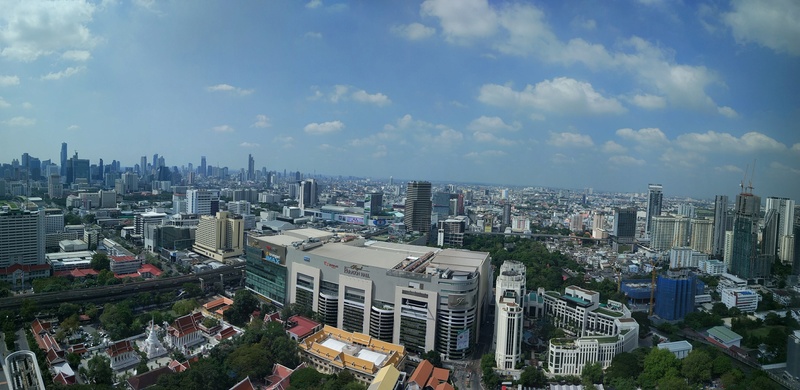
Half panoramic view from the hotel room 

Secondly, we met a friend there. It's Derek, the blogmaster of TheFinance.sg and his wife. It was one of the rare times we met any friends overseas, so that was a very good experience for me. We went to our hotel's roof top bar to have a drink and see the world and soak in the atmosphere. Usually we won't go to such places, and we're glad to play host to our friends, meeting in a foreign land and seeing familiar faces.

View from the hotel's rooftop bar

Thirdly, we went there as a couple many times, and this is the first time we went as a parent. I kept thinking and missing our baby boy. Thankfully we arranged for video call with my mum periodically, who is taking care of our boy. I didn't know I can miss someone so much. I am literally scrolling through past photos and sharing with my wife. That's an aspect that I didn't expect from myself.

These three things alone makes this trip slightly different and special. That's the external things. Internally, I feel that the whole trip makes me realise what the important things are in my life. While we are living the high life in Bangkok eating restaurants in almost every other meals, I thought to myself that I would not want to live such a life if my wife isn't around with me. Removing my wife from the context would make me miserable. Removing the high life context from me and my wife is very okay. So having my wife around me is very important to me, much more important the tour. Touring around with my wife is the point, and must not be mistaken for touring overseas. Next, we spent most of our time shopping, eating and resting. It feels shiok for the first few days, but after a while, it too became pointless. Why? We're missing our baby boy, so that's a new experience for me. There's only so much tom yum gong we can eat, so much thai milk tea to drink and so much goods to buy. Everything else is just bland after a while.


This is how my boy feels on the second day after he realised his parents are not around

I'm not sure why I was feeling like this. It's supposed to be an long anticipated trip, but around the middle of the trip, I wished I am home so that I can hug my baby boy. It's a funny feeling, and it makes me know what is important to me: family.

There are some observations I've made in my trip:
1) People stand on the right for escalator, meaning the 'speeding' lane is on the left. This is quite the opposite here in Singapore. I think sometimes when we take the escalator locally ourselves, we tend to mentally scold the person in front of us for blocking our way. But they could be used to their own way of doing things and blind to the new ways. We have to learn to be more understanding and also to be aware of our blind spots.

2) The car park in shopping malls are not located in basements and are actual stories. It's like in Singapore if we want to go to the carpark, it's usually located in B1, or B2. But in Thailand, it's in story 3 or story 4. It's interesting because perhaps they have too much land over there, so it's easier to build up than to dig down. The cost increases a lot as you go deeper down.

3) I've not been to thailand for 2 years, and suddenly I see a lot more people are into the mobile phone culture. Meaning that they will whip out their phone and stare at it for long periods of time.

4) There is a floor in MBK where there are artists selling copies of artwork and painting. I didn't see it anymore. I guess it had moved along with the times.

5) In big shopping malls, there are plenty of spaces that are under renovation and closed off. It's something like Singapore, where sections of malls are boarded up, with something 'exciting' coming along in the near future. The retail scene in Thailand is like ours too...slowly fading off.

6) Empty stores in Singapore are guarded by pots of money plants. But not over there. So money plant guardians is a local culture.

7) There is plenty of Japanese food over there, but not so much Korean food. In Singapore, it's quite the reverse. Korean food is popping up all over the place. I've not eaten any korean food before, nor wish to try haha

8) There's rarely authentic thai food restaurants, but I think Thai food is mainly street food, and that's where the authentic Thai cuisine are to be found. 

9) Electrical sockets are turned clockwise from our orientation, meaning that the live is on top, neutral at the bottom and earth is on the right. Why is it rotated, I wonder...


Oh, and during the flight, I didn't watch any movies. None feels interesting to me. I listened to some music and kept reading. These are the things that brings me joy. After a few days of eating rich food, I stopped eating so much. I wanted to feel hungry again instead of eating at fixed timing. I also don't have to sit in a plane in order to enjoy some quiet moment with my wife. Sometimes I wonder whether I really do need this trip. Do I really need to go overseas? Actually no, but sometimes we need to go outside to realise what is really inside.

And boy, by disrupting my usual schedule, I've broken out of my usual thinking and re-found myself.

THAT is the true goal of travelling. At least in my definition.

Sunday, December 31, 2017

Reflection of 2017

Today is the last day of 2017. Like previous years, I will grow reflective and think what I've done in the past year. I usually begin by asking questions to myself (and everyone) whether the year 2017 is a good year or not, and how anyone would grade this year out of 10. This year, I imagine having a conversation with myself, sort of an interview between me and myself.

Interviewer: I
Myself: M

I: I'd like to ask you this question. How would you grade this year 2017 out of a scale of 10? Can you share how and why you grade yourself this score?

M: This year is a fantastic 10 out of 10 for me. My usual categories are Finance, Mind, Body and Spirit.

Financially I did better than expected. I didn't do as much work because I had a child earlier this year, so I had to forgo some work scheduling so that I can be more present for my kid. But the lack of income is made up by other sources of income, so I ended up the year with nearly 70k of savings, when I only expected 30 to 40k. I was pleasantly surprised by that. I also managed to accumulate 240k, which means I can activate my plan to invest it at 5% pa to get a dividend income of $1k per month.

On the Mind part, I only managed to read 11 books instead of the usual 52 books a year. This is because the time I usually spent reading is now spent watching Netflix instead because I have only so much energy to spare throughout the day. I expect myself to start reading when things are more stabilised, but it doesn't seem like anytime soon. I did however read a few great books and I still take with me the lessons right now.

On the Body part, this is a total flop. No exercises, no more strict diet, no more pullups and pushups. No excuses for me.

On the Spirit side, I stopped meditating, but even after more than a year of stopping, I still think I got the positive effects of practising both mindfulness and meditating. There's nothing new on this front for me in 2017, just more of the usual stuff.


I: Hmm, from what you've described, it seems that 2017 is not such a good year isn't it? Why did you say it's 10 out of 10? Are you delusional?

M: Haha! Perhaps I am delusional. But there are people scoring 100% on every front yet they are also unhappy, so how do you make sense of it all? I think happiness is not just tied to these categories. More importantly, happiness is a state of mind, and this year 2017 is a joyous year for me. The birth of my son overshadows all the little things I had not achieved. My son is healthy and well, my mum who is recovering from cancer is also doing very very well and I am generally healthy. There's a lot of bad things that might had happened, but it didn't, so I am thankful and grateful for it. I make it a point to make every year a better year than the year before, and so far it had been true.


I: Alright, I see. So where do you see yourself at the end of 2018? 

M: My big plan had been established a few years ago and I'm still following it. More of the usual, like saving 50k (or more) per year, and reading more often instead of watching Netflix. I don't think I still have the energy to exercise, but we'll see what we can do on that front. I want 2018 to be better than 2017 too.


I: What are your major challenges that you've encountered in 2017 this year?

M: It's getting used to a new regime and schedule after taking on a new identity - that of a involved father. I've seen a lot of tuition kids who fathers are absent and I am not going to let that happen to me, hence the conscious decision to be present to my kid. This means that there's a lot of personal time and work time that is sacrificed. I take it gladly.

The other thing is how not to not just survive but also to thrive in my caretaking of my son. I don't want to just feed and change the diapers, but also to build a relationship and really want to spend time with my son. I'm still learning to do well, but there's still room for improvement. At least he called me papa before anyone else and I'm secretly happy and glad that I must have done the right thing.


I: You said that this year you read less than your usual 52 books a year. How do you feel about that?

M: I think after a few months into the year 2017, I already had an inkling that I am not going to hit that figure, so I took it in my stride. I started taking down notes instead of just reading, so instead of going for breadth, I went for depth. I am practically studying the things I was reading this year, so it is very refreshing for me. I took a long break from reading and I felt better of it. I had been reading intensely ever since I started that habit in 2007, so a break after 10 yrs seem appropriate. It's a liberating feeling to be honest. I always felt that I had to continue reading and reading, because I had a target to meet. That was like being disciplined and goal oriented. I'm still learning to take things easy.


I: How do you feel about being a father?

M: That is one of the best thing that happened to me. I didn't know I am capable of giving love to another person, not even to my wife. I didn't know that I can be melted just by a flash of a smile and with tiny fingers wrapped around mine. I thought I won't be able to handle taking care of babies too. But I believe I handled it pretty well. I think my relationship with my wife also improved tremendously. We always think to ourselves, whether it'll be better being younger parents. But I think the answer is no. We're more ready now than before, and if we have our child before we're ready, we will be much more anxious and subjected to peer pressure. This is the best time for us.


I: Alright, we know you're a good father, but besides the baby, what's the scariest thing you've done in 2017?

M: It must have been the public speaking gig I had at DBS NAV. I had to prepare some presentation slides on powerpoint, and the last time I did that was back in my university days when I had to present to a panel of lecturers who are grading my thesis. It had been decades since I last did any sort of such speaking. That was some scary shit, but I think I managed to pull it off. It's definitely the scariest and the most stressful thing that happened to me in 2017. Even way above seeing my wife giving birth naturally to my son, for sure. I'm not the one in pain and I'm not scared of blood lol


I: Last question for you. If there's one thing in 2017 that you would like to repeat in 2018, what would that be?

M: I'm quite torn by this question. There's the bullishness of the stock market that propelled by networth quite a bit. Do I want to repeat that? I think not. It might feel good, but I'm about 45%+ in cash, and I would like to have some chance to utilise that at some good point in 2018, haha! I think I'll go for great health for everyone that I love. I want that to repeat again in 2018 and I will be so thankful and blessed by it.


Tuesday, December 19, 2017

30 things that I realised in 2017

1.You don’t know how tired you can get until you are a parent. It gives me a new perspective and now see my own parents in a different light.

2.If you don’t want to complain about work, have a kid. You will also see work in a different light because you can finally be ‘in-control’ of your life. You might even volunteer for OT.

3.Babies are manipulative little creatures. They flash a smile, and you suddenly forgot you haven’t slept well for the past year, clearing their shit and feeding them in the wee hours of the day, and still want to continue doing so.

4.People can say what they want, but it’s the doing that differentiates them from the rest of those dreamers. Follow what they do, not what they say.

5.Haven’t been reading much this year, but I’m surprised how much clarity it gives to my mind. I’ve been reading too much for the past few years!

6.If you eat more carbs, you will want to eat more carbs to fill you. Vice versa.

7.The fastest way to see if you are too idealistic is to be in the thick of things. Your idealism will get destroyed quickly by the practicalities of life.

8.If life is a RPG (role playing game) where I can get to allocate points to stats, I’ll maximise charisma. I think that’s what my boy did.

9.My boy is well on track to save 100k by age 20. He has 18k in his possessions now, inclusive of a big fat contribution from the govt. Boasting rights for him in the future.

10.Learning the different roads and how to drive from one place to another is like learning a language. If your family do not have a car when you are a child, you can learn to drive in your adulthood, but you will never be able to know how to go from A to B without a GPS.

11.I spent nearly 4 months preparing milk from formula the wrong way, until I had a chance encounter seeing how my wife did the proper way. I suck. Or maybe the lesson here is that there are many ways to succeed.

12.Being a old father, I wondered if I will have more energy to catch up with my son if I had him when I’m much younger. The conclusion is that I will have more energy, but I will be less self-assured, more jittery, will do more comparison with peers and have less priority to my kid than now. I think it’s a good trade off.

13.Having a kid doesn’t cement the relationship between couples. It amplifies it. If you have a good relationship with your spouse, you’re going to have an even better one after having a kid. If it’s weak to begin with, it’ll go even weaker.

14.I think I’m a patient person. Having a kid will test that limit to the max.

15.I see less and less grandparents having the skillset to take care of their grandkids. It might not even be the skillsets, but also the inclination to want to do so. Grandparents these days prefer to travel and/or work. I wonder if I’ll be a good nurturing grandfather too.


16.I am paying my tv watching debt with interest now, catching up years of not watching. From less than 3 hours a year of tv, to about 3 hours a day now. You can be so tired you just want to vegetate in front of the tv to celebrate the official ending of the day when my baby finally fall asleep.

17.It’s hard to isolate my kid from viewing the screen. They are digital natives, and it will be wrong to stop them from using it. I guess the key here is self-control and how to have the discipline to regulate desires internally. Work in progress.

18.I really hate students who lie. Usually they will fire me, or I will fire them. I dislike spending half my time trying to decipher whether what they say is real or not, rather than spending the time tutoring them.

19.There’s a huge stereotype that fathers can’t be caretakers. It rivals the one question that I keep getting asked – does being a tutor mean that I don’t have to pay tax? But can I really blame them? From my work, 99% of the time, fathers are absent. Out of 14 years of my tutoring work, I can only recall less than 5 instances where the dad is involved.

20.The returns of the stock market does not contribute much to my networth right now. I have to keep reminding myself that when I think I’m spending far too much energy and time on it. The focus right now must be on my active income and career.

21.I can be stingy on myself, but generally I don’t think I am on others. If I am, let me know lol

22.2017 is officially the year of the cryptocurrency. People left right and centre are just talking about it all the time.

23.Being a self-employed working at home rocks! The benefits of it is slowly materialising. I see my family all the time and don’t have to ‘go out’ to work.

24.I’ve started writing a diary entry every day for the past 8 months. I realised when I’m tired, I talk about events without emotions, basically in chronological order. When I’m not so tired, I talk more about my feelings and other people’s feelings. It could be an insight to my personality.

25.What’s the difference between love and like? If you like a flower, you will pluck it off the ground and keep it. If you love a flower, you will water it everyday and keep it healthy.

26.Having a baby allowed me to see the evolution of needs. As we grow, the needs of the baby increases and gets more complex. That’s the winding up part. I think at a certain point in life, we should do a winding down process too, where we scale down our needs and simplify things.

27.I’m at the age where I don’t get invited to wedding or even baby showers anymore. Morbidly, I’m waiting for notification to attend funeral wakes and such. It’s interesting to observe such trends among my age group peers. Is it all unhappiness down the road from now?

28.As I get older, I’m getting a lot more frugal on my time. Negative influences are generally out of my life and I actively censor and avoid, especially when I can do nothing to change them. Positive influences I’ll actively seek them out. I cannot stand being a driftwood floating in the open sea, drifting aimlessly in any direction.

29.2017 is the year where my relationship with my mum had never been stronger. It’s all possible because she comes over to help me out with the baby almost everyday. From her love and care of my son, I think back to the days when she took care of me in the same loving and caring ways too. It had come full circle.

30.Don’t let me avoid challenges. Give me the strength to overcome them and the courage to face future challenges.

Tuesday, December 05, 2017

Planning your end game after FF

There is a reddit share about a person in the US who had already reached financial independence without being married and having kids, but had a lot of other non-financial issues to deal with. For example, he talked about how to let his close family and friends know about his new found status, yet he does not want to lie about it. He has issues with being honest with them without being taken advantage or being probed at. There is also the existential issue about what else he is going to do with his life. This arises mainly because he does not have a routine to follow, and days can become weeks and weeks become months. Before he knows it, years would have passed with him wandering around aimlessly. He obviously does not want this.

For those who are aiming for financial freedom (FF), it's important to read the bad side of it. He laid it all out in his reddit post. The journey towards financial freedom is such a long and arduous one, and I think we forgot to think about the end-game. What are we going to do after we have reached it? It's a good idea to start thinking about these issues earlier rather than latter, because it's important to realise that while money solves a lot of problems, it does not solve issues like what is the meaning of life. My friend Christopher, who had reached FF himself, blogged about this here. He had a good word for this issue, calling it existential independence. It's like a twin set of booster rockets - you cannot be truly free if you have only one rocket of financial freedom blasting away. You need the other rocket of existential independence to bring you out of the earth's gravitational pull to be truly free.

I've not reached FF and I'm still on my way. But I've seen enough people who had already FF to know there are only a few end games after reaching FF. I list them out here:

1. Meaningful work
2. Religion
3. Travel
4. Family

Let's talk about them in more detail below. I will also share what my own end game is after reaching FF. I know it's still far away, but some of these stuff needs time to 'compound', just like your financial assets. You can't just tap on it on the day you needed it and expect it to start running on its own. Like all things, you need time and effort for your 'investment' to work out at the time you needed them most.


1. Meaningful work

Work that is meaningful, as opposed to work that pays the bill. I think there could be some misunderstanding about what happens after reaching FF. You might take a long holiday, being relieved that you are finally freed of work, only to come back to some sort of work again to resolve some of the issues that only purposeful work can help. FF is not about not having to work ever again. It merely gives you the option not to work for money again. It's very different.

I am most likely pursuing this path. I'm a tutor and I blessed to be one of the few people who loved his job so much to do it for free. The good thing about my job is that I can scale it down easily; I just need to work lesser and take in fewer students, or choose to work on 3 days. Flexi-work arrangement is not for everyone, nor for any industry. If your boss refuse such arrangement, what can you do? Also, the work that pays for the bill might not be the work that is meaningful for you. If the work that you are doing on your way to FF doesn't give you satisfaction beyond the paycheck, then you should look for other sort of meaningful work. Even mentoring younger people can be said to be meaningful work. The best way to find out if it's meaningful is to ask yourself if you are willing to do the work for free over extended periods of time.


2. Religion

When I say religion, I really mean spiritual work. I know some people, after reaching FF, start to get a lot more involved with their own respective religious groups. Born again Christians or born again Buddhist. Volunteering with these religious groups can be nice intersection between meaningful work and religion, since it satisfies both at the same time. It need not have to be any religion too. Practicing mindfulness and meditating also gives the same kind of spiritual purpose in your life.

I'm more of the mindfulness and meditating kind. I'm already reading up and practicing on such stuff in my own journey towards being FF. Some friends started on this religious route when they reached their mid life crisis towards mid 30s and 40s, and the continuation of this involvement allows them a very smooth transition when they finally become FF.


3. Travel

This is the route for a lot of singles. Take a backpack and they start travelling all around the world. Bitten by the travel bug, they are out of town almost every other quarter. The planning of the trip, the logistics arrangement, the research and packing all constitute a sort of project management work for them. It's a very structured project, where you know the start and the end point and it's highly repeatable.

Not for me though. I'm not a travel bug, and I can stay at home for prolonged periods of time as long as I have my creature comfort.


4. Family

I did not mention friends, because friends can come and go. But friends can be like family too, providing a very strong support for your mental health. If you have children, this can be a project that last for decades. As a new parent, it's never ending work. When your children starts having children of their own, it's like your shares started to give you bonus shares. But it might not be everyone's cup of tea, and I totally understand that. Those who are married and have kids are generally okay with their end game after reaching FF. I have limited examples of this type though, because it's so hard to be FF when you have kids.

In the end, what this feels like to me is similar to playing a game with your own selection of game difficulty. If you choose easy (or easier), your game play involves not having family and kids and reaching FF. But you might have an existential crisis much later on after FF. You ultimately choose an easy (or easier) game play but a much more difficult end game. If you choose hard (or harder), your game play involves juggling family time and work, having less resources towards the goal of FF and finally reaching FF. But you have a much easier end game after FF. This game of life is really well balanced lol


There are some other options that I can think of. These are people I've read but not actually encountered. One type is the health fanatics that chose to focus on health or health related activities. They become like addicted to marathons or body building. Then there are the Bilbo Baggins type, who wanted to write books to perhaps reach a certain sort of immortality with their works, so that their books can be their legacy when their mortal body passes on. Again, I've never met them before. 


Whatever rocks your boat man. But you need to plan for it. This end game planning after reaching FF is what will determine your happiness once the financial part is taken care of. 

Friday, December 01, 2017

Networth update in 2017

Another year is almost coming to a close. This year is yet another fantastic year for me. Every year seems to be fantastic to me, so either I'm delusional or I'm really happy with my life. I'm going for the latter haha! The last time I did my networth update is around the same time last year, back in 2nd Dec 2016 here. To clarify, this is my networth, not the networth of my household.

There are so many ways to calculate networth, but I've always done mine this way. It's essentially assets minus liabilities but how you define assets and liabilities makes all the difference. Unlike most people, I excluded the value of my property but included the debt associated with it. Took me a few years to reach from a negative value to 0. The assets part include:

1. Cash in my wallet
2. All the money in my various bank accounts
3. Cash holdings under mattress and milo tins at home
4. Money in my paypal account
5. All the money in the 3 accounts in my CPF
6. Money market fund account
7. Marked to market investment portfolios
8. Surrender cash value of whole life insurance plans

I do not include the value of my 5 room flat that I'm currently staying in, and also the value of the family car that I own.

The liabilities part include:

1. Credit card bills
2. My portion of the HDB mortgage loan (total remaining loan amount divided by 2)

A good friend, Azrael, finally legitimize the way I calculated my networth. He introduced the term Net Current Asset Value (NCAV), first coined by Benjamin Graham to valuate a company. NCAV basically means taking the current assets minus all total liabilities. Since property value of my residential property is not under current assets (I could be wrong, I'm no accountant), hence what I did to valuate my networth is similar to the conceptual definition of NCAV. I stand to be corrected of course. But seriously, it also doesn't matter. I'm still going to do it my way haha

2014: Assets: $226k, Liabilities: $220k, Networth: $6k
2015: Assets: $295k, Liabilities: $207k, Networth: $87k
2016: Assets: $351k, Liabilities: $188k, Networth: $163k
2017: Assets: $449k, Liabilities: $182k, Networth: $267k


At first glance, there seems to be a huge increase in networth. Nearly a 100k increase year to year since 2016. Liabilities did not drop that much, only dropping by 6k from 2016. Assets went up a lot, nearly 100k to 449k in 2017.

The assets increased by a lot, and I think it's mainly due to my dividends and the bullish stock market. This year, because of my kid, I definitely worked much lesser compared to previous years. My total income fell as I free up my weekend time slots to make more time to take care of my kid. Hence, initially I thought my savings will drop as a result. Surprisingly, it came in pretty strong at 72k. This amount must have been saved by the combination of more dividends, parental leave and child care leave added together. So even though I worked less actively, these streams of income played their role to cushion my fall in active income. In the future, I would expect my asset value to generate more and more cashflow for me, as I progressively spend more and more time towards my family instead of wealth building. Inevitable.

Liabilities is mainly from the amount that I owed for my HDB mortgage. I switched from HDB loan of 2.6% to a commercial loan. It's somewhere in transition yet, so I have not paid my mortgage since November. Traditionally, I would also do a lump sum partial capital repayment for my loan, but because it's in between lenders now, I would do it only in 2018 when things are settled down. That would explain why my liabilities only dropped 6k from 2016.

Networth went up nearly 100k, and I think it's mainly due to asset value increasing. This means it's mainly the bullishness of the stock market that causes my asset value to go up. I'm about 40% cash. That will be my option if and when the market allows me to buy. Not in a hurry to use it all, so let it rot.

My networth is finally way over my liabilities. This means that if I choose to, I can liquidate everything and pay off my liabilities. I wouldn't do that of course, but I can choose to do that now. I look forward to the day that my networth is twice of my liabilities, then my whole family will be relieved of one great debt.

Sunday, November 26, 2017

I'm officially retired!

I'm officially retired...for the year. Due to the nature of my job, I have about 2 to 3 months of relatively free work. It's my eat-grass season and my winter month. This obviously affects my income, because I'm probably earning like 20% of my 'normal' months. Every year, I'll face this forced retirement and I've come a long way to deal with the uncertainty and the emotions that comes with it. This article will share my thoughts about the emotions of retirement. I must say I've not retired for good, but I've plenty of experience on retirement. All 15 years of it. Strange eh?

The emotions comes in 4 stages:

1. Relief
2. Happiness
3. Guilt
4. Resolution

I'll discuss a bit more in detail for each stages now:

1. Relief

I've worked very hard for about 10 months of the year, working through the weekend. This year is a bit lesser because I'm a newly minted father, but usually I'm so packed with work that I'm actually looking forward to my winter months. I think most employees will share the same feeling that I had. It's like you have worked hard for 20-30 years and finally you can see the deadline to end your working life. But it's only a relief if you've prepared for it by settling your debts and saving up a nice stash and all. I've saved about 70k+ for the year and am prepared to 'draw down' on the savings during my wintry months. If I haven't saved enough or at all, I guess I'll be very very stressed. So the first few days, I felt a immense weight off my shoulder. Very light and...relieved.

2. Happiness

After the feeling of relief, next came the feeling of joy. I felt happy that I'm finally having a good time catching up with long neglected friends or spending quality time with family. Quality time means you have no agenda or have no other appointments other than the current one, not trying to rationalise to yourself that although you have only 1 hour you will squeeze it by doing as many activities as possible. This period is where I catch up on my social life, my gaming and my books. This stage rejuvenates me and prepares me for the next period of work. It refreshes you and prepares you for the longer journey ahead.

3. Guilt

Unfortunately, the feeling of happiness is usually short lived. After what could be weeks to months, I might feel guilty that I'm wasting my life away. While others are busy working their asses off in offices and scurrying away to important meetings, I'm sitting, alone, in a cafe, sipping coffee and staring at nothing. There's only so much nothing to stare at. I'll say that most people who are taking leave for a week or so wouldn't feel this stage yet. They will certainly reach stage 1 of feeling relief, or stage 2 (if the leave is long enough) of feeling joy and happiness. But to reach stage 3 of guilt, you need a few months of doing no work at all. I could be playing so much games that I start to feel that I'm wasting my day away bashing digital monsters and collecting digital gold coins, where I could be earning real money fighting real life monsters. The real lesson here is that even if you are fully retired, you cannot stop working. Just stop working for money. Work keeps you in contact with other humans, or makes you feel important, or gives you joy. Find other reasons to do some sort of work again, something to set your routine and make you feel like a useful citizen to society once more.

4. Resolution

The period of guilt will build up until you start doing something. Usually this will end up where you start looking for work again (or in my case where my work starts finding me again), or you find some sort of semi retirement arrangement where you decide to spend the bulk of your time on. It could be project based, working on some hobby or some thing that keeps you occupied for the bulk of your free time. It could be volunteer work or some part time work or mentoring work. This might run a few iterations of the stages again, especially if the work you chosen overwhelms you. Eventually you'll reach an equilibrium where there is optimum work life balance that you can continue...until the next emotional crisis hits you again.


Those are the 4 stages. When you take a short leave of a 1-2 days, you'll reach stage 1: relief. When you have a longer leave of a week, you'll reach stage 2: happiness. When you have a much longer sabbatical leave of more than a few months, you'll go through all the stages from 1 to 4, passing through stage 3 of guilt and stage 4 of resolution. 

While reaching financial independence is important, don't focus solely on the monetary aspects of it. Most of the time, the emotions will be the part that you derail your best laid plans. Financial independence is not just about passive income > expenses. Work might be an important part of your identity, regardless of whether you liked working or not, hence to take it all away in one shot might be too sudden too soon. Practice the emotional aspects of retirement!