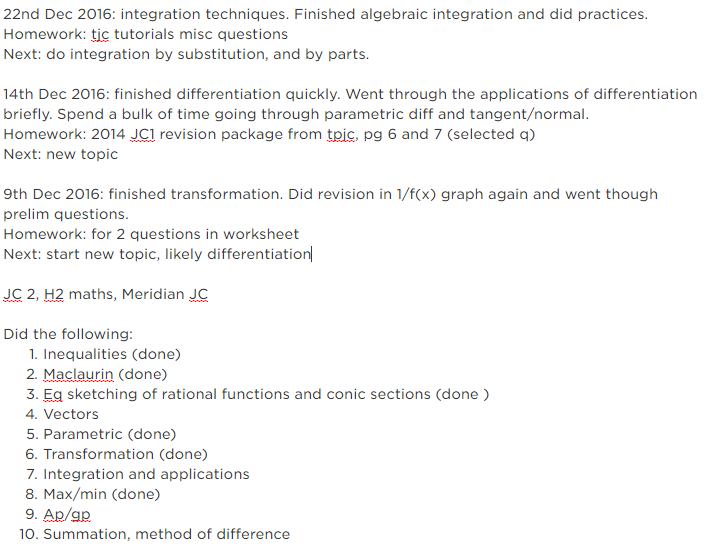
I was filling up some forms for baby bonus and all the other paper work, when I realised that I had worked as a tutor for 14 years! That represents so much of my life, so I think I should reflect and think about some of the things I've seen and learnt from my students and their relationships with their parents and school in general. It'll be a good thing to do less of the wrong stuff and do more of the right stuff. Here it goes:
1. Daddies are mostly absent
Throughout my entire career as a tutor, daddies are mostly absent. I dare to guesstimate that the actual percentage of dads who care is less than 10%. They are not around to fetch their kids, or ask about their homework. I think the ideal stereotypical father is someone who is there to dispense out money or to be a disciplinarian. Some of my students don't even know what their father do for a living. Being a father now, I should also think about the kind of father I want to become. It helps that I'm working at home and I deeply appreciate the sheer amount of time I had with my baby boy. I want to be there around with him to observe all his 'firsts', and not to leave home when he's asleep and come back home to see him sleeping again. That's a promise from me to him.
2. The years that matters are the years before you start formal schooling
I've taught older students and I wondered why their learning abilities and motivational levels are so different. When I taught secondary school students, I thought primary school makes all the different. When I taught primary school, I thought pre school makes all the difference. When I taught pre school, I realised the environment at home makes all the difference. Any thing beyond that will be genetic influences already. If you want to make a difference, spend more time before your kid goes to formal school. Cultivate the right values and the right habits. It'll create a world of difference when he begins formal schooling. It also helps that when kids are younger, they will listen to you. Once they are in secondary school, good luck to you if they listen to whatever you ask them to do.
3. Give your kids responsibilities and duties befitting their age and maturity
I've seen upper secondary school students having their school bags packed by their mothers. I've seen JC students still asking their parents what their schedule is like for the week. I think we should all watch Diana Ser's programme on TV, with the title translated as Child Labour, in mandarin. I watched it today and there's this 10 years old kid from Thailand who has to work as a Muay Thai fighter to win prize money to feed his family. Diana Ser wisely brought his boy along to observe and film it. I think his kid is going to treasure his life back in Singapore. Are we creating chances like that for our kids to empathise and learn not to take things for granted? I think if we hand over the reins to our kids, we shouldn't expect perfections. It's all the little screw ups that will let the kid grow and mature.
I remember a parent whose child is in sec 4 but she always have to chase her child all over the place in order to arrange the child's tuition. I told her that she has to let go and let the child handle it alone. So she agreed and tried it out. For the first few times, the child forgot that we have scheduled lessons and missed it entirely. The mum, in anger, wanted to revert back to the original arrangement but I told her to have faith in the whole process. It's important to screw up and learn to move on from there. So one day, after yet another major screw up, the child finally realised the mistake and apologised to me and her mum. Such incidents dropped to zero afterwards.
I guess if you don't let the child make and own his own mistakes, you will forever be chasing after him. So, let go.
4. A good school might not be good for your child
Most people I know are very anxious when it comes to primary school selection. Some of them even moved to a good prime location near to a prestigious school so that their kids can have a good headstart in life. I haven't even talked about volunteering at the primary school yet. I've seen my fair share of students who went to a supposedly good school, but because they can't handle the stress, they ended up doing very very badly. There are others who strive in neighborhood schools and because of the good conducive environment, grew in confidence and did pretty well in the end.
I think the point is that there are two ways in which children handle stress. They either crumble or they rise to the challenge. It's important not to force a child into a good school. Afterall, a good school is good because of the students who went in, not because of some special geographical location or special syllabus. I do understand the need for parents wanting their child to socialise and mix in with people from better backgrounds so that they have a good network from young. But let's leave this until much much later, perhaps in university or JC.

5. How you do anything is how you do everything
I tend to nag students on little things, like writing the wavy lines underneath a letter when denoting vectors, or putting in the degree symbol after the numbers and so on. Some students obviously find it frustrating, so they will tell me that they would remember do such things only during exams. It doesn't work that way. There are only 4 major exams in a year, but there are countless practice sessions. If you are going to do the right things only during exams, I'll bet that you won't remember to do it during exams as well. It's about the attitude to do the right thing every time also. If you don't practice during peace time, you don't do it during war times. I really think that discipline is the thing that gets you to places, not motivation. Motivation is that single moment where you feel like doing something for the first time, and thereafter you have to reply on just discipline to get you there.
6. Set high standards
I usually give worksheets that are way harder than what the students perceive themselves capable of. If they are in combined science, I'll give them pure science questions. If they are in NA level, I'll give them combined science questions. This is like wearing iron weights during practice runs, and when the weights are removed, they will literally fly. When done properly, they will experience immediate small success in school based exams and hopefully their confidence and desire for more success will form the next level of motivation to bring them greater success. It's a way to get them 'hooked' with success, hence providing that intrinsic motivation to want to do better.
7. Hardwork beats talent anytime, unless talent becomes hardworking
There are students who grasp new concepts immediately, while others I'll have to explain in a variety of ways. Some students are just more talented in doing math or science. But if I have to bet who will have greater academic success, I'll bet on the kid who is more hardworking. I've seen countless examples of students who beat talented ones through sheer hardwork. Of course, if they are competing against students who are hardworking and have talent, it's not going to be that easy anymore. The good thing about hardwork is that we can always strive to be more hardworking. You just can't say I'm born this way, so it places the blame solely on yourself. This fits in with the growth mindset - that our abilities are like muscles and will grow when we practice more, instead of a fixed mindset where our abilities are based squarely on the roll of the dice on our genes.
8. Be the example that you want your kid to become
I've seen children whose parents wanted them to stop using their handphones, but they themselves uses it all the time. I think children are smart enough to detect double standards, and they will follow what you do instead of what you said. If you want children to do their work, you have to show them how you do yours. If you want children to have a reading habit, you have to show them how you read all the time too. I think children is really just a reflection of yourself. I'm sure your children will hold you to the same standards just like how you exert yours on them.
9. Listen more, judge less.
This is a reminder to myself. Sometimes we live in the world, we become proficient in the ways of the world, and then forgot that our children are pretty new to it. We tend to judge them using our own yardstick. I'm guilty of getting irritated by my students when I've said the same things over and over again. To them, maybe they had heard it for the first time, but for me, I've said the same things probably a thousand times. I think it's important to listen to what they think, and don't judge prematurely. Don't think about a response while your child talking. Listen actively.
10. In the end, show love
This is also a reminder to myself that no matter how irritated or frustrated I am, at the end of the day, show love. We can't get so absorbed by our own anger and frustrations that it becomes self feeding, treating every little wrong behavior or mistakes done by the child as if it's a big mistake that feeds the anger and frustration even more. I think parenting is the same. There will be times when you feel negative emotions towards the child. Remember to show more love at the end of the day. It can be a little apology to explain why you are so frustrated and show some encouragement. It can be a little pat on the back or a hug, just to tell the child that we still love them.
1. Daddies are mostly absent
Throughout my entire career as a tutor, daddies are mostly absent. I dare to guesstimate that the actual percentage of dads who care is less than 10%. They are not around to fetch their kids, or ask about their homework. I think the ideal stereotypical father is someone who is there to dispense out money or to be a disciplinarian. Some of my students don't even know what their father do for a living. Being a father now, I should also think about the kind of father I want to become. It helps that I'm working at home and I deeply appreciate the sheer amount of time I had with my baby boy. I want to be there around with him to observe all his 'firsts', and not to leave home when he's asleep and come back home to see him sleeping again. That's a promise from me to him.
2. The years that matters are the years before you start formal schooling
I've taught older students and I wondered why their learning abilities and motivational levels are so different. When I taught secondary school students, I thought primary school makes all the different. When I taught primary school, I thought pre school makes all the difference. When I taught pre school, I realised the environment at home makes all the difference. Any thing beyond that will be genetic influences already. If you want to make a difference, spend more time before your kid goes to formal school. Cultivate the right values and the right habits. It'll create a world of difference when he begins formal schooling. It also helps that when kids are younger, they will listen to you. Once they are in secondary school, good luck to you if they listen to whatever you ask them to do.
3. Give your kids responsibilities and duties befitting their age and maturity
I've seen upper secondary school students having their school bags packed by their mothers. I've seen JC students still asking their parents what their schedule is like for the week. I think we should all watch Diana Ser's programme on TV, with the title translated as Child Labour, in mandarin. I watched it today and there's this 10 years old kid from Thailand who has to work as a Muay Thai fighter to win prize money to feed his family. Diana Ser wisely brought his boy along to observe and film it. I think his kid is going to treasure his life back in Singapore. Are we creating chances like that for our kids to empathise and learn not to take things for granted? I think if we hand over the reins to our kids, we shouldn't expect perfections. It's all the little screw ups that will let the kid grow and mature.
I remember a parent whose child is in sec 4 but she always have to chase her child all over the place in order to arrange the child's tuition. I told her that she has to let go and let the child handle it alone. So she agreed and tried it out. For the first few times, the child forgot that we have scheduled lessons and missed it entirely. The mum, in anger, wanted to revert back to the original arrangement but I told her to have faith in the whole process. It's important to screw up and learn to move on from there. So one day, after yet another major screw up, the child finally realised the mistake and apologised to me and her mum. Such incidents dropped to zero afterwards.
I guess if you don't let the child make and own his own mistakes, you will forever be chasing after him. So, let go.
4. A good school might not be good for your child
Most people I know are very anxious when it comes to primary school selection. Some of them even moved to a good prime location near to a prestigious school so that their kids can have a good headstart in life. I haven't even talked about volunteering at the primary school yet. I've seen my fair share of students who went to a supposedly good school, but because they can't handle the stress, they ended up doing very very badly. There are others who strive in neighborhood schools and because of the good conducive environment, grew in confidence and did pretty well in the end.
I think the point is that there are two ways in which children handle stress. They either crumble or they rise to the challenge. It's important not to force a child into a good school. Afterall, a good school is good because of the students who went in, not because of some special geographical location or special syllabus. I do understand the need for parents wanting their child to socialise and mix in with people from better backgrounds so that they have a good network from young. But let's leave this until much much later, perhaps in university or JC.
5. How you do anything is how you do everything
I tend to nag students on little things, like writing the wavy lines underneath a letter when denoting vectors, or putting in the degree symbol after the numbers and so on. Some students obviously find it frustrating, so they will tell me that they would remember do such things only during exams. It doesn't work that way. There are only 4 major exams in a year, but there are countless practice sessions. If you are going to do the right things only during exams, I'll bet that you won't remember to do it during exams as well. It's about the attitude to do the right thing every time also. If you don't practice during peace time, you don't do it during war times. I really think that discipline is the thing that gets you to places, not motivation. Motivation is that single moment where you feel like doing something for the first time, and thereafter you have to reply on just discipline to get you there.
6. Set high standards
I usually give worksheets that are way harder than what the students perceive themselves capable of. If they are in combined science, I'll give them pure science questions. If they are in NA level, I'll give them combined science questions. This is like wearing iron weights during practice runs, and when the weights are removed, they will literally fly. When done properly, they will experience immediate small success in school based exams and hopefully their confidence and desire for more success will form the next level of motivation to bring them greater success. It's a way to get them 'hooked' with success, hence providing that intrinsic motivation to want to do better.
7. Hardwork beats talent anytime, unless talent becomes hardworking
There are students who grasp new concepts immediately, while others I'll have to explain in a variety of ways. Some students are just more talented in doing math or science. But if I have to bet who will have greater academic success, I'll bet on the kid who is more hardworking. I've seen countless examples of students who beat talented ones through sheer hardwork. Of course, if they are competing against students who are hardworking and have talent, it's not going to be that easy anymore. The good thing about hardwork is that we can always strive to be more hardworking. You just can't say I'm born this way, so it places the blame solely on yourself. This fits in with the growth mindset - that our abilities are like muscles and will grow when we practice more, instead of a fixed mindset where our abilities are based squarely on the roll of the dice on our genes.
8. Be the example that you want your kid to become
I've seen children whose parents wanted them to stop using their handphones, but they themselves uses it all the time. I think children are smart enough to detect double standards, and they will follow what you do instead of what you said. If you want children to do their work, you have to show them how you do yours. If you want children to have a reading habit, you have to show them how you read all the time too. I think children is really just a reflection of yourself. I'm sure your children will hold you to the same standards just like how you exert yours on them.
9. Listen more, judge less.
This is a reminder to myself. Sometimes we live in the world, we become proficient in the ways of the world, and then forgot that our children are pretty new to it. We tend to judge them using our own yardstick. I'm guilty of getting irritated by my students when I've said the same things over and over again. To them, maybe they had heard it for the first time, but for me, I've said the same things probably a thousand times. I think it's important to listen to what they think, and don't judge prematurely. Don't think about a response while your child talking. Listen actively.
10. In the end, show love
This is also a reminder to myself that no matter how irritated or frustrated I am, at the end of the day, show love. We can't get so absorbed by our own anger and frustrations that it becomes self feeding, treating every little wrong behavior or mistakes done by the child as if it's a big mistake that feeds the anger and frustration even more. I think parenting is the same. There will be times when you feel negative emotions towards the child. Remember to show more love at the end of the day. It can be a little apology to explain why you are so frustrated and show some encouragement. It can be a little pat on the back or a hug, just to tell the child that we still love them.