Friday, March 27, 2015

To him whom you love to hate and hate to love

It hadn’t always been a smooth relationship.


When I was young, I respected him as I would to any adult, especially one who so crucially shaped Singapore the way it is today. Back then, he was still the Prime Minister of Singapore and I remembered fondly the crowds that stood up and cheered loudly for him whenever he arrived on national day parade every year. I must be one of the last batches of people who had him as the Prime Minister of Singapore before he handed it to the next.


Like a teenager, I went through a period of rebelliousness. That is the phase where I learnt and read a lot more things about the kind of ‘fixing’ he did to his political opponents and how he bulldozed his way and imposed his strong obstinate views on things that matters to him, and to us. Hate might be too strong a word to use, but if all the adjectives in the world can be split up into ‘nice’ and ‘not-so-nice’, I would certainly put my relationship with him then under the same category as the latter.


That phase lasted quite a while, until I started working in the society for a few years. You look at the things you rebelled against in the past, and you shrugged. You go to another country and then you look at your own country. You noticed things that are bad in your own, but there are things that did go right too. In the end, are there more rights than wrongs? At the time when it matters, would anybody who is made of lesser stuff be able to achieve what we had for the past 50 years? Nobody can answer that, but I believe he did what he could at that point in time to ensure that we survive. Philosophy can wait till the war is over. Until then, a strong leadership using more sticks than carrots will have to do.


I started to forgive him. He did his best and nobody could have asked for more. When rumors of his many ‘deaths’ circulated around in social media in recent years, I thought to myself that they should just leave him alone. When his wife left, I didn’t see a politician out to dictate his views on everyone. What I saw was a father, a grandfather and a lonely husband, something everyone can certainly relate to.


In life, he is feared. Oh, how greatly he is feared! It's his intense stare, or maybe it's his no nonsense way of cutting to the heart of any problems that sends the shivers up anybody who dares to face him. He cares not for any public opinion and will gladly be the lone voice of truth, even if it’s his own version of truth.


And in death, he is loved. Oh, how deeply he is loved! It’s his soft touch on anything pertaining to Singapore, even if it’s a trash that floats down the river. It’s his Red Box that is filled with all the necessary documents and observations he had made, marking the start and the end of each day with his country in his thoughts.


Why couldn’t all these human side of him be shown earlier? That would soften his harsh image tremendously. But perhaps this is not what he wants after all. With his boxing gloves ever ready, he would gladly step onto the ring to take on whoever dares to fight Singapore. Maybe, that is how he wants to be remembered as – a fighter who fights for his beliefs.


Like I’ve said, it’s not always a smooth relationship. Like a kid, you love your parents, and then rebel against them and hate them, before growing up to forgive them because you know that they tried their best in their own circumstances that you might never understand. And finally, you came to love your parents and you remember them for all the good things that they had done for you.


All the juicy bits of a roasted chicken that they insisted you eat because they prefer to eat the bonier parts. All the last piece of each year’s log cake that they insisted you take because they were too full. All the understanding and forgiving they had shown you, even when you broke their favorite vase and forgot their birthdays.


All the things we took for granted.


Sleep well, Ah Gong, and thank you for taking care of us when we’re too young to understand what’s at stake.
Monday, March 23, 2015

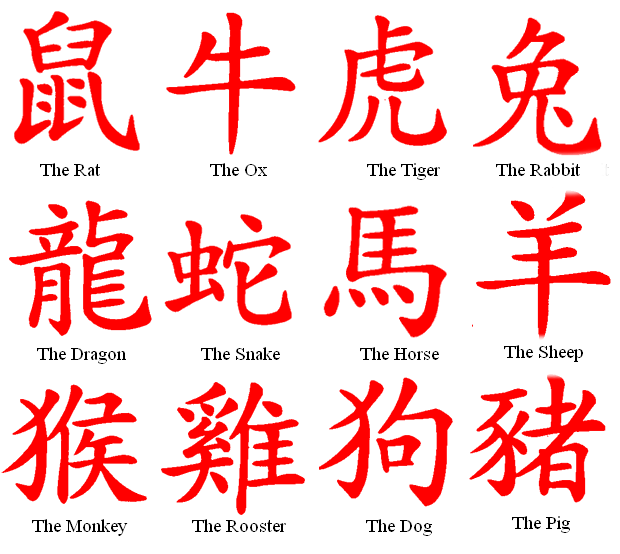
Algorithm to find the Chinese horoscope sign of any year

After learning about modulo function, I finally have an elegant algorithm to find out the Chinese horoscope sign based on the year of input. It came from an innocent enough question from facebook - what's the value of m+n, such that 2012^m and 2012^n has the same last 3 digits, if m and n are integers are m is greater than m?

I did a bit of exploring and found out the answer by doing it through excel. Then I discovered the modulo function, and then I also discovered the theorem that if a = b (mod m), then a^c = b^c (mod m). It's vastly different from learning about mathematical theorem through books or teachers, and learning about it through discovery. The joy of solving the puzzle is immensely satisfying.

But first of all, what's the modulo function?


Modulo function has two inputs i.e. MOD (a, b). Basically the function just returns you the number that is the remainder if a is divided by b. For example, MOD (12, 3) = 0 because 12 divided by 3 gives no remainder. MOD (12, 5) = 2 because 12 divided by 5 gives a remainder of 2.


My algorithm to find out the Chinese astrological sign is to take the input year, subtract 4 to it, modulo it to 12, then add 1 to the result. You can use it on excel.

i.e. Let x be the input year

y = MOD(x-4, 12) + 1

The output y will give you a number ranging from 1 to 12, so

1 is rat,
2 is ox,
3 is tiger,
4 is rabbit,
5 is dragon,
6 is snake,
7 is horse,
8 is goat,
9 is monkey,
10 is rooster,
11 is dog and
12 is pig.

To illustrate this, let's try out the year 3194:

So in the year 3194, y = MOD(3194-4, 12) +1 = 11, so it’s the year of the dog.

My Two Rolex

I never wanted to have a Rolex. But today I realised that I have not just one, but two! Two Rolex right in front of me and I didn't know!


A Rolex watch is a status symbol, a hallmark of those who had arrived. But I think I'll never ever buy one. I prefer my time pieces to be digital, so that time telling is precise. I also need my time pieces to have a stop watch, water resistant, have night light and able to tell the date accurately. I'm slightly allergic to leather and dislike those thick metal straps because the weight will cause the watch to slide down my bony wrist. All these restrictions and preferences make it highly unlikely that I'll ever buy a Rolex.


So where did I get my two Rolex from?


My two Rolex are priceless. Even with money, you can't buy it. It's also limited edition and it's out of production worldwide. It's not made of cold steel and definitely won't cause irritation to my wrist. It tells the time gently by a little nudge, perhaps a little pinch. Quite water resistant, but if you soak it in water for too long, the surface might get a little crinkled, but nothing is damaged permanently. It grows old with time but always soft to the touch. Both the Rolex fits my hands perfectly - sometimes the strap holds it strongly and sometimes loosely. It seems to have a mind of its own. When I made it angry, it will refuse to wrap around my hands. The pinches are a little more painful and time seems to slow to a crawl. When I made it happy, it will refuse to leave my hands. Its warm touch quickens my heartbeat and makes me smile.


Limited edition Rolex. Value: Priceless

Saturday, March 21, 2015

Book review - The Singapore Permanent Portfolio by Alvin Chow

Alvin from BigFatPurse is very kind to pass me a copy of his newest book, The Singapore Permanent Portfolio. I've always wanted to know more about the Permanent portfolio, so this comes as a godsend. Why is it named the permanent portfolio? I think I'll answer that question at the end of this post.


The permanent portfolio is an investment idea that comes from US in the 70s, but the idea is that you hold 4 different types of assets in equal proportion (25% each) that will allow you to profit no matter what the economic situation is. There's an asset that will thrive in the growth, inflationary, recessionary and deflationary phase of the economy. Think of it as planting 4 different types of crops that will thrive well in the 4 seasons of the year - spring, summer, autumn and winter. When spring comes, crop A will grow exceedingly well, so you harvest it and use the proceeds to grow more of the other crops. When summer comes, it's crop B's turn to grow very well, so you harvest it and use the proceeds to grow more of the other crops.


It's a fascinating idea - one that allows the investor to dissociate human tendency towards greed and fear when it comes to investing. Think of it as a sort of standard portfolio re-balancing process but with a twist.


The idea is easy enough to follow, and the book succinctly illustrates the ideology behind the permanent portfolio. If that's all that the book offers, then you can easily google it from the internet. What this book offers is something that you won't find in any others - applying the investment idea to the Singapore context. So while the idea of a permanent portfolio comes from US, Alvin's book illustrates clearly how to actually apply it in our local context. What are the 4 assets to own in the permanent portfolio? Where to get them? How to do the re-balancing? All these and more are answered in the book.


For a portfolio that can weather all economic situation, producing reasonable returns with low volatility, as well as minimal work, what's not to like about it?


So why is it called the permanent portfolio? What is the thing that is permanent about the portfolio? Knowing that you have to re-balance the portfolio mix perhaps once or twice a year or whenever necessary, the portfolio allocation of the 4 assets is definitely not permanent. It will vary accordingly to the rise and fall of the 4 asset class. Or perhaps the term is coined because you never have to sell any assets completely? I think I have an answer. It's called the permanent portfolio because this portfolio will stay with you regardless of the bigger economic situation. And you have to keep balancing the asset classes to keep it permanently balanced. It's like dynamic equilibrium - everything is moving so that there's a balance.


Maybe you should read about it and think for yourself why the name of this peculiar idea is called the Permanent Portfolio?

Friday, March 20, 2015

SMART expo

SMART expo had been around organizing events and seminars for quite a while. This March is their 38th one running in the series. The event is free and it's good if you're interested or want to find out more about investing in properties around the region or if you want to know more about investing/trading in the stock market and achieving financial freedom. The list of speakers include Ken Chee, Dato Eric Cheng, Conrad Alvin Lim, Vina Ip from Property Soul, Jeff Sun, Getty Goh, Calvin Yeo from DrWealth and many more.


There are many interesting seminars and I even discovered one of my long lost secondary school classmates giving one of the talk! What a coincidence! Here's some of the seminars that I'm personally interested in:


1. The mastery of money, what I didn't learn in school - Jameson Chia
2. How to setup basic asset allocation - Calvin Yeo
3. Dirty truths and profitable secrets to building wealth through properties - Vina Ip


There are many many more such free seminar, so do check the full timetable for the different seminars and their timing by clicking here.


Frankly, I'm not so interested in the property part of the seminar, especially those that deal with overseas market. I think it's the lack of information and mostly fear from the unknown. I'm more interested in the personal finance, stock market investing/trading and perhaps some fortune telling, tarot reading and fengshui seminars. Nevertheless, this seminar provides a free platform for people who want to find out more. No obligations of course, so just take this as an opportunity to educate yourself further.


Venue: Marina Bay Sands Expo & Convention Centre, Hall B
Date: 28th and 29th March
Time: 11am to 7pm
Price: Free with registration


For the first 150 visitors each day, you can also stand a chance to win free supermarket gift vouchers worth $10 SGD. No harm right? Free to attend, can educate yourself and possibly get some gift vouchers for your supermarket groceries. So if you're free to attend, do register early if you want a shot at the free gifts ;)

Good luck!

Thursday, March 19, 2015

FREE Jim Rogers seminar

I know some of you are fans of Jim Rogers, so here's a lobang you can't miss. To those who don't know who he is, here's a quick description of him. He is a astute investor who is quite unlike others. He is a top down kind of investor who bets on big macro trends in the economy, unlike some other gurus who go from bottom up. He had said before that commodities will be the thing to look out for in the near future and even thinks that being a farmer in the future will be the best occupation to be in. He wrote several books like Street Smarts, Hot Commodities and Investment Biker.


InvestGlobal kindly sponsored a ticket to Jim Rogers' seminar, titled "2015 Market Outlook and Strategies". Here's the details of the event:

Venue: Suntec Convention and Exhibition centre, Hall 404 Seminar Room

Date: 11th April

Time: 1230 pm to 230 pm

Price of ticket: $298 (early bird price: $198)

Topic: Jim Rogers will share about the 2015 market and give a glimpse about his portfolio and where he will be putting his money this year. There will also be tips, advice and strategies and what his views are regarding Russia, USD and so on.


The seminar is part of a two day event called InvestGlobal (admission free) on 11th and 12th April which will cover segments from stocks, shares, forex, option, futures, property markets etc. There are 15 exhibitors at the fair, which includes venture capital, broking firms, trading firms, banks, property companies, investment educators, franchise and other business opportunties. For more info, you can click here.


Interested? I won't be going because I have work, just to let you know. If you want this free seminar worth up to $298, just comment below or email me, telling me:

1) Why do you want to go?
2) If you've read his books, which one do you like the best? And why?
3) What do you hope to get out of this seminar?


I'll contact you if you're the winner of the free ticket. After that, you must be willing to give me your full name, NRIC, email address and mobile number so that the organiser can register the ticket under your name. Don't worry, your details are safe with me, and will be purged from my email and system the moment I've passed it to the organiser. If you've a problem with sharing your privacy (I'll understand), then do not participate in this.


If there are no takers, I'll let it lapse. I've no vested interest in this.

Good luck!

(Closing entry: 23rd March, 12 noon)

Monday, March 16, 2015

The 3 Wishes

Saw AK's post, and decided to write a short story on it after AK's posting of a picture composition in his facebook. So here goes:

---------------------------------


One day, AK went to a mee pok stall for dinner. When he drove there, he spotted a car park, but unfortunately a BMW arrived at the same time and parked before him. The BMW is so huge - it occupied more than the space demarcated. AK told the driver of the BMW to shift it a little but the driver ignored him and went on his way.


Incensed, AK was too shocked to reply. Just then, a smoke and a jingle and a genie appeared, asking for a wish from AK. In the fit of anger, AK wished that he is the owner of the BMW, so that he can also bully other drivers.


And so lo and behold, AK turned into the owner of the BMW. His mum, who is in the hospital for some surgery, wanted to eat the famous mee pok noodles. He is going to have a meeting soon but decided to rush down to get his mum's favourite noodles. So he hurried to their BMW and drove over to the stall. Didn't took them long to park the car, though there was a small mazda behind them. The owner of the mazda wind down his window and asked AK to shift their car a little so that he can park. AK looked at the time. He's going to be late and the mee pok stall will be closing soon, so he ignored the driver and went to queue for his mee pok.


In his hurry, he accidentally knocked a bowl of noodles from the ledge of the stall. Incensed, the stall owner scolded AK and refused to sell the noodles to him. To think that he had hurried here to satisfy his mum's craving, possibly being late for his meeting and not being able to get any noodles! Nonsense!


Just then, a smoke and a jingle and a genie appeared, asking for a wish from AK. In the fit of anger, AK wished that he is the owner of the noodle stall, so that he can bully other customers too.


And so lo and behold, AK turned into the owner of the mee pok stall. Day in and day out, he had been working in the stall just to break even. The lack of helpers and the high rental certainly didn't help his situation. No choice, he will have to continue working till kingdom come. One day, he was working in the stall as usual and feeling very tired. He had been there since 6 am till 930pm. Even though he is closing at 10pm, there's still a long queue ahead, so he guessed he will have to work OT as usual.


Just then, a customer came and knocked a bowl of noodles onto the floor. Immediately, AK's blood pressure shot up! It's nearing closing time, there's so many customers in front and I have to endure this! Why can't he be like the owner of ASSI who is famous for his passive income and is going for semi-retirement now? Why?? Why does he have to endure and suffer all these nonsense working?


Just then, a smoke and a jingle and a genie appeared, asking for a wish from AK. In the fit of anger, AK wished that he is the owner of ASSI.


So lo and behold, he became the owner of ASSI.

Thursday, March 12, 2015

Unactionable advise

Things should be made simpler, but not to such an extent that a big part of the meaning is lost. We often hear of market truism like the following:


1. Buy low, sell high
2. Don't lose your capital
3. Diversify diversify diversify


and many many more. I'm sure if we look hard enough, we can find contradicting truism that runs contrary to an existing one. With regards to the above 3 truism, I can think of the following contradicting ones:


1. Buy high, sell higher
2. If we win more than we lost, we still end up being profitable
3. Focus focus focus


To a newbie, everything is so confusing. If you follow this guru, he'll recommend that you focus all your energy to just a few companies and learn everything you know about it. If you follow another guru, he'll recommend that you'll diversify to reduce your risk and as long as you win bigger than you had lost, you'll still come out ahead winning the game. Who to believe? Who to trust?


The problem with such market truism is that the context that such truism is applied is often lost when reduced to a single sentence. The particular is sacrificed for the general, and in return, we immortalised the real market observation with a catchy soundbite that the public consume readily.


Buy low and sell high. Sure, but how do you know when it is a low and when it is a high? Is there a situation when you can justify buying high and selling it higher? Isn't it what growth investing is about? Don't lose your capital. That's both rule number 1 and rule number 2, repeated ad nauseum to a hungry crowd of fans. Who in the right mind wants to lose capital? Of course nobody expects to lose their capital, but how does one NOT lose capital? By not investing? By investing wisely? Then what's wisely? Even the guru himself lost money, so what can we minions do about it? Diversify to reduce market risk, says one guru. Concentrate and don't diworsify, says another. What is happening?


It doesn't take a lot of intelligence to understand these market truism, but it takes a lot of wisdom to know when each will apply. How does one gain wisdom? By making mistakes and learning from them. How does one make mistakes? By trying, failing and getting up all the time until you learn from it. Do you really think after attending a course and reading a few books, you can start getting double digit yields?


Similarly, a lot of advise are also inactionable, because by immortalising them in short soundbites, we lost the context in which the advice works. Think about these:


1. Bring an umbrella when it rains
2. Be careful, don't make careless mistakes
3. Check their financial statements; you don't know if they will have accounting irregularities


When do you know it will rain? If you can careful, how do you make careless mistakes? If their accounts are rigged, why do you still read them? These are all very nice and well meaning advise, but I think ultimately, they are unactionable. You can't act because you don't know when the advise will apply. It's only after the deed is done can you sit back, reflect and rationalise the facts leading up to the deed and say, oh, I should have done this and that. Perhaps after a few rounds of iteration, we will finally know the when part of bringing an umbrella when it rains.


Perhaps, not even then.

Monday, March 09, 2015

Wishing for rain to come

In this very hot and humid weather, we all wished for rain to come. We already had our umbrellas and raincoats packed ready just for that rainy day. Even our hearts wished to see rainy days. Conversations go from "Hello, good morning" to "Bloody weather so hot, when is it raining?". Below are some of the conversations that I took note:


"Oh, it had been sooo long since it had last rained, so a rain should be coming soon. Mark my words!"


"The change in the weather and the drop in the seasonal winds indicate that rain will come, and very soon, within plus minus 2 weeks from now. Our weather charts here and here shows the inevitability of this. Bring your umbrellas! Don't say we didn't warn you! You first hear it from us before all the other weather forecasters say it!"


"When it finally rains, I'll carry my brand new umbrellas that I bought so long ago! It had been wrapped in its plastic coverings since I bought it but never had the chance to use it. I even had my special raincoat that I bought, also long time ago, just for this long awaited rain. I'm very sure my umbrella and raincoat is more than enough to survive any rainstorm that comes. Come and hit me!"


Some people are so sure that their raincoats and umbrella can withstand whatever rain that will come. I don't know. I've seen really bad weather before and I was caught out with a broken umbrella and non water proof shoes. Usually I wear boots that can withstand 30 mins of mild rain hitting on it, without my socks getting rain. But that particular day, I still remembered, the wind was so strong that it blew my umbrella inside out! The wind practically made the rain go horizontally, so it didn't really matter if I'm bringing an umbrella or not. My shoes didn't disappoint, but in my haste to correct my upended umbrella, I stepped into a puddle of water that is caused by that intense rain. It didn't matter if my boots can take 30 mins of rain - it just got soaked straight through. And guess what, while walking on the road, a car zoomed past a big puddle of water and soaked my clothes in muddy water.


I learned from that lesson. When it's raining heavily, I watch out for that puddle of water by the roadside. I will use my umbrella to shield my side that faces the road with the puddle on it, and let the rain fall onto me from above. Rather clean rain than muddy water! My umbrella is titled towards where the wind blows so that it will not upend itself in the strong wind. Heck, I even make sure that the metal part of the umbrella is made of sturdy steel rather than the cheaper aluminium. I always carry an umbrella with me in my bag, no matter how many people say that I look so unfashionable carrying a teenager's secondary bag instead of a more up fashion corporate looking men's clutch bag. And yes, my shoes still can withstand 30 mins of rain but I learned to focus on not stepping on puddles of water simply because my boots are water proof. You know, sometimes we do silly things - just because we wear water proof watches, we purposely wash our hands with it. Tempting fate, I call it.


I know the rain will come eventually but I don't really wish for it. Some people will be caught in it, just like I did in the past. I'm still afraid of getting caught unprepared in the heavy rain but I no longer fear it. Hey, after all, it's just rain. I'm still alive, maybe a little wetter, but I'm still alive. That got to count, isn't it?

Friday, March 06, 2015

Old posts made new: Multiple brokerage platforms

When market crashes, you thought that you can be nimble and sell your stocks if you’re in the wrong side of a trade. But have you encountered situations where your brokerage platform failed on you?


I looked through my 2007 posts and realized that I posted about it before. It’s found here:

1. The sky is falling
2. SPECIAL DAY – TAKE NOTE
3. DAMN U DBS
4. Finally logged on to DBS


Back then, I only had one brokerage platform which is under DBS Vickers online. It had failed miserably on me back then when I was trading warrants. In the midst of the trading, the whole platform went offline and I couldn't sell it. From a winning trade to a losing trade because of platform issues isn't funny. What’s worse is that warrants trading for HSI closes earlier, so it's nearing the closing time and I didn't want to hold on to a volatile warrant overnight.


Needless to say, it’s an incredible stressful time for me. I swear never again! That’s why I got another few backups as my brokerage platform. In fact, now I had several backups, even though I use mainly just one for my transactions. In the past, I used to log in all the time to trade. I seldom do that now, but I think it's still good to know that if I need to buy/sell, I had the options to go to different brokerage account to do it, just in case it fails on me again.


Again, the idea of redundancy applies. If you have a margin of safety on your stock purchases, do you also have a margin of safety for your transaction platform? Being prepared also means getting all your resources ready, for that moment when you need them the most, during the moments when you need them the least.


I think my thinking back then of having multiple brokerage platform, still applies to the context now, and possibly in the future.


Wednesday, March 04, 2015

Old posts made new: Warrants Trading

I'm starting a new series in my blog, called "Old posts made new". I know, the name is quite lame and I'm not in a creative mood to come up with fancy name now. In this series, I'll look back at some of the past articles I've posted in my site and compare to see if it still stands true now. Most importantly, I'll share some of the psychology behind my thinking in the past and contrast against that of now. I hope that in this series, I can reflect and think about whether I had aged AND grown wiser over the years.


In this debut of the series, I'll talk about my trading of warrants way back in 2006. Using the word 'trading' might be a bit kind to myself - the actual situation is just whacking. If you look at the posts in my 2006 history, it's all about warrants. Why did I choose to enter the stock market using such an exotic instrument instead of the more normal blue chips or small caps?


It's capital. I only have a very small capital to begin with, and naive as it sounds today, I thought that if I can buy more because it's cheaper, I can make more. At that time, I didn't know that warrants are highly leveraged and also highly cornered. It's a wonder, even till today, that I didn't blow my account out.


My trading size back in 2006 was about 10k a pop. Since warrants are about 20 cts to 60 cts, I'm holding about 20k to 40k number of warrants. Scalping is what I think is the closest term I can use to describe what I'm doing. Since I hold such a large number of warrants, a small tiny movement enables me to reap profits (or losses) after transaction costs. And back then, I didn't know anything about charts so I was scalping without any guide or roadmap. Basically, I'm just picking pennies in front of a bulldozer.


I was going in and out several times a day. My stock screening 'technique' is just to see which counters are the top volume of the day, and trade that particular warrant. It was so incredibly funny looking back at how I 'played' the stock market, treating it like a casino betting on BIG or SMALL. Some days, I'll make 1k, sometimes I'll lose 2k, but I think most of the time, I'm making a few hundreds a day. Back then I just started my career as a tutor, so I'm earning less working for 6 hours a day, compared to just a few minutes trading the warrants. It was an amazingly f up realisation that you can earn more money in the stock market compared to your work, and that makes you NOT want to work. Back then, it was the height of the bull market and the music in the party was especially loud and intoxicating with everyone almost drunk with all the money they had made from the stock market. Who would know that in a span of 1 to 2 years, everything will come crashing down?


So why did I stop trading warrants?


Ironically, it was when I read more about it. I bought a book on warrants trading and initially I wanted to master it. I also picked up more books about technical analysis and charting. The more I read, the more I realised I can do it and I went in with greater and greater sizing, thinking that if I'm smart without knowing all these and I can still make money, I'll be invulnerable now! Such hubris!


In 2007, my position sizing increased to a staggering 40k in one single position. Let me break this down for you. The warrant is about 73 cts, and I went in 55 lots at 1000 shares per lot. One tick of 0.01 movement means $550 dollars. And warrants are very volatile and they move A LOT! I lost 1.5k on that trade alone. It could have much much worse, on hindsight.


In 2006, I was ahead by 3k but in 2007, I was down by 9k. Overall, I lost about 6.2k trading warrants, with most of it lost in 2007. It's like I've lost my magic touch. But no, I knew that I don't have any magic touch at all and it's really thankful that I didn't lose much more than that.


What are the lessons that I drew from this?


1. Everyone has a gambling nature. It's just whether we can find the proper channel to unleash that beast inside you. I think it's more important to honestly recognise that you are addicted than to say, oh, I won't ever gamble and I'm risk adverse and all the other bullshit you kid yourself so that you don't have to face your inner demons. I'm generally a careful conservative person who is extremely prudent with money. I'm shocked at how I can totally reverse 180 degrees to be a 'warrant prince'. It can happen to me, and it can happen to you too. Be honest and recognise that you have a Dr Jekyll and a Mr Hyde within you - it's just that most of the time, you kept Mr Hyde on a leash.


2. Position sizing and loss cutting. The relation between these two are inversely related. If you have a huge position sizing, you must have a strict cut loss. If you have a smaller position sizing, you can have a wider cut loss. If you already planned out your portfolio such that no position is more than x% of your total portfolio, then you might never have to cut loss if you're not of the trader mentality. The point I'm making is that you should make sure that any individual counter CANNOT rock your entire boat. It applies equally to nonsensically averaging down techniques. You can literally average down a sinking stock all the way to kingdom come. If you use leverage, and you screw your position sizing, and have a lax cut loss, I hope you have a put warrant out there so that I can buy it to short you!


3. In bull times, everyone wants to be a trader. When you see your returns from the stock market earning more than the time and effort from your work, it can seriously f up your mind. History repeats for those who do not know them. I'm very sure in the future, I'll see a new batch of young punks wanting to earn easy income from the stock market and complain about the purpose of studying/working/earning active income etc etc. I might already be seeing signs of them now.


4. Greed and fear can work magic on your mind. I noticed during my warrant trading days that if I'm wearing a certain T-shirt, I usually win more than lose. So, I try to wear my lucky shirt in order to win from the market. Stupid shit like these are warning signs that my emotional state is fragile and I need astronomical and godly help for everyday life to function in the way I want it. You'll notice that I always pay attention to my emotions and psychological state. Now you understand why.


It wasn't easy talking about old battle scars. I wasn't proud of them and I wouldn't normally revisit and peel off those scabs just to see if the wounds are still bleeding red or not. But I think it's important to make your mistakes, own them and make f-king sure you won't ever repeat them.


Gosh...I lost count of how many 'F' I mentally scolded myself during the course of writing this post.

Tuesday, March 03, 2015

The recipe


85 grams butter, 175 grams sugar and 120 grams of flour,
3 large eggs, 200 degrees – bakes into 1 delicious cake

2 cups water, 3 cups sugar and 1.5 tbsp of yeast,
6 cups flour, 175 degrees – kneads you a warm loaf of bread

250 grams butter, 140 grams sugar and 300 grams of flour,
1 egg yolk, 180 degrees – one motherful tray of cookies

8 hours sleep, 3 square meals, and 2.5 litres of water,
1 brisk walk, 2 servings of fruits – 90 healthy years of life

2 parts savings, 1 part temperament and 3 parts sitting with patience,
1 bear market, 3 parts gusto – 50 years free from toil

2 understanding hearts, 4 listening ears, 2 tender hands to hold,
1 cupid’s arrow, 2 sweet lovers– a reason to live that old


Monday, March 02, 2015

Of men and women

If you go to any shopping mall, you will notice how the goods in the men's department and ladies' department are arranged in different manner.


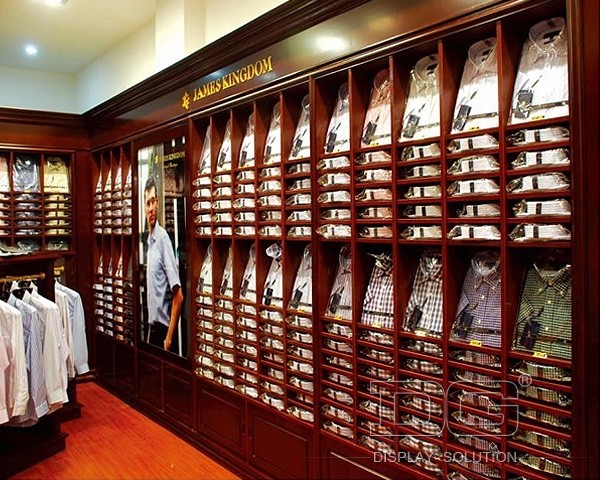
1. The items in men's department are packed in nice boxes. Shirts are sold in transparent packages and neatly arranged in colour, size and cutting. If you know what you are looking for, you can swoop in and get the right package, pay for it and it's yours.


2. For the ladies' department, you'll seldom see cloths packed, if at all. They are often found hanging on racks so that shoppers can browse them easily. I don't recall seeing any packages at all, which is quite unlike those in the men's department.


3. From the layout of different shops, you can see whether they are meant for females or men. If it's meant for men, you'll see them all packed neatly in boxes or packages. For females, it's all laid out for you to see. If there are 3 colours for the same model, you'll see 3 colours all laid out in front. In general, shopping centres are meant to entice female shoppers than male shoppers. Go look around and see if I'm wrong.


Men's shirts. Neat rows and columns and packages.


Ladies' dresses - Spread out, displayed and no packages.


There must be some kind of behavioural science involved in this. Otherwise, why would every shopping centre that I go to adopt this kind of goods arrangement? Maybe men are hunters, so they prefer hunting for their things when they shop. So if the goods are arranged neatly in a logical fashion, it'll be easier to look for them and go off. Females are gatherers, so they are good at picking good items from a wide variety of things. Their eye for detail enables them to pick things that usually eludes men. It's almost like all the concentration powers in their vision is narrowed down to a small beam in front of them, so they see 200% in clear, zoomed in details. For men? Their concentration powers in their vision is spread over a wider range of view (more than 180 degrees), so that they can see more, though in lesser detail.


Knowing this might present some interesting information on how you do things, depending on who your target audience is.


1. If you're selling to men, put in nice boxes and arranged them in a logical fashion, so that they don't have to ask for help and can find their way around independently.


2. If you're selling to women, put all your goods out to display, so that they can feel and touch and compare and contrast. Putting in nice boxes to display your items must be quite a turn off for them, I suppose.


3. For men, because they loath to ask for directions, it's better to have all the information available on the boxes. For women, even if it's there, they'll ask. I'm, of course, generalizing and stereotyping here, but this works most of the time.


Can we apply the same standards to financial blogs? Is my blog more catered towards women or male readers? I think mine is more feminine than masculine. Do you think so?

Sunday, March 01, 2015

Hurray for redundancy

I saw B's post on market valuation here and I thought he did a good job to remind people about not investing when market valuation is high. I'm here to warn about another thing - that disasters does not strike alone. Usually we're well equipped to handle one big disaster in our life, but we're seldom well equipped to handle 2 or more in quick successive hits.


We talk about employing our war chest and how when the market is crashing, we'll swoop in and buy at cheap valuations. But we seldom talk about the circumstances that happens when the market crash. Usually our jobs is at stake. You wouldn't dare to invest all your war chest, even though it's meant for that purpose, because you're worried now whether your emergency cash is enough should you lose your job. The circumstances when the market crashes is very different from now, when you're sitting in your chair comfortably reading this post. It'll be anxious, uncertain and gloomy.


So the real question is whether you can still secure your own active income in the form of your job, have enough cash to tide over while your spouse look for another job because he/she is retrenched, handle the increasing stress level and possibly adversely affecting your health, AND also invest at cheap valuations?


I'm not sure if I can do it, but I'll try. I hope I did everything I can and I'm still worried.


The key is to survive first then we talk about thriving. Be resilient to any crisis, and then have the means to take advantage of it. If you can't even survive, don't even talk about striking it rich by buying OCBC at less than $5 when it crashes.


To survive, it's about combining all the factors of job security, insurance, emergency cash, family support, belt tightening measures etc etc. To thrive, it's about having the means to take advantage of the general gloom. That's just having ample liquidity.  Always plan to survive first and check and double check what can happen if your mortgage loan increase, you lose your job, your passive income stops giving you money and your spouse gets retrenched, you have health problems and you're the last man standing holding everything together.


We talk about having a safety margin for our stock purchases. But do you have a safety margin over your emergency cash? 

Saturday, February 28, 2015

2 minus 1 is different from 1 minus 0

The numerical difference between 1 and 2 is the same as that between 0 and 1, but they are not the same. I cite some examples:


1. When sharing food, and there's only one piece left, nobody touches the food. Every time you take away a piece, you deprive others of having another piece. This deprivation is greatest when you take away the last piece, compared to any other pieces. Suddenly from having food in the plate, there's none left now. The more pieces there are, the less the deprivation from taking away one piece. Hence, the speed of taking food from a plate full of it is very fast initially but decays rapidly to near zero when it approaches the last piece. Especially between strangers.


2. Going from 0 pull up to 1 pull up is tremendously difficult. Going from 1 to 2 is easier than going from 0 to 1. I think 90% of the effort is spent training to go from 0 to 1 than any other increment. So the real question is this: Can you do one? If you can, you can do a lot more!


3. If the price of an item decreases from $2 to $1, it's quite different from dropping from $1 to $0, even thought the drop is still $1. What's $0? It's free! Free is so powerful that it makes people want something even though they don't need it. Conversely, an item that is free initially, once you start charging money for it, you'll howls of protest. If you've offered free water and start charging for it now, you better have some PR skills out there.


This has some implication in doing certain things differently.


When you're selling things to others, you might want them to buy something small from you first. This could be the opener to other things. Once they get over the hurdle of buying anything from you, effectively crossing the great gulf from 0 to 1, you can convince them to buy more things from you. This is a trick that is used in bargain shops. One or two items might be very cheap compared to the rest of the market, but when you're there and you bought it, you've just crossed the distance between 0 and 1. It makes it more likely for you to buy any other things since you're already there. Change a non-interested person to an interested person, from an interested person to a small buyer, from a small buyer to a large buyer.


When negotiating, make the other party concede to something small first, effectively breaking their resistance to bigger concessions. Once they crossed the gulf from 0 to 1, it'll be easier to ask them to concede more.


When building confidence, start by doing small things that makes you feel confident. You might want to start a weight loss program and didn't have the motivation to start. Buy yourself  a new shoe, go down and just walk first. Once you get over that big jump from 0 to 1, progressively increase it, making sure you build the confidence to clear small hurdles before climbing bigger ones.


Mathematics is funny when applied to real life with all our emotions invested in our actions. 2 minus 1 is really different from one minus zero.

Friday, February 27, 2015

What's 14 subtracted from 432?

Sorry, I just had to get this out of my head. I learnt about binary system in JC but I was very bad at it. However, that new number system is so vastly different from the current decimal one that I'm obsessed and fascinated by it at the same time. It had always been on my mind and recently more so. Did I tell you that being moody makes me ultra creative in unexpected ways? It can be in the form of art, poem, music or whatever other forms it takes. It just happens to take the form of a elaborate sibei eng new number system. 

----------------------------------------------------------------

We’re all fixated with the decimal system. We have 10 digits on our hands, and that makes it easier to count, so I guess that’s the reason why our number system is based on 10 digits from 0 to 9. But let’s say we are all aliens with 4 digits, how would our ‘normal’ viewpoint of numbers change? Let’s start from first principles.


If we have 4 digits in our hands, the only numbers that we can work on is 0,1,2,3 and 4 – essentially a 5 digit system.  There’s no digits after 4, so there's no 5, 6, 7, 8 or 9.


Looking at our current decimal system, how do we get the next number after 9? We add one more placing to the left of our single digit, and reset the number 9 back to 0. So after 9, we can 10. Back to our 5 digit system, what’s the number after 4? We add one more digit to the left of our number and reset our number back to 0. So, after 4, we get 10. Let’s run through the whole number sequence:


For decimal:

0,1,2,3,4,5,6,7,8,9, 10, 11, 12, 13, 14, 15, 16, 17, 18, 19, 20, 21…

For our 5 digit system:

0, 1, 2, 3, 4, 10, 11, 12, 13, 14, 20, 21, 22, 23, 24, 30…

So what happens after we reach 40+? 40, 41, 42, 43, 44. What’s the next number?


By right, we should add one to the left of the digit we’re currently working on, and reset the digit back to 0. But since both digits are 4, we have to reset the numbers and add another digit to the left again. We end up with 43, 44, 100, 101, 102, 103, 104, 110, 111 and so on and on.


That’s for addition.


In principal, subtraction is the same as addition, except you’re going backwards. How do we do 432 – 14 in our new 5 digit number system? The best way to do this is to convert back to decimal system. Every 10 in our new system is equivalent to a 5 in decimal system, so 20 is 10 in decimal, 30 is 20 in decimal, and 40 is 30 in decimal and so on and on


Every 100 in our new system is actually 25 in decimal, so 200 is 50 in decimal and 300 is 75 and so on.

In other words, the hundreds placing of our new system is really how many multiples of 25; the tens placing is how many multiples of 5 and the ones placing is just ones. In our new system, if we have a number xyz, then the conversion of this number to decimal is just 25x + 5y + z

Therefore 432 is equivalent to 4x25 + 3*5 + 2 = 117 and 14 is 1*5 + 4 = 9. Since 117 – 9 = 108 in decimal system, we need to convert back to our new 5 digit system.

108 is not entirely divisible by 25, so the best we can do is 4 x 25, and we’ll have a remainder of 8. Next, we try dividing 8 by 5, the best we can do is 1 x 5 and we’ll have a remainder of 3. So, 108 = 4x25 + 1x5 + 3. In other words, 108 in decimal is 413 in our new system.


432 - 14 = 413


Can we derive a new method of doing subtraction by hand? Sure.


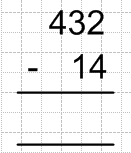
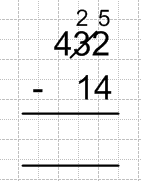
This is essentially the problem.  Looking at the ‘ones’ placing, 4 cannot be subtracted from 2, so we need to take away the ‘tens’ placing (i.e. 3), knock off 1 and add 5 (not 10 because we’re doing a 5 digit number system) to the ‘ones’ placing. Like this:


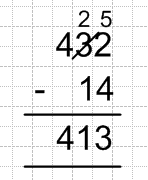
Looking back at the ‘ones’ placing, 5+2-4 = 3. And 2-1 = 1, so we have:


Essentially the same answer if we were to convert the number 432 and 14 back to decimal, carry out the subtraction, then convert back to 5 digit system.


This means that our operation of numbers is very robust in the sense that besides being able to work on the current decimal system, even by restricting the digits available at hand (from 10 to 5), it can still work. I haven't tried multiplication, which is really another form of addition, and also division, which is really another form of subtraction. From there on, it can develop in powers (another kind of multiplication) and what other operation out there.


Is this important? Nope. But it's certainly fun for me. I'm trying to answer this age old question. Why is 1 + 1 = 2? The answer is that it need not be 2. It really depends on which number system you're using. It can really be 10 if you're using binary for example.

--------------------------------------------------------


Hey, while showering, I just came up with a formula to convert any base system to our standard decimal one! If the base is y and the numbers are abcd, then to convert it, you just have to do this:

a(y^3)+b(y^2)+c(y^1)+d(y^0)

For example, if we want to convert the binary number (base 2) 10110 to decimal, we just do this:

1(2^4)+0(2^3)+1(2^2)+1(2^1)+0(2^0) = 22.

Or if you want to convert 432 (base 5) to decimal, you just do this: 4(5^2) + 3(5^1) + 2(5^0) = 117!

EUREKA!

Thursday, February 26, 2015

I played 800 games of 100 coin toss

You have to read this article before this to make sense of what I'm saying here.


After putting up the probability distribution and showing that after playing 100 toss of coin, where each head gives you $2 and each tail takes away $1 from you, will not always give you a positive returns, I was still unsatisfied.


I went ahead and did a monte carlo simulation of the game on excel. Using RAND() function, I will get a random value between 0 and 1. I programmed it such that if I have a number bigger or equal to 0.5, it'll be heads and I'll assign a value of 1 to it. If not, it'll be tails and I'll assign a value of 0 to it.

IF( cell >= 0.5, 1, 0) 

After tallying the number of heads and tails, I proceed to count the gain/loss from this 100 toss game. I did 800 simulation of such 100 coin toss, effectively throwing 80,000 coins in my computer program.


HUAT AH!

Here's the results of all 800 such games of 100 coin tosses. The numbers in each cell represents the gain/loss from playing the game:


I highlighted 2 cells in yellow because this is what I get after playing 800 such games - I've two games where I have negative returns! The probability is higher than the initial theoretical calculation. The theoretical probability of ending up having losses after 100 coin tosses is 0.043686%. Based on this monte carlo simulation, I have 2/800 or 0.25% of ending up not being profitable.


I calculated the average score of all these 800 games of 100 coin tosses, and it turns out to be $49.43875, which is very close to the expected value calculated of $50. Just for interest sake, the mode (the sum that occurred most often) of all 800 such games is $53 and the median is $50.


There! The statement that after 100 coin tosses, you always end up being profitable is not true. Combining the new found skills in excel simulation with real life examples is really really interesting LOL

THAT statement is probably improbable

I saw this article from the fifth person while having mee goreng for lunch. The article talked about how you can increase your wins in investing. All in all, a good piece of article. Sound investing advice. The only complain that I have is that it's not sound mathematically. I'm being anal about this, of course, and it's all because of one word. But let's hear my arguments.


You play a game of tossing a fair coin. If it shows heads, you get $2. If it shows tails, you lose $1.


So what's the expected gains/loss from playing such game? It's 2 x 0.5 - 1 x 0.5 = $0.50. So the article mentioned that if you play one such game, you might not get $0.50, but after playing a large number of games, notably 100 such tosses, the law of averages will kick in and you will earn $50. The article went on to say that "You will always end up profitable after 100 tosses".


Eh...something isn't quite right leh. My mind is attuned to seeing the word 'always'. I get doubts whenever I see that word. Always means 100%. So you mean I will always be profitable after 100 tosses? I've strong issues with that statement that you will always end up profitable after 100 tosses, because it doesn't sound right. Let's test it out.


100 tosses of a coin with a 50% chance of getting heads and 50% chance of getting tails is just a binomial distribution with number of trials as 100 and probability of success, here defined as getting a head, as 0.5. So I let X be the number of heads you get from throwing a fair coin 100 times.


I used an excel spreadsheet to calculate the probability distribution of X. This is a random variable that can only take values between 0 and 100, inclusive. Also, if I have 2 heads, i.e. x = 2, I will lose $94 ($2 x 2 - $1 x 98 = - $94). Below shows a screenshot of the spreadsheet that I did:


This goes on and on until we first see the losses, represented by the strings of negative values, turn positive. That occurs when we have 34 heads and 66 tails, getting us a grand total of $2.


This means that if I get 34 heads and above (i.e. x = 34 to 100), I'll end up having gains after 100 tosses. The probability of getting gains is therefore to sum up all the probabilities from x = 34 all the way to x = 100. That gives me 99.95631%. Quite high, and quite certain, but it's far from 100%.


Conversely, if I get anything from 0 to 33 heads, inclusive, I'll end up having losses after 100 tosses. The probability of losing is thus 0.043686%. Again, it's not certain that we will definitely win. There's a possibility of losing, just that it's highly improbable.


And of course, the expectation of these 100 tosses is still $50 ($0.50 per game x 100 games). I'll be rather careful to say that just because the expectation is $50, you'll always end up being positive after 100 such games. The expectation is just an average of 100 games and we all know what's the perils of using averages. If the average water level in an unmapped ocean is 1 m, does it mean that suddenly, you won't drop into a deep trench of 10 m deep?


Since it's binomial and the distribution is symmetrical, the mode of the distribution, which is the most likely gain/loss you get after 100 toss, will be $50 (corresponding with x = 50), with an attached probability of 7.95892%.


The best that I can say about using expectancy is this: If it's positive, the odds are in your favour. If it's negative, the odds are against you. Probability doesn't mean much to me, having seen my father-in-law winning lotteries almost every month. Yea, so what if the probability is small, as long as there's a chance, no matter how improbable it is, somebody has to win it LOL


Wednesday, February 25, 2015

Realize (the value of time)

This is a fantastic poem called Realize, author unknown. I first saw it hanging as a poster in my then girlfriend's room. This poem captured both the essence of time in the viewpoint of different people in their unique circumstances. Take this as the sequel of my previous post "Time slipping through my hands like sand".


Realize
-----------

To realize the value of one year, ask a student who has failed a final exam.

To realize the value of one month, ask a mother who has given birth to a premature baby.

To realize the value of one week, ask an editor of a weekly newspaper.

To realize the value of one hour, ask the lovers who are waiting to meet.

To realize the value of one minute; ask a person who has missed the train, bus or plane.

To realize the value of one second, ask a person who has survived an accident.

To realize the value of one millisecond, ask the person who has won a silver medal in the Olympics.

Time waits for no one. Treasure every moment you have. You will treasure it even more when you can share it with someone special.

Time slipping through my hands like sand

It's nearing the end of Feb. Soon it'll be March and it'll be another quarter of 2015 gone. Just like that.


It's crazy when you sit back and observe the flow of time. It's slowest when you have nothing to do and you keep looking at your watch, urging with all your mental strength for the minutes to tick by faster. It's fastest when you're the busiest, secretly wishing that time will slow down for you to do that little bit more. Since I felt that time passes without me noticing, I must have been busy.


Work-wise, I don't recall having been this busy in this usually quiet first few months of the year. If I didn't control, I would have been head to toes in work by Feb, which is highly unusual. Am I complaining? Yes and no. Yes because I felt that I had not fully rested. I've been running into this year since last year. No, because my salary increases with more work hours. I'm busier hence I earn more. In terms of my saving goals, I've a few more months to earn before the traditionally drier seasons, so it's highly likely that my savings goals will be reached, and likely sooner.


My ideal kind of retreat


That should have been a happy occasion, worthy of celebration. But I stand here, slightly ambivalent about the achievement. What's happening to me? No longer a money whore? No longer pursuing financial freedom dreams? Not that, it's just that these days, I'm more aware of the cost of reaching any goals. And I'm slightly weary of it. At the back of my mind, this question keeps lingering on my mind - "so what?". So what if you achieved the savings target? It'll be like that the next year and the next year and the next year until a bigger target is achieved. And then what?


Is there a stop to all these? I think there is, but it's far far away. And in the meantime, I better do something to prevent myself from burning out. It's a long journey ahead, and I'm determined to finish happy. Perhaps this long CNY break, which prevents me from working, is making me slightly depressed. I know how ludicrous I sound, but my work is a savior to me in multiple ways. For one, it tempers my mood and usually during my off peak season, I almost always feel slightly moody.


In terms of health, I managed to do 3 clean chin ups. Still working on it, and doing it every other day with my wife at the pull up bar. She's getting stronger too, but still can't clear that important hurdle from zero to 1. Will be switching to palms facing outwards soon (technically a pull up) and fully expecting a drop in the number of counts.


I also managed to finish 10 books and I'm into my 11th book now. 1 book a week means I should have done 9 books, so I'm slightly ahead, but not too far. I'm reading slower because I've to prepare for some new modules to teach, and that takes up some time from me. I'm actually quite happy to stick to my reading schedule. Usually I will read more during my off peak seasons, but I'm trying to see if I can stick to a more regular kind of reading schedule, which means I can probably read more than 52 books a year. That would be amazing! Imagine the incremental knowledge that I will have by reading just more books that others. I'm not a scholar by appointment, but I think I'm one by habit.


I started this article feeling down but finished it feeling a little more upbeat. I think it's great counting our blessings!


Sunday, February 22, 2015

Thought experiment on being FF

What will I do after I have a million dollars? A million dollar is figurative, it might not really be one million dollars. Could be 2 million. The point is, what will I do if I have the financial means not to ever work again?


Quite resolutely and with much certainty, I'll continue doing what I'm doing. I don't hate my job; in fact I like it very very much. There's a lot of meaning and it brings me a lot of satisfaction and joy beyond the obvious financial gains. What I'll do is to reduce the intensity and the duration of my work hours. I think I'll be a little more selective in my students and take in the ones that can benefit the most from me. I would increase the number of students that I help for free or at a very low rate. Perhaps I'll go back and join SINDA and CDAC to help out students.


What else would I do? I'll probably give a lot more money to my parents. More importantly, I'll spend more time with them. Not everything can be solved with money, but those that can be, I should be able to solve it easily without affecting me too much. If I have 1 litre of water, sparing 500 ml of water might be substantial. If I've 10 litre, 500 ml of water doesn't seem like much anymore. My solution to such money woes is to grow big enough to make the problem seem insignificant.


What else can I do? Get a nice mini cooper for my dear wife. It need not even be new (for me, I doubt if I'll ever buy a brand new car), but at least it must be worth it. She likes one and probably find that a very useful tool and nice thing to have and to use in her everyday life. The good thing about having the means is that you can settle all the needs and indulge in a little more wants. Can I afford one now? Sure, it'll be a pre-owned car with 3 year left and it'll cost me 60 to 70k. Is it worth it? Definitely not, hence I'm reluctant to do it despite her numerous attempts to convince me.


At this point, I'm a little flabbergasted. I've a hard time thinking what I'll do with the money. Is it because I'm contented? Or is it because I have limited imagination? It's hard to say. Maybe after not having grapes since young, I started seeing those grapes as sour and eventually no longer want those grapes at all now.


Is there anything that I really want?  I could do with a new desktop, but the problem is that I like old things. The older they are, the more memories of me using the things and hence the more precious it is to me. Says the person who had only 1 mechanical pencil that I used for about 18 years. New things? Cool, but I might not like it. How about more experiences? I could do that. Perhaps more trips overseas? The furthest I've ever been is to Taiwan. Maybe Aussie, but that's because of army, so maybe it's not counted. I suspect I don't really like going overseas. An ideal relaxed day for me is a book in hand, at home, without a care for time and commitments. This will be punctuated by my wife asking me to go out for a short tea breaks at nearby cafe and just sharing a cake or two and watching people and talking about everything and yet nothing at the same time. This can happen anywhere, and especially near home and need not be overseas.


What if I'm financially free but my loved ones are not longer there to share it with me? I'm quite sure I'll bury myself in work. Probably I'll work harder than I ever had, so that I can find more meaning in future days where the sun no longer shines and no cakes and teas ever taste the same again. I'll probably not go to those cafes that we had been together - it'll likely be too painful for me. Oh, very likely I might live overseas and seek a different life altogether.


So typing this post and reflecting, maybe it doesn't really matter if I reach financial freedom at all. Do I need that million dollars to start doing all this? Not really. It'll just be more comfortable and probably it'll feel psychologically more secure. Maybe I can just say screw it and get what my wife desires - a mini cooper. Does 60 or 70k really matter? At most it'll slow me down by 1 year or 2 years, but the important thing is that I get to share something important at the right time with the right person. I'm saying this not just about the car, but everything else in general.


I realised deeply that money isn't very important for me but I'm concerned about it enough to track my expenses daily, invest in the stock market, have money goals and saving goals. Why? Is it because I want to reach financial freedom? I think maybe it's not. You don't see me talking much about financial freedom in my blog and I'm certainly not obsessed about it. To me, the mindset is that if I get it, I get it. If not, life goes on. I'm quite certain I'll be a millionaire though. It's just a matter of when. The trajectory in my spending and earning patterns certainly points me in that direction. And then what?


So let's me totally honest. What I really really want is just security. If I don't address that, even if I have 1 billion dollars in my bank, I'll still feel the same. Can I give more money to my parents now? Sure. Not as much as I could have given if I have a million dollars now, but I can certainly give more.  Can I afford to take up less students and instead do more volunteer teaching? Sure. My earnings might take a hit but that's still okay. I have to think that earning another 1k might not be worth as much as the satisfaction in mentoring a person when I volunteer my time. Can I buy a car that my wife wants? Sure, not a brand new car, but a pre-owned one that we can still use for another 5 yrs perhaps? I'll set me back by a few years, but so what? Can I buy the desktop upgrade that will cost me perhaps 2-3k? Sure, I can, but it's certainly not the priority given my penchant for old things.


That clarifies a lot of things. The difference between me being officially financially free and now is just simply the level of security that I'll have. I should spend more effort relaxing and getting comfortable with spending rather than racking my mind to earn more money.


Self-enlightenment.

Monday, February 16, 2015

Why I read blogs

My daily morning routine for the past few years had been quite constant. The first thing I do is usually to go to TheFinance.sg to read what other people are blogging about in an area of interest known as 'Personal finance' and 'Finance'. TheFinance.sg is actually a blog aggregator, which means that I just have to access one site to see a range of different sites that contributes to it, saving me a lot of time searching for similar themes and topics.


Do I read the newspaper? I did subscribe to it, though it wasn't my idea at all. I would have preferred not to subscribe. I think newspaper as a source of news is not at all a good idea. News comes in randomly, and the value of a news article decays rapidly with time. To be printed on a national newspaper, you have to get a reporter on the spot, churn out a report, verify the factual information, send it to the editor to approve and finally publish it physically as a newspaper before distributing for public consumption. By then, the short half life of news articles would have rendered it old news already. Which is why social media like facebook and especially twitter, is a better source of breaking news, though often unverified.


So what's the use of traditional printed material like newspaper and news magazine?


It's for their opinions and editorial pieces, where people analyse and give their viewpoints on how the news relate to us. These half digested news piece saves us the trouble of thinking through each and every news article, and probably generate new thought sources and reflection. These opinions of facts, necessarily means they are subjective, but that's the thing I like about them. They don't pretend to give general good advice for everyone. It's the same news but it's seen through the lens of someone with his own usual prejudices and baggage. 


Blogs often do give subjective viewpoints. We might all be talking about a particular news, but because we all are different, we'll focus on different parts of the news that are important to us. The sum of parts of many subjective interpretations makes it more objective than any individual subjective parts. If you read widely, especially from different camps, you'll end up having both sides of the argument, and then you can proceed to make your own judgement about the situation.


That is how we should treat all sources of information.


The other main reason of why I like to read blogs is because it's an immersion of this subculture that makes it harder for me NOT to succeed. This subculture of a financial warrior, striving hard to save more and earn more and invest more with the aim of being financially free is weird and when we talk about this subject matter to the everyday common people, we might be seen as... unsociable. Imagine telling someone that our food budget is reached, so is it possible to eat something cheaper today? It's an outright turnoff.


But having gone out with a couple of financial bloggers, we all know what we want. We'll totally understand if someone's budget is nearing a certain amount. We can totally sit down and talk about deep issues on investment and personal finance matters freely. This is just an extension of our online persona into real life. Nothing weird there. In fact, it feels like we're just bantering and commenting on each other's blog as usual, albeit using our body language instead of mere emoticons.


To be immersed in a conducive environment where it's normal to save more than 50% of your income and not drape yourself in fine clothes and fine watches is like a baby bird watching eagles fly. This is just everyday normal life, nothing extraordinary and nothing that we can't do ourselves. 


I can't tell you how enlightening and free this can set your mind. Everyone who wants to have a shot at financial freedom ought to be immersed in such an environment.

Thursday, February 12, 2015

Planting a bamboo is insane

Can you imagine sitting still for years, doing the same thing again and again while waiting for the results, if any, to show? People might have called this the definition of insanity - doing the same thing again and again yet hoping for a different results. But there's exactly how a Chinese bamboo tree takes to grow.


Most tree will grow steadily, so you can definitely see progress for the effort of taking care of them and watering them. The Chinese bamboo is different. For the first year, you see nothing. So you water them and take care of them. For the second year, you see nothing. It's alright, you continue to water them. For the third year, you also see nothing. Now, you're starting to feel anxious. Did I plant them correctly? Are they dormant and waiting to burst out of the soil or dead and buried in it? You can't exactly peek inside to observe! For the fourth year, as usual, you see nothing indicating that they are still living. Then, in the fifth year, just when you're about to give up hope, an incredible thing happens. The bamboo shoots break ground and grow to a height of 27 metres in one year!


Some people like to compare investing with fishing. I don't. Fishing sounds so...predatory. I prefer to compare it to gardening. The first few days of planting a seed is the hardest to swallow. You plant it, and everyday you'll go and water and see if there's any progress. Sometimes, after waiting for a long period, you might or might not see results. I ever waited months, watering every day to know all my tomato seeds is dead from the start. It's the best test of patience and discipline. Despite how it sounds, doing the same thing again and again without seeing any progress (might even be a regress) is not easy at all.


Sitting still is not easy.


To overcome this, they used to say we should be motivated. I think to stay motivated like that is insane. Motivation is a positive feedback cycle of seeing positive results from your efforts. If you don't see anything, it's hard to stay constantly positive. I think having a system is better. You just keep doing the same thing day in day out. If you do it, consider that as a job well done! This way, you segregate the results from your efforts and makes it possible to sustain for a much longer period of time. And when you finally see progress, the positive feedback cycle for motivation will continue to feed the system.


That being said, always be ready to give up a foolish venture. What? Doesn't that negate everything I've said?! It takes intelligence to acquire knowledge, but it takes wisdom to know exactly when to apply what knowledge. So what am I saying? Nothing and everything at the same time.


Thursday, February 05, 2015

How to do a 2 variable data table

I was going to teach a student business analytics, which is something I've never really done before. So far so good, it's half statistics, which I already knew but more application type of questions (instead of theoretical ones) somewhat related to making sound business decisions. The other half is about simulation and modelling using mainly excel. I've always wanted to learn the deeper end of excel but never really got the motivation to see down and try out all the fancy stuff. It's not just about learning it, but also applying it to my daily life and see how I can hack out some more productivity out of the things that I do. That's more important for me.


I'm at best a novice user of excel. The formula part of the excel is not a problem for me. It's the more intricate data crunching part that eludes me. So if you're already an excel expert, don't laugh at my feeble attempt.


I happened upon this question where they set up a 2 variable data table to see how it varies the final output. Fancy stuff, didn't even know I could do that! So here's me sharing how to do 2-variable data table, step by step.


So here's my problem: I want to get a sum of money in 30 yrs time. I want to find out how much I can get by using this formula:

Future value (FV) = Present value (PV) x (1 + Rate/100)^time

There are two input variables in here, namely PV and R, and one input constant, which is time. My output data will be FV. Time is fixed at 30 yrs, and the two input variables are rate (of investment returns, at %/pa) and PV (which is the amount that I'm going to invest right now). I want to see how the two variables will affect the output, which is the future value FV, given this particular set of constraints.


I limit my PV to go between $5k and $100k inclusive, and my rate between 0.5% and 8% inclusive.


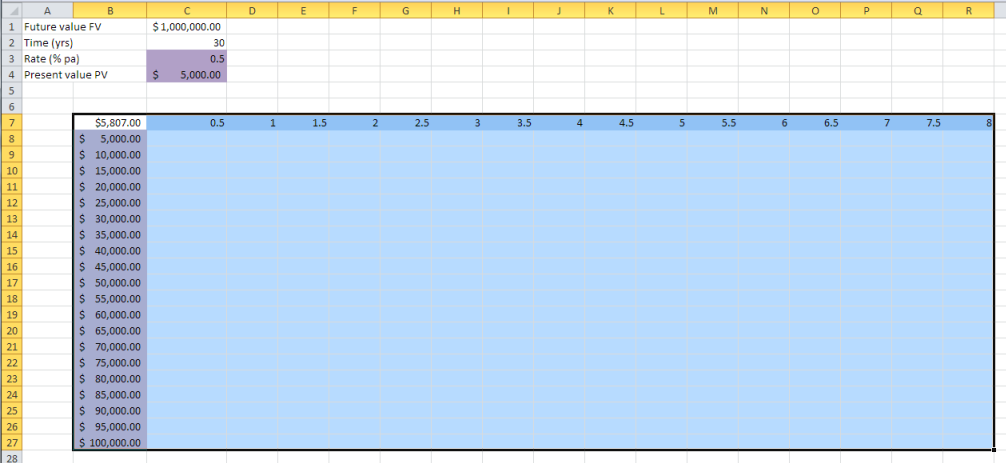
Step 1: Key in the data in excel.


The cell B7 is using the formula: = C4*POWER((1+C3/100),C2). It doesn't matter what rate or PV you used initially. I used 0.5 and $5000 at first, but it doesn't really matter.


Step 2: Key in the rows and columns.

The rows I let it be the rate, ranging from 0.5 to 8 with incremental steps of 0.5%. The columns I let it be the PV starting from 5k to 100k, with incremental steps of 5k. Do note that the rows and columns must be to the right and bottom of the cell B7.


Step 3: Highlight cell B7:R27, as shown below


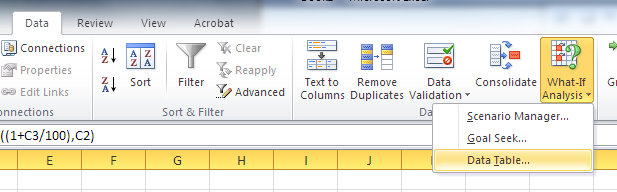
Step 4: Go to Data / What-if-analysis / Data Table and click on it.


Select row input cell as C3 and column input cell as C4. Basically you're telling them that you want the row of cells (C7:R7) to the right of B7 as the Rate (C3) and the columns of cells below B7 (B8:B27) as the PV (C4).


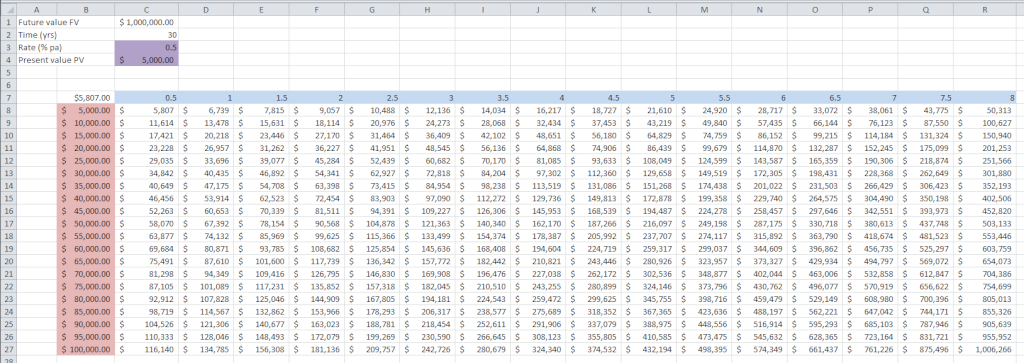
Step 5: Done!


You can now analyse the data based on the different inputs of rate and PV. For example, if you want to reach 200k at the end of 30 yrs, you can do a few options:

1. Put in 20k and invest at 8%
2. Put in 35k and invest at 6%
3. Put in 80k and invest at 3% and many other options


This is seriously going to be helpful for me!

Thursday, January 29, 2015

My chin up journey

For the past weeks since the start of the year, you can see 2 persons in the east near to a pull up bar, around 10pm to as late as 11pm. One of them would go near to a bar first, mount it by jumping up and the other would as quickly as possible, grab the ankles and help to assist the person to go up. It'll be 2 sets of 6 assisted chin ups, if they are feeling strong and energetic, or 3 sets of 4 reps if they are not feeling up to it. Always, there'll be rest in between the sets.


Those two persons is me and my wife. For some reason that I'm still trying to figure out, we decided to train to do at least 1 chin up by CNY. Both of us are zero heroes, meaning we can't even do one chin ups. For me, I'm a serial zero hero. At the peak I could do 10+, and that was back in my prime during army days.


During end 2013, I managed to do 3 to 4, so that I could pass the more stringent IPPT before they revamped it all over again. Anyway, I have a lot of experience in going from zero chin ups to 1. The journey from 0 to 1 is immensely harder than from 1 to 2 and from 2 to 3. So a lot of effort had to be done to build up the back muscles and the arms. Esp the back muscles, which is kind of hard to train unless you go to the gym purposefully. For my wife, she never had the experience of doing 1 chin up before, so it's a brand new experience for her.


This is where I want to be


In the past, when I was going from 0 to 1, I was doing all sorts of things except going to the bar to attempt to pull myself up. I would be doing weights, then push ups and dips and those assisted pull up machines found in the gym. The settings of the chin up machine is set so that I can do 10, which means that it's not hard a setting. After training for some time, I would test myself by going to the bar and attempt to do one. A few grunts and a few kicks, I still can't do one. How disappointing, I thought. Didn't I train hard?


If you want to learn how to swim, you can buy the best swimming trunks, the best anti-fog goggles, a nice Speedo swimming cap and even a mp3 player that is water resistance so that you can listen to music while swimming. You can read all about how to do it from books, talk to swimming enthusiasts to ask them to give you some tips and watch youtube videos. But if your feet is not even dipping into the swimming pool, it's not going to help. To learn how to swim, you need to jump into the water. Might not be initially, but eventually you'll need to.


I guess the same lesson applies for my chin ups...if I want to do one chin up, I need to go to the bar and attempt to do it. All other things are peripheral. The most effective way to do it is to attempt to do it. Invariably, you'll encounter problems. Like, I can only do less than half a chin up. Since the back muscles are the ones that do the initial lifting, I concluded that my back muscles are weak. The only way to train is to do more assisted chin ups, until you can do half a chin up (this means that you can lift yourself up to the point where your elbows are about 90 degrees).


And that is where I am right now.


To go further, I need to build up my biceps. That's why I'm doing weights. Out of all books that I read, it's Antifragile by Nassim Nicholas Taleb that I learnt how to build more powerful muscles so that you can lift heavier weights. You just need to take the max weight that you can lift for about 5-6 times, instead of doing multiple times on lighter weights. When I mean 5-6 times, I really mean the last lift you can do is 6. You'll be struggling on the last rep and you possibly can't do anymore after that. The theory is that if you want to lift heavier weights (which is essentially what chin up is about), you need to practice lifter heavier weights. Doing lighter weights multiple times can only make you...lift lighter weights multiple times. So right now for me, it's 8.75 kg for 6 times, 3 sets, with rest in between.


It just takes less than 10 mins to waste my arms totally. On top of this, I'm still doing the die-die-do-12-chins-up-by-any-means exercise with my wife. I tried it yesterday night, and I can barely even do 1/4. It's like that, my muscles are totally wasted. To become stronger, you need to destroy and rebuild. That's how nature works. I just need to supply it with nutrients and water and the rest would take care of itself.


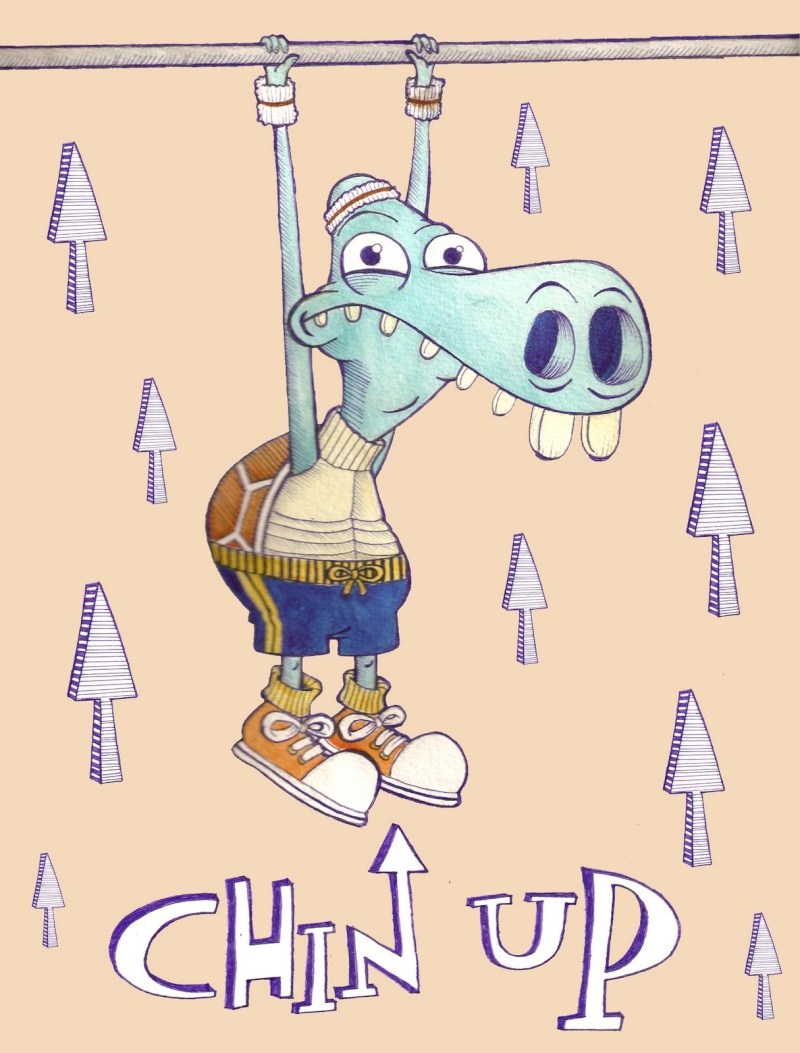
This is where I am now. From Freddy Thorn Illustration

LP the personal trainer? No lah. Knowing me, you know where I'm going to end this post with. Seldom do we see new things, but we consistently find new ways of doing old things. From my chin up journey, you can see a few important points:


1. If you want to do something, go do it. Don't do everything except the things you want to do. I know sometimes we need to psych ourselves to the task. Go do it then, but ultimately remember this, to do chin ups, you need to go to the pull up bar and do chin ups. Any other things are peripheral and at most plays a supporting role. Do the thing that you fear the most.


2. Push your limits to grow. Doing the same thing that you can already do multiple times is a different sort of training if your goal is to do even bigger things. Of course you'll suck at it initially, but that's the only way to push yourself out of your comfort zone.


3. To grow anew, you need to destroy. By going about your old ways yet hoping to see new results is insane and delusional. If you don't remove the old, it's hard to find new space to fit in the new.