Monday, September 29, 2014

The 3 components of ROE

I've written in the past about the dangers of relying solely on ROE calculations. The danger comes from not knowing the components that makes up ROE. For the uninitiated, it refers to a matrix called Return on Equities.


Not this roe lah!

I think it's important to use Dupont analysis of ROE to break up the components of ROE into 3 main categories:


  1. Financial leverage = Total assets / Equity
  2. Assets turnover = Revenue / Assets
  3. Net margin = Profits after tax (PAT)/ Revenues


If you take the 3 ratios above and multiply them, you'll find that the denominator and numerator of most components will cancel each other, giving you :


ROE = Total assets/Equity x Revenue/Assets x PAT/Revenues = PAT/equity

That is the standard formula for the computation of ROE


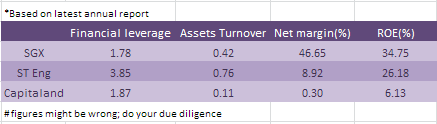
Let's use some concrete examples. I randomly take 3 STI components, SGX, ST Eng and Capitaland. They have nothing to do with each other (in terms of the business they do). The only commonality is that they have easily accessible annual reports so that I don't have to plow through everything to get the numbers required. Lazy, I know :)


So here it goes:


If you look at the ROE component, you'll have realised that ST Engineering's ROE is high because it is more highly geared up. Basically with leverage, you'll have a multiplier effect on your gains or your losses. That's not necessary bad, it's just that if you compare ROE alone, you'll miss that fact.


Again, if you look at the ROE of SGX, you'll find that the main component driving it is actually it's high net margins. That super delicious net margins pushes up the ROE. That is not necessary good or bad, it's just something that might not be noticed if you just focus on ROE alone.


You can dig more about ROE in my previous post here. The real important one is the 2nd link, but it's riddled with broken links of pictures...argh..

1. Dupont analysis of ROE
2. Woe be to those who missed out ROE
(I apologise for the lack of pictures...the server that I had uploaded the pictures went bust...so it's gone)

Thursday, September 25, 2014

Winning the skirmishes but losing the war

We are sometimes so caught up with our lives that we neglect the big picture. We often keep doing the things that are urgent, but forget about the things that are less urgent but nevertheless are important.


Study the matrix above.


Urgent means that it has a time factor to it. It needs to be done as soon as possible in order to meet datelines that are either self-imposed or externally imposed. Important means that it fulfills certain long term goals or mission.


Quadrant 1 are the tasks that are both urgent and important. These are crises situation and are emergencies. Priority should be given to these. But how many crises situation are there in a day? If everything is a crisis, your workflow is not set up yet, so you might need to work on that. An example of such a situation is when your client calls you for an important presentation that may lead to a sale. Everything else needs to be put on hold while you pursue this lead.


Quadrant 2 are the tasks that are not urgent but are important. These are the tasks that are often neglected because of the lack of urgency. A good example is retirement planning. Retirement is a goal that is years away for working adults but if you don't start planning now, it might reach a point of no return. So for such situation, we need to sit down and think about what are the things that are potentially urgent in the future and has great impact on your life. These, we need to do long term planning. You can probably delay for a week or two, but certainly not delay in years.


Quadrant 3 are the tasks that are urgent but not important. At best, these are interruptions to your workflow. It could be your boss asking you for yet another board meeting. It could be your mum asking you to get something for her while you are doing your work.


Quadrant 4 are the tasks that are not important and not urgent. I try to push a lot of task into this category as I grow up. Not a lot of things are as important now as it seems in the past. An example of this is playing games. It serves at best as a time waster event, though we all need such activities to relax and wind down. Just don't make this a priority when there are Q1, Q2 and Q3 things left undone.


The ideal workflow goes like this:


  1. Classify all activities into the four quadrants 
  2. Settle all the Q1 (urgent and important) activities first
  3.  Then try to push those activities from Q3 (urgent but not important) into Q4 (not urgent and not important), as much as possible.
  4. Settle the remaining Q3 activities
  5. Schedule the Q2 stuff daily or weekly into your timetable. They are not urgent but they are still important. So do them on a daily/weekly/monthly/yearly basis. The key point is to plan it into your timetable, otherwise they will not be missed until it's too late.
  6. Do the Q4 activities the last. Or when you need a break from your suddenly productive life.

I'll proceed to give an example of how to use this in a typical student's life.

  • Do all assignments that is due this week first
  • Pass down some 'arrows' that are shot by your group leaders in your co-curricular activities to others. Those that can't be passed down, just settle it as soon as you can
  • Exams are in 2 months time. Have a plan of how your revision schedule will be like. Stick to it every week. Start early, finish leisurely. Start late, finish panicky.
  • Stop watching you-tube videos or korean dramas when you don't even have time to finish the above. Allow yourself only a very limited time to do these per week, and only after you've had a good productive week.

You can be surprised how many people cannot find the time to study for exams until it's too late. Too swamped by everyday living that they miss the big picture. Are you doing that in your financial life too? Too concerned with day to day living and miss planning for longer term goals?

Saturday, September 20, 2014

Will you buy a chair for 1.6k?

I read a very interesting article about the comfort principle this morning. It's about optimising your spending in such a way so that you maximise your comfort level. If not taken to the extreme, this provides a very good guide on spending on things that are of value to you, not merely to catch up with or impress others.


Similar to the author in the article, I also spent A LOT of money on a chair. When I renovated my current home, I knew I will be spending a lot of time at home. I'm constantly having back aches from sitting in ill adjusted chairs and because of the long amount of time spent sitting down, the chair gets hot very easily. It's very frustrating when you know you have to do work but you're suffering from back aches and hot butts. Hence, when I saw this awesome chair with mesh netting (to allow ventilation) with lots of adjustments to fit the chair on you, instead of the other way round, I wanted to get it immediately. But the price tag of 1.6k is what held me back.


This is the exact chair that I bought


That was when my wife came in and reasoned with me. This chair will probably last 6 years, probably longer. My previous chairs lasted about that amount of time too (imagine the aches I've to suffer!!). If I spend 8 hours sitting on it per day, it'll be a good 17,500 hours of usage, which works out to be about $0.10 cents per hour. Considering that this is the 3rd year of usage and it's still running strong, I think it can probably last a lot longer than 6 yrs, bringing down the usage cost per hour. Knowing myself, I will probably not buy another chair if this one can last that long.


And so I bought a super duper chair with a price tag of $1.6k. Sounds like a splurge, but I think it's one of the best buy because it's something I use every single day, bringing me a comfort level that I might not have if I've to get a chair which is way cheaper.


This principle is not a good excuse to buy anything because you only live once. The article mentioned that you must also combine it with knowing what is 'good enough'. Also, what is expensive need not necessary be the best, so don't go judging the quality of items with the price tag.


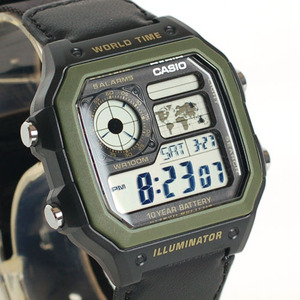
I think to balance this article, I must also mention that while I can spend so much on a chair, I'm loathe to spend on a watch. A watch is functional to me and it must have 3 things - lights, stopwatch, digital time. I can't wear metal watches (It'll be too heavy for me) and the weather is too hot for leather straps (it'll stink when sweat soaks in). That totally leaves me out of luxury watches, which is perfectly fine for me. I recently got a watch for $30 and I'm so very happy with it. So before you say it, I'm not asking everyone to buy everything that your money can afford.


This watch I got it from qoo10 for about $30


Spend crazily on the things that matter, and frugally on the things that don't.

Sunday, September 14, 2014

Hedging both sides of the bet on life

We usually hedge against a long life by planning for our retirement. We save up. We make sure we have enough passive income to last 20-30 years after our retirement. But we also have to hedge against the possibility of having a short life.


Nobody knows when we're going to pass away. While it's never good to live in the present and forget about the future, it's also equally bad to concentrate solely on the future and skim on the present. I know myself  - I tend to over-worry too much. I worry whether I have enough income and enough savings to last me the next month. It took me quite a while before I can willingly spend part of my savings on myself. I've to thank my enlightened friends to knock some sense into me when I'm obsessed about savings at the neglect of my present self.


So hedge against long life. Go save up for your future self. But do hedge against the possibility of a short life - go spend time with your closed ones, spend money on things that brings you happiness. Different advice works for different people. For people who are tighter on money, advice them to spend more on themselves. It's going to be okay. For people who are looser on their money, advice them to spend less on their present and more on their future. Save up for rainy day.


In the uncertainty of the duration of your life span, we have to hedge both sides of the bet. Live for the moment. Spend impulsively. Live like there's no tomorrow. Then, like a person with split personality, save up for tomorrow. Build up a passive income stream for retirement. Delay gratification.


Is it contradictory? No, I don't think so. The two opposite poles are just swings of the same pendulum. There's no duality. The cup is empty and full at the same time. But if you can't see that the cup is empty and full simultaneously, then practice seeing it as one or the other first. For me, I see that the cup is empty first, so I save up for it. Only recently do I see that the cup is also full, so I must spend to keep it from overflowing.

Friday, September 12, 2014

$10k a month as a tutor? Think again.

I think by now you should have read this post about a tutor who earns $10k a month. Most of what is mentioned in the article is quite true and I can vouch for its accuracy. Some comments on it though, before you quit your job to become one:


1. There's no CPF contribution by employer, leave, benefits, company dinners, health insurance sponsored by company. There's no company benefits at all.


You must learn to take care of your own affairs. Being a tutor is not just about the teaching part. You have to learn to manage your own affairs, save up for your own retirement and do your own accounts and tax. If you really hate these kind of admin stuff and do not want to pick up stuff like accounting, investment, insurance and a million other things that normally people take for granted, then you should seriously consider another job. It's essentially a one man show.


2. Learn marketing


If you're so good at teaching, it doesn't mean that students will naturally come to you. You have to learn how to sell yourself so that you have a constant stream of students every year. Besides learning your craft, the next biggest thing to ensure longevity of your business is to learn how to sell yourself and market yourself well enough so that through word-of-mouth, you'll get constant referrals.


3. Love what you're doing


If you're in this just for the money, I can assure you that you're going to hate this job. In certain months, there's no life at all. You practically work from Monday to Monday. You'll hate public holidays and weekends. You'll no longer have friends who will ask you out for dinner because you're working. You'll get messages throughout the day from panicky students asking you for help to solve this question and answer that query. Your work is weaved so intricately with your life that you cannot differentiate when work stops.


And so, you had better enjoy what you're doing. Do this for the money? You're not going to last long. Students are also not stupid. They can tell quickly if you really care about them or not.


4. Have a support group


It can be a lonely journey. But fortunately, my wife is also working odd hours just like me. We enjoy shopping when people are working and working through the night when others are relaxing. I can't imagine if one of us is working normal hours and the other odd hours. The conflict and schedule clashes should be quite hard to manage. It's good to have someone walking the journey with me.


5. Learn to be a counselor and a mentor, rather than a mere tutor


 You'll be surprised how often I've to settle issues other than those related to studies. Not everyone comes in all motivated to learn. More often than not, I'll have to find my way to reach out to the person. Sometimes, I failed and sometimes I succeed. That's what makes the job so interesting, once you're past the stage of knowing what to teach or how to teach. It's a combination of listening, observing and motivating that makes a person want to do well for his studies. To me, it's never about the exams. It's a way to touch the inner fire within each person, igniting it strongly enough so that it can glow and touch others too. It's a magical feeling that makes you want to experience it again and again.


That's what keeps me going.


6. Be comfortable with the seasons of work and play


You're never going to have a stable pay. Face it and accept it and plan for it. Each year, your income might drop by 50% or more and you'll have to work hard to recruit new students just to match up to the previous year income. This makes a fixed monthly pay such a luxury. Face it, accept it and plan for it. If you're not ready for such a drastic change in your pay schedule, you're going to feel very jittery in the dry season from November to January.


Ten years playing this game, I've learnt to look forward to my dry months when I'm busy with work and looking forward to work in the busy months when I've had enough play. Worry also no use. Learn to flow along and learn to let go. Bad times don't stay forever, so do good times.


You think it's so easy to earn $10k? Try it and see if you can handle the downsides first.

Related post:
1. Self analysis of tuition business
2. Unstable income stream from tutoring
3. The other side of being a tutor

Friday, September 05, 2014

Retirement thoughts

I was thinking about retirement income recently, especially after reading a click bait post from a magical blog. I felt cheated because I was baited into it, so that set me thinking. It's not the same topic however, but certainly in the same general area of personal finance.


To get a retirement income, we have to settle a few variables. Once those variables are thought of, we can perhaps (roughly) solve this question of getting the monthly retirement income. The factors are:


1. When are you going to retire?

2. How much income do you need when you retire?

3. What is your life's expectancy?


Your solution to this question is going to be as good as your inputs and hence your assumptions involved. We might not be able to know all the answers to the 3 questions exactly, but a rough idea is better than none.


Let's apply it to myself. Let's say I'm 35 this yr and I'm going to retire by age 60. Assuming life expectancy of 85 yrs old, I'll still have another 25 yrs to work and another 25 yrs after retirement to ration my money so that I'll have enough for money to last my life. Let's assume that all the medical bills are taken care of by insurance to make the situation cleaner and less cumbersome, so that the retirement income is purely for spending and consumption.


My expenditure is about 3.5k per month, but that includes my mortgage of 1k (split between wife and myself) which no longer needs to be paid by age 60. There are things that no longer need to be paid when I'm 60, like my limited whole life plan and the mortgage insurance. But let's just take it conservatively (in fact, very conservatively) that my expenses is going to be 3.5k.


3.5k per month over 25 yrs after I retired at 60 works out to be $1,050,000. That's on today's terms, inflation of about 3% not inclusive.  How long do I have to save up that amount?


I've 25 yrs of years after retirement and 25 yrs of work years to save up, so that means I've to save 3.5k per month, every month of my working year, in order to retire with enough income to have 3.5k when I retire till I'm 85 yrs old.  Wow, that means I've to earn 7k per month from now till age 60 in order to get that amount. The 7k is split up into 3.5k for living expenses now and 3.5k for living expenses for my future self.


Of course, that's just pure savings alone. It'll be a lot better with some investment returns, so I can accumulate more with lesser savings per month. But the problem is made worse by the fact that we begin with -3% 'investment return' to begin with. That's because of inflation. Just to break even, we need to get 3% per year AND save that much to get 3.5k per month upon retirement.


Not exactly easy eh? So what can be done?


Firstly, lead a simple life and reduce your expenses. If you can live with 2.5k per month, you just need to save 2.5k per month for every working month. The idea is simple. If you want $500 per month in the future, save $500 per month while working. If you want $1k per month, save $1 k per month for every working month.


Secondly, start earning money and start saving early. The good thing is that if you live a simple life now, you probably will be leading a simple life in your retirement too. If you don't reduce your expenditure and spend the exact amount during your retirement years, you'll need a savings ratio of 50% to reach there (3.5k to save for retirement on an income of 7k means 50% savings), based on my 25 yrs of working years and 25 yrs of life after retirement.  I think if you are a conscious spender, and include your CPF contribution in your retirement plan, saving 50% is not a problem unless you are earning below 2k. If that's the case, you really need to find ways to boost up your income first. Unfortunately, you'll have more pressing issues at present to think about than to think about retirement in the future, I believe.


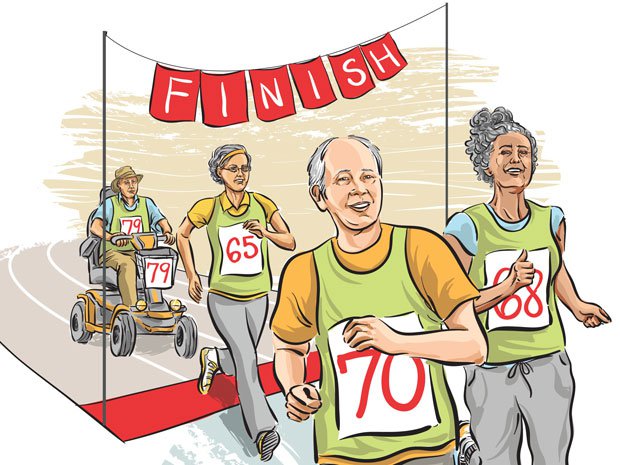
If you start work earlier, you can save for your retirement earlier. Think of it this way. For my situation, I've 25 yrs to work to earn 25 yrs of retirement income. If I start working towards this goal earlier, I might have 35 yrs to work to earn 25 yrs of retirement income. It'll be much much easier and less stressful. Conversely, if you started late and you have 10 yrs of work to earn 25 yrs of retirement income, I seriously don't know how it's going to be done without suffering a drop in standard of living.


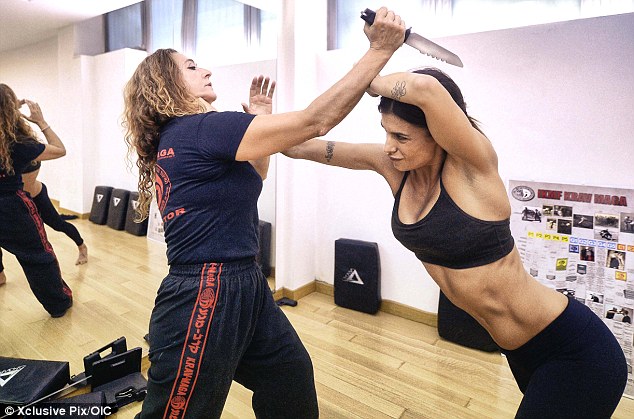
Thirdly, retire later. If you push back the retirement age, you boost your chances of retiring better. How so? Pushing back your retirement age shortens the amount of funds needed for retirement because you have lesser years to plan for. At the same time, you increase the number of working years to save up more. This is like a Krav Maga move where you counter and attack simultaneously. If the Israeli martial arts can be used surviving in real life situations, this move of pushing your retirement age certainly increases your chances of surviving retirement, so to speak.


Fourthly, you have to keep on working and be employed. To do that, you need to keep yourself updated and retrained if necessary in order to stay employable. If that's not possible, you'll have to engage in some small business or become self employed. Nobody owes you a living, so start planning for your own business or self employment when still at your prime, while you can.


Lastly, it's taboo but it still must be said. Just live a shorter life. Shorter life, less retirement funding needed. Period. But we can't really control that without resorting to the final solution, can we?


Monday, September 01, 2014

Is it a "waste of yourself" to be caught up in investing?

I think financial education is a must in this world. It's not even an option. Everything (almost) transacts in monetary terms, so without a working knowledge of money, you'll be severely disadvantaged in this world that you're currently living in.


But even though it's a necessity, it doesn't mean everyone needs to be an expert in it. There are different levels of involvement. Essentially, if you're not interested in financial stuff, you just need to know enough not to make big mistakes. If you're more interested in dollars and cents, then you get more involved in perhaps actively choosing your insurance or managing your funds to reap a better return.


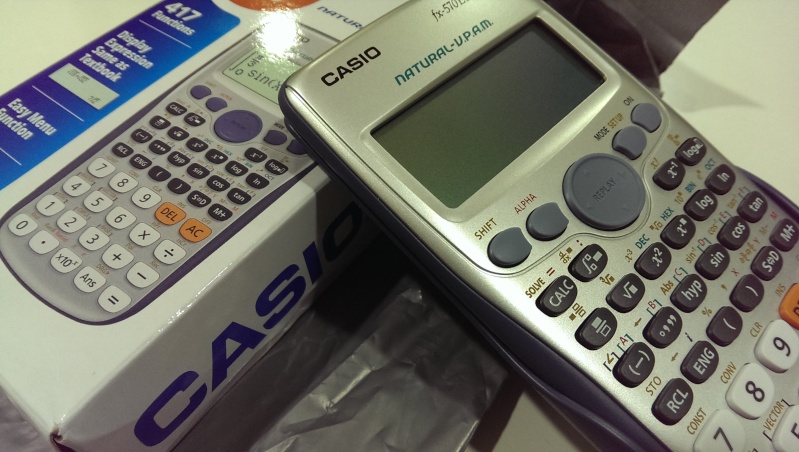
That's my new CASIO calculator, by the way.

There are a few components of financial education that we should all know a little about:

1. Personal finance - credit cards, savings, needs and wants, budgeting, tax etc

2. Insurance - the difference types like whole, term, endowment, ILP, accident, H&S, disability income, annuity, mortgage and car insurance

3. Investments - bonds, stocks, retirement funds like CPF, commodities etc


As mentioned, you really don't need to know everything in detailed, because at best, these are just chapter topics. Take for example - stocks. There are huge write ups about the different methods of valuating stocks, from technical analysis to fundamental analysis. If you delve into fundamental analysis, you also need a crash course on accounts to know what is happening. Then you need to read into sector/industry analysis and many reports on the individual companies and their competitors. If you're into technical analysis, there are various time frames you need to learn, the different indicators and their respective signals and whether they are lagging or forward looking. No wonder it's so daunting for beginners to pick up. Where do you start? What do you need to know?


Imagine a person with zero working knowledge of these stuff. They will be at the mercy of someone who knows better and acts in his own self interest. You can't blame regulatory board only for making huge financial mistakes because you trust others. You must also shine the light of blame on yourself for not taking the time and effort to find out more. I made a huge mistake when I bought a huge chunk of whole life very early in my twenties. It sucked up a lot of my cash, possibly not even giving me enough coverage. But it's that very act of stupidity on my part that made me want to learn more about financial stuff. This lead to that, and soon, I began to learn more about insurance because it's really another aspect of financial education. It's a costly mistake on my part (I've since reduced the coverage of that whole life and thus reduced the premium) but in a way, my lack of knowledge made me a susceptible victim to any one who is more knowledgeable and wants to earn my money.


So when a student from the sociology department asked a panel of speakers in the first Young and Savvy seminar on Aug 22nd this year, about whether it's a "waste of yourself" to be caught up with the idea of investing just because everyone else seems to say it's important, I thought that he hit a very important question.


The Young and Savvy series of talks is organised by The Straits Times with presenting sponsor, Frank by OCBC. Note the sponsor is a credit card by a bank.


Just because you're not interested in something doesn't make that something less important to life. I think investing, which is but a component of financial education, is as important to life as swimming. You might not need to swim for your life everyday, but when you do, you'd better know how. It's a shame that our education system does not have a major component of financial education even though it's so important to life. Things might be a little better now though, I must admit. At least this gap is recognised and steps are taken to incorporate more of these life skills into their curriculum, albeit in the form of extra curricular seminars or workshops. It'll be great joy to tutor someone in financial education in the future, I must confess.


But learning need not be formal. Most of us learn though informal channels anyway. Educational institutions should just be a place where we learn how to learn. Engineering, the course I major in, is really a good place to learn how to learn because you learn enough about everything so that you can pick it up yourself. In my 4 years, apart from the heavy stuff in engineering itself, I've learnt a little about accounting, sociology, communication skills, microbiology, economics and computing. No small feat. If you want to find out more, you can just pick up a book, or google it and learn. I'm sure there are more formal courses online, free or otherwise, that enables you to pick enough stuff so that you won't feel so daunted learning them yourself.


So start now. Read some blogs. Read some books. Enroll into some courses and learn the skill that is so essential for modern life now and reap the benefits far into the future.

Wednesday, August 27, 2014

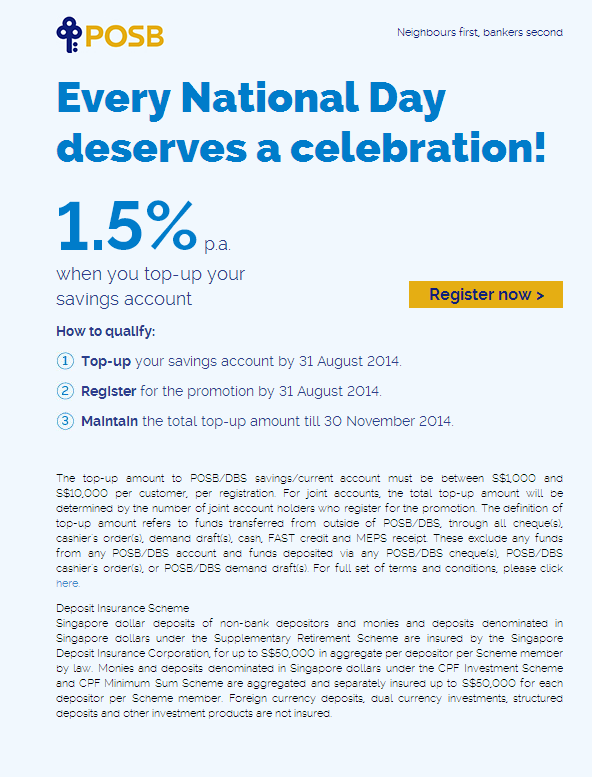
Have you grabbed POSB's low hanging fruits?

I thought I'll just share this again, in case you missed my informative story "It would have to do".


It's about the POSB national day celebration, where they will give you an extra 1.5% per annum for 3 months if you register after you've deposited in a sum (up to 10k max) in your savings account and not touch it till 30th November 2014. Do remember to register here after you've put in your money.


The dateline for this exercise is till 31st Aug 2014, which is this coming Monday. As long as the funds are new, as in it's transferred from outside of POSB/DBS, through cheques, cashier's order, demand drafts, cash, FAST or MEPS receipt, it'll be okay. I'm not too sure what they mean by not touching your registered new funds. Let's say I've 5k inside, I put in 10k, but spend 3k, does it still qualify? I'm not too sure, but I put it in my dormant bank account just in case. I don't really do anything with that account, so I should be safe.


I know it's not much. It's $37.40 is all that you'll get. True, but it's also not much effort to get this extra money, so I'll do it. Low hanging fruits... I like.

Saturday, August 23, 2014

The girl who picks up snail


He was just 22, when he met a beautiful girl
bending over a pavement, while it pours like pearl
With her brown and beady eyes, she pointed to a snail
crawling along the pavement, leaving a moist and slimy trail.
With slow and gentle hands, she plucked it off the ground
and placed it just beside, a soft and grassy mound.
Puzzled, he asked the girl, "Why change the snail's locale?"
Beaming, she answered back, "This is my rationale,"


"This snail moves too slow, you see
It is quietly plodding by,
Its shell is just too frail, you know
A foot, a crush, it'll say goodbye
So please stay strong, let me pick you up,
Be safe and sound, you little pup,
See you again on the other side,
May our paths again, meet and collide."


Before long he was married to her,
a joyous occasion, with fanfare and liqueur.
At age 32, they had a child:
A sweet little girl with her mother's smile.
But the babe was born with a hole in her heart
Is this child's life going wrong from the start?
Worried, he asked her,  "Can our child make it?"
"Surely," she said, "though she's a little unfit"


"This snail moves too slow, you see
It is quietly plodding by,
Its shell is just too frail, you know
A foot, a crush, it'll say goodbye
So please stay strong, let me pick you up,
Be safe and sound, you little pup,
I'll be here to watch you grow,
And march down the aisle with your Romeo."


40 years flew by just like that
Together, he and she grew old and fat
But in his eyes, she's still the beautiful girl
whom he met last week while it rains like pearl
One day, hands together, they were having a stroll
Her grip loosened, she fell, no longer in control
A moment later they were at a hospital bed
He sat beside her, his face full of dread.
His daughter came in, with her own kids,
and saw his worry, his sorrow, roll down his lids.
Sadly, he asked her, "Will ma be alright?"
"If ma can speak, she'll say this," she cried.


"This snail moves too slow, you see
It is quietly plodding by,
Its shell is just too frail, you know
A foot, a crush, it'll say goodbye
So please stay strong, let me pick you up,
Be safe and sound, you little pup,
See you again on the other side,
May our paths again, meet and collide."

------------------------------------------------------------------
Here's an old post to accompany this lyrics/poem : The Little Things

Tuesday, August 19, 2014

OCBC rights issue (Part 2)

I was thinking whether there's a way to make the best out of this rights issue...seems bleak.

For those who haven't read, do read my first post on this rights exercise: OCBC rights issue (Part 1) first.

I thought of a few ways. Let's just assume that the buy in price is $10.20, just to make a comparison. Commission is not included in all calculations, unless otherwise stated. Theoretical ex rights price (TERP) based on $10.20 is $9.92


1. Buy in at 1 lot at $10.20. You'll be entitled 125 rights shares. You'll have a total of 1125 shares. Apply for 875 excess right shares at $7.65 to round up to 1 full lot.

Average price per share: $8.93

Advantages: You reap the maximum number of odd lots need to top up to 1 round lot, just by buying 1 lot of mother shares before XR.

Disadvantages: A lot of people will have odd lots, and I guess not a lot will have a portfolio consisting of multiples of 8 lots of OCBC shares, since it's such a big cap. The pool of unsubscribed rights will be very low. I just don't think they'll be so good to round up your 1125 shares to 2000 shares, giving you a super huge discount due to the $7.65 rights price. Chances are not good that you'll have all your excess rights allocated, if at all.


2. Buy in 8 shares from the unit share market at $10.20. The unit share market is available to a few brokerage. I know of two - poems and standard chartered bank (sort of). You'll be entitled 1 share of rights. You'll have a total of 9 shares. Apply for 991 excess right shares at $7.65 to round up to 1 full lot.

Average price per share: $7.59

Advantages: You can't get any lower than this in terms of average price per share after the rights exercise.

Disadvantages: You wish! From what I know, the total number of excess rights allocated to you will not exceed the number of total shares you own. This rule is a good guide to follow for any rights exercise: If you have 4 lots, you don't need to apply more than 4 lots of excess rights. I guess for poorly subscribed rights exercise, there's a possibility that you'll be dumped so much excess rights that you'll be scared. I don't think this particular one is going to be a poorly subscribed rights exercise. It's a good rule to follow, nevertheless.


3. Buy in 800 shares from the unit share price market at $10.20. You'll be entitled 100 rights shares. You'll have a total of 900 shares. Apply for another 100 excess right shares to round up to 1 full lot.

Average price: $9.69

Advantages: In the near future, fingers crossed, SGX is going to implement board lot trading size of 100 shares, instead of the current 1000 shares per lot. If that's the case, whether you get the excess rights allocated to you or not, you'll still have round board lot size. Let's say you are not allocated any excess rights, you'll have 900 shares in total. In the near future, this 900 shares will be 9 lots (based on 100 shares/lot). Let's say you're allocated the total of 100 excess rights shares, you'll have 1000 shares, so you'll still have 1 round lot for easy trading. This case is more likely too...getting 100 excess rights to round up to the current board lot of 1000 shares/lot seems to be more possible than the scenario painted in case 1.

Disadvantages: It might not be worth it, especially if you can't get any excess rights. But you won't know until you do it ya? Do take note of commission also, since I didn't include it in my calculations. If you have standard chartered bank, it might be worth a shot. Who knows?


4. Buy nil paid rights during the trading period from 1st Sept 9am to 9th Sept 5pm

Disadvantages: You'll not maximizing the $7.65 issued price of the rights shares if you buy off the market during the nil paid rights trading period. I don't see why anyone would not subscribe to their rights shares...so I don't think it'll be seriously undervalued compared to the mother shares to be worth a shot at this.


5. Buy in after the whole rights issue is over

Advantages: Based on the scenario I've seen in all the rights issue, the price will go down after the rights. This might happen for OCBC too, but who knows right? If that's the case, you'll enter with all the complications settled. No need to queue at ATMs and so on. The main advantage is clarity.

Disadvantages: OCBC will CA on this coming Fri. CA = Cum All, so they will also XD on the same day. You'll lose out a bit on the interim dividend of 14 cts per shares. This can be an advantage of sorts, since the price after XR and XD (in combination, it's CA) will push the price down naturally. So when you buy in after all the she-bang is over, you'll not be entitled to the dividend of 18 cts per share (Thks cy for the correction!) That's $180 per lot, not something to thumb your nose at.


So there! All your options I thought of are laid out in front of you. I'm leaning towards (3) and (5). There's also always a last option - not to act at all.

Monday, August 18, 2014

OCBC rights issue (Part 1)

I'm always very interested in rights issue.


There's a new kid on the block just announced today. That's for OCBC. They bought into WingHang bank listed in HK, maybe even over paying for it. The big idea is that they can raise the funds for the purchase by doing private placements (Boo!), borrow money and increasing their debts (not too good, in the light of ever increasing capital requirements by central banks worldwide), and issuing rights. I think they are doing a combination of both rights and debt, which is quite a good move.


The terms of the rights issue is as follows:


1. One rights share for every 8 existing ordinary shares. That is, if you own 1000 shares or 1 lot of OCBC shares before XR, you'll be entitled 125 rights shares.


2. Each right shares is at an issue price of $7.65. The price as of 18th Aug 2014 is about $10.20, thus it's being issued at a discount of 25% at $7.65.


3. Based on pre rights price of $10.20, the theoretical ex rights price (TERP) is $9.92. For those interested on how you get it, this is the calculation:

TERP (based on $10.20) = (10.20*8 + 7.65*1) / (8+1) = 9.9167... = $9.92

Again, the TERP is not a price fixed in stone. It's just an estimation of what the price would be after the rights issue, assuming everything (including price) remains the same. So take it as a rough guide that it is, nothing more.


4. A lot of details are not out yet. In fact, the rights exercise haven't even been approved by SGX yet. Most likely it'll go through, but here's the indicative timetable of key events:

Shares XR date: 25th Aug 2014, 9am 

(that means 22nd Aug, THIS Fri 5pm is the last trading day before the shares goes XR on the following Mon!)

Dispatch of Offer Information Statement (OIS) : 1st Sept 2014

Period of trading for nil paid rights: 1st Sept, 9am to 9th Sept, 5pm

Last date for acceptance and payment for excess rights: 15th Sept 2014 (930 pm for ATM applications)

Expected date of issuance of rights shares: 26th Sept 2014

Trading of rights shares as ordinary shares: 29th Sept 2014


The full document is here, for those who want more details other than the salient points mentioned in this post.


Okay, so how to make the best out of the rights issue? Again, I'm assuming the viewpoint of someone who doesn't have any OCBC shares to begin with, and trying to arbitrage on the price difference of the shares before and after rights issue. The rights exercise is quite friendly, because for every 8 shares you own, you'll be entitled to 1 rights shares. And since 1000 shares in one lot is actually divisible by 8, you won't have to resort of funny tricks to avoid getting odd lots.


The problem about capitalising on this particular rights issue is this:


1) we have the trading lot size for SGX reduced from 1000 shares per lot to 100 shares per lot. It's coming soon, so they say. But it's been delayed again and again. It's supposed to come in first quarter of 2014, by look where we are now. If it's reduced to 100 shares per lot, the usual method of maximizing the number of odd lots you get will be rubbished. Firstly, there's less incentives for shareholders to avoid odd lots (those not in multiples of 1000 shares), so there's less chance to arbitrage on it. Secondly, the number of excess rights to round up to round lots will be reduced drastically.


2) 1 for 8 rights exercise is too friendly. You won't get fractional rights shares which are usually discarded. I think the pool of excess rights shares that are not subscribed will be reduced drastically.


3) OCBC is a big cap. 1 lot at current price is a freaking $10,200. I suppose not many people will have more than 1 lot of OCBC shares, don't even talk about multiples of 8 lots. So assuming that a big part of the population owns less than 8 lots of OCBC mother shares, then you always end up with odd lots. Let's say you have 1 lot of OCBC shares, after rights, you'll get 1125 shares of OCBC shares. That's odd lots right? So, if we want to apply for excess rights shares to round to 2000 shares, what's the chances of succeeding when almost everyone out there is doing the same?

It's not going to be high, that's for sure.


Perhaps there's still a way to capitalise on this...but let me clarify my thoughts first.

(Update: Here's the second part of the post - OCBC rights issue (Part 2))

Friday, August 15, 2014

A Great Loss

"A Great Loss"

I knew I was unimportant. In the hustle and bustle of everyday life I am invisible to her eyes. Nah – she nary cast a glance at me, and even if she did, I must say the look is never affirmative. Usually it ranges from glowering distaste to say the least, and glaring disgust at the worst.

“Why are you here? Why don’t you go away?” She mutters maliciously.

But I did stay. I did not go. Despite the lack of cordiality and the constant contempt I hang on. I persisted because I know that she needs me. I am there in her lowest moments – to share her sorrow and to bear the burden of her binges. I am there to sustain her purges, when she pounded madly on the machine and work herself to frenzy. I’m by her side always, supporting her every move, even at my own expense – waxing and waning at her whim and wishes.

But today I received terrible news – that she is going to get rid of me once and for all. Apparently, after all I’ve done for her, it is still inadequate. The last thing I am supposed to do for her, is to be a scapegoat and be sacrificed for her sins. She had found the ‘Final Solution’, and is all set to sever the ties that bound us. That a swift, slick, slice is going to put asunder what God had joined together.  I shudder to think of the cold sharp blade coming between us. Why doesn’t she want me? Why make me go away? Am I that dispensible?

Perhaps because I’m really unimportant.

I’m just a fat cell.

---------------------------------------------------------------------------


Sometimes, when you start off something, you've no idea what sort of paths it'll lead you to. In my case, I recently started a rebel-ution to the rationality and factual way of presentation that is pervasive in the financial blogosphere. I'm not saying that it's wrong, it's just that we need a balance between the proverbial rationality of the mind and emotions of the heart. Stories always tug at your heartstrings, while numbers and facts appeal to your minds. I'm thinking that the pull of the heart is more important.


These two are not necessary mutually exclusive too. In fact, Warren Buffet is known for his folksy ways of presenting normally hard cold financial facts into likable stories. It's his way of marrying story telling and factual presentation that makes so many people want to attend the annual Berkshire shareholder meeting in Omaha.


To those who think that reading fiction is a great waste of time, I empathize with you. I used to think that way too and it's only very recently (ah...it's been about 7 years now) that I picked up a novel to read. And after reading stories upon stories, I came to the realization that the setting of the novel isn't as important as the message that is sent across. The message is masked in between the dialogue and descriptions of scenes, but it's there if you put effort to reflect after reading. The message you get is all the more etched into your mind simply because it's not handed out like a spoon to your gaping mouth. You have to work for it. And the messages changes all the time depending on the moods and circumstances when you read the same book! What sorcery is this?!


You know, in Bullythebear, I never had a guest post. But this is going to be the first. The author of this guest post is infected with the story telling bug too, after reading a few of my short stories:

1. An Empty House 
2. It Would Have To Do
3. The secrets of the millionaire dwarfs
4. My Father

She's none other than my wife.

Her post might not have much to do with the themes that I normally blog about. But it'll give a different perspective and world views in the pretty male dominated financial blogosphere. Diversity of views is always a good thing.

Tuesday, August 12, 2014

A clip from the past

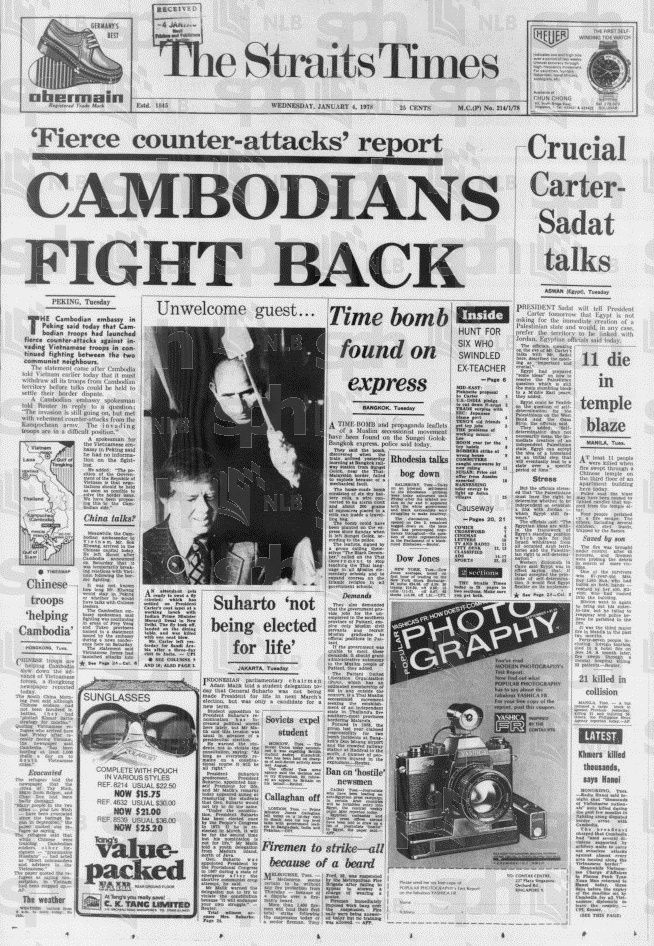
Recently I chanced upon this site on NLB that has clips of Straits times in the past. It's very interesting to read about the past. Things were so different then.

This was the headlines of the day when I was born. President of the US is Jimmy Carter. There's still USSR back in those days. The local police are hunting a con person who swindled an ex-teacher.


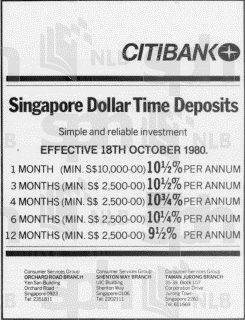
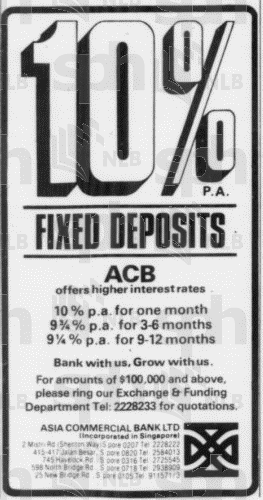
2 years later, in 1980, this was the advertisements found in the papers.


Citibank had an ad for fixed deposits. They are offering about 10% pa for various holding periods. Interestingly, the longer you put your money with them, the lesser the yield. The shorter it is, the higher the rates. I doubt I've seen such an inverted relationship with fixed deposit, but things are such in the past.

This was another one offering by Asia Commercial bank. I doubt they are still around after the merging of many different banks in Singapore to form the big local 3.


In the past, numbers are in 6 digits, as you can see from the ad for the department's number (2228233). You might have thought that 10% pa is such a lucrative offer, but nope, it's not. I think the stock market is rising even higher than 10% pa.


How times have changed. Will we ever go back to those times? It's hard to say, but I'll be the last one to say 'never'!

Sunday, August 10, 2014

My Father

When I was a kid at 5, I never liked my father. He wasn't there when I needed him, to teach me how to bike. Each night I want a kiss from him, before tucking me to bed. Wasn't there to comfort me, as I cry myself in bed. When I grow up as a man, I don't want to be like him.


When I was a teen at 15, I seldom see my father. He was sleeping when I leave at dawn, at work when I sleep at night. Two persons with the same surname, a stranger inside my home. When he took leave from work, stayed at home to rest, he'll often yell and shout at me. His work can't even earn enough, to buy the coolest gadgets, or bring me to exotic countries, that my friends had been since six.


Teenage years was over, and I just turned 25, but when I think about my father, I still hate him very much. When I graduated I didn't invite him - don't want others to know. I'm ashamed that he will arrive, with the smell and sweat of his toil. What's the point anyway? He'll just stand and not mingle. He'll be in a corner and not smile, maybe his time spent is not worthwhile. But I'll start work soon and earn my keep, I'll find a wife and have a kid.


When 20s flew past and I turned 35, I despise father very much. He retired with white hair and tired eyes, does nothing on a couch he sits all day. He keeps calling me to come home for dinner, but I'm too busy with life and has no more vigor. He asks often for more allowance, but I couldn't give him more than just a pittance. "How can I give you more", I said, "when I have my own family to care for?" Despite working all day and night, I just barely earn enough to get by. But that's okay cos my kid's the reason, for me to live and work hard till I too am beaten. I promise to teach him how to bike, and a kiss on the forehead before he sleeps at night. I know I've said that since yesterday, but work as always keeps me at bay. But I promise again my child one day, all the promises I've made I'll pay.


I was 45 when my father left, didn't attend his wake I must confess. Hardly had time to rest after work, but there's still a duty I cannot shirk. So I took leave and stayed at home, to make sure my kid is not alone. I may have raised my voice a little, but my love for him you cannot belittle. I know his friends travel, and their daddies buy them gifts, so that's why I've saved up a little, for a surprise on Christmas eve. I hope this savings won't be used up, to pay for emergencies. But sadly I'm ashamed to say, that it had always been that way.


With tired eyes and greying hair, I struggled at 55. I never thought I'll say this, but I think about father all night. Wasn't invited when my kid graduated, and I don't think I'll find out why. But I'm still proud of him and it's okay, as long as his future's bright. Besides I'm too tired from work to smile, I'll probably stand in a corner. A few more years I'll be retired, and then things will be all right.


I retired from work, aged 65, and there isn't much things to do. So I sit on a couch and wait all day, for the time my kid comes home. There is oft one pair of chopsticks, though I cook his favourite dish all day. I know why my allowance is so little - he's got his family to take care of. Sadly between his kid and his father, I know quietly I'm ranked down further. Father sometimes I'll think of you, calling me home to eat your stew. Father sometimes I miss you so, why didn't I call to say hello?


Now I lie bedridden all day, my age is 75.  What I really want to see, whenever I opened my eyes, my kid my grandson surrounding me, to tell me everything's alright. But the closest thing I'll get, is not the warmth of gentle hands, it's an old faded photo, trapped in a cold and sullen frame. How could things begin so right, in the end become so wrong? I can't stand, can't do anything, except to reflect and think what's wrong.


Kiddo, when I leave this world, don't ever be like me.

Daddy, you'll see when I join you soon, I grew up just like you.

----------------------------------------------------------------------------


It's quite emotional draining for me to write this. When I first wrote this piece, even voicing it out can bring moisture to my eyes. How much had one generation sacrificed for the next? I think only a parent can say for sure. A tribute to all parents.


Friday, August 08, 2014

Kindle paper white

I thought I would never get another kindle, but I was proven wrong. This time, it's the 6.7 inches kindle paperwhite.


What's so special about this compared to my 9.7 inches old graphite DX?


First of all, there's a back lit for the kindle paperwhite. This makes reading possible when there's no natural light. The brightness level is easily accessible by two touches, so you can adjust the settings on the go. I usually keep it lesser than 25% level (the actual light level I used is about 6 to 8), even when I'm reading at night with the night lamp dimmer on. It's bright enough to make my eyes hurt at 50% level, or maybe I'm just old now. I think this feature is really well implemented. The backlight brightens up the whole screen in a very nice fashion, and you can't really see where the light is coming from. With the e ink technology, I think the contrast is made even better than my graphite DX. The technology for the paperwhite is really something - you have to hold it in your hands and read something off it to be amazed by it.


Secondly, you can adjust different fonts on the go too. That's a feature that I would love to have. I hardwired my kindle dx to change its font because I find that the default font is a bit hard to read clearly. It's not easy to do that because you've to mess around with the settings. There's no menu just for that. With the paperwhite, it's just another option to choose from. There's a lot of things that are customizable in this paperwhite version of the kindle, which adds a little touch to the aesthetic value of the device when using it.


Thirdly, it's touch screen. The screen changes a lot faster now, so you won't notice much time lag when you click on any options. Even the page turning is rendered almost instantaneously, which is not the case for my older graphite dx. I even find the touch screen on the paperwhite too sensitive. The lag for the older graphite dx is not such a problem after some time, because I've trained myself to press it like 1-2 seconds before I finished reading the last words of the last line, so I don't really notice the lag. But I'm sure it's visible for someone holding the graphite dx for the first time. Paperwhite is as smooth as it gets when it comes to page turning and I think this has got to do with the faster processor. It's the most lag free and smoothest I've seen in all my kindle devices. The good thing about touchscreen is that for now, you just need to press and hold a word that you want to check on the dictionary, and out pops either Wikipedia or the built in dictionary. It makes you want to look up a word that you don't know, since it's so easy to check up a dictionary.


Yup, you can see the contrast between the paperwhite (left) and graphite dx (right)


Battery life? I switched off my wireless and I read everyday for the past 1 week, about 2-3 hours each time. It barely dipped actually. I think I've to believe that the battery for the paperwhite will last 8 weeks as stated officially. But I did read reviews where users found that the battery life drops to about 1 week after prolonged usage (about 6 months). I'll have to update on that once I'm there.


What's missing on the paperwhite is the feature where you can get the device to read out to you. I suppose with so many audiobooks that are professionally voiced, there's no real need to have a robotic voice reading out to you anymore. But I'll like to have that. Sometimes, on rare occasions, I would just like to eat my packet lunch and listen to a stiff female voice read to me in a weird google-translatish voice. I can do that with my graphite DX, but not with kindle paperwhite. At least, after using it everyday for a week, I haven't seen that function yet. If you had one and know where it's hidden, do let me know!


The smaller 6.7 inch also means that now, it's palm sized, very portable and can be carried around easily. Kindle dx is a tad heavy - you do get tired holding the reader and lugging it around. Hence for people who like to read while commuting on public transport, the smaller 6.7 inch palm size do work wonders. It's no surprise I've NEVER seen anyone in public with the bigger 9.7 inch kindle dx, but plenty with the smaller paperwhite or the older kindle 3. However, I prefer the bigger one because I do read pdf on my device and it's easier to read it on a larger device. I almost never bring my kindle dx out anyway (I think reading is best done in bed), so it's never a problem for me.


Lastly, how much did I buy it for? I bought the no advertisement (dubbed "without special offers" by Amazon), wifi only version of the paperwhite at SGD $185, everything in. If you don't mind advertisement, it's even cheaper at SGD 100. Throw in another SGD 7 dollars and you get it delivered to your doorstep. I bought it from the Qoo10 website (formally Gmart) from one of the sellers. It's from Japan (you can see it from the box) and it was delivered to me within 2 days of ordering it, to my pleasant surprise.

Thursday, August 07, 2014

The secrets of the millionaire dwarfs

"Bwahahaa! Those are yer good ol' times, ain't ye?", bellowed Drurim Drumsbearer as he gulped down his fifth pint of Heineken. The good dwarf had long ago hung his battle-worn oaken shield that had been passed down from his bloodline and exchanged his trusty old battleaxe for his Louis Vuitton's leather briefcase, perfectly tailored pinstripe suit and a pair of brown, calf leather oxford.


Drurim wasn't supposed to drink, but of course, Heineken isn't considered alcohol to him. They just don't brew like in the good old days now, you know. Drurim is well past his middle age, but dwarfs live longer than humans, especially now that less of them died from battle. His physician had told him long ago that he had to watch his blood pressure, given that his lifestyle is not longer as active as before. Considering that there are no longer Orcs around to bash, 2 out of 3 dwarfs suffered the same kind of 'modern' lifestyle diseases common to most humans.


Yea, something like that, but without the helmet, the armor. Drop off the shield, the axe and boots and replace it all with modern western suit and a pair of dress shoes. Oh, add in a leather briefcase.


He was reminiscing the good old days with his fellow kinsmen. Most of them are considered very wealthy by human standards. Besides being very industrious and hardworking, dwarfs are blessed with a strong constitution and a stubborn will to live, and that enables them to carry on working till they are way past the normal retirement standards of other races. There's even a dwarven wisdom for that - "Sleep when yer dead".


But the real reason for their wealth comes from what the gnomes invented aeons ago. Master tradesman and inventive by nature, gnomes invented the concept of compound interest and this remains the greatest proof of gnomish ingenuity so far.


Drurim had deposited a sum of $1,000 in HSBC for 3% per annum back when he had first learned how to handle an axe at his teenage age of 30 yrs old. That was the inheritance he got when his grandfather was called up by Dumathoin, Keeper of the Secrets Under The Mountain, for his eternal rest by His side. Today, he had $1,070,500 in that bank account alone!


It must be gnomish techno-magic at work! What else can thousands multiply itself into millions?!


Do u know the secrets to transmute less money into more without the pains of active labour? If so, pray tell exactly how old is our good dwarf Drurim Drumsbearer?

------------------------------------------------------------------------------

The idea of a modern day dwarf is very appealing to me, very Shadowrun-ish. We all know the magic of compounding, but imagine the normal lifespan of humans is no longer a restriction, then what happens? That's when compounding gets even more magical. Ever wondered why the vampires in movies are never portrayed as the destitute poor? All the time, they are insanely rich, to the point that they don't ever work for money, but for power. Just a small amount of money deposited in a money bank (not the blood bank...lame joke I know) increases exponentially by itself over the passage of time.


You'll read more of Drurim Drumsbearer for sure.

Tuesday, August 05, 2014

It Would Have To Do

I'm on a roll. I must say this new development of dispensing financial information through the use of short stories is making me excited about blogging on personal finance again. It keeps me thinking of imaginary characters making imaginary conversations. Actually they are not so imaginary. It's always based on fragments on some real aspects of my life, or on the life of others around me. If you will, it's more like my own brand of mixing facts and fiction together. Fun stuff.

I've another one here.


It Would Have To Do
------------------------------------------------------------------------------------------
“Eh dear, come take a look at this!”, he said after putting down the cup of SOBE fresh soya milk (original). He would have much preferred the less sweet Trim version, but alas, the supermarkets are out of stock.

It’s not a very good time to talk to her. She’s rushing off to work and as usual, there’s a lot of last minute things to pack for the journey. It doesn’t help that it’s cold and drizzling outside. The brightness of his voice doesn’t seem to dissipate the gloomy greyness outside.

Sparing a precious few seconds of her time, she came over to where his fingers are pointing. She saw an advertisement in the Straits times with a mish mash of words. In the 2 seconds she needed to scan through the entire full page ad, a few words stand out amongst the rest. She first saw a “POSB”, then a “National Day”, something about a “celebration” and some short string of numbers (“1.5”).

“What’s this?”, she said with a slight hint of impatience. She furrowed her brows before disappearing into the dressing room. From the living room, he can hear the sound of things being unpacked and packed.

“Oh, they are giving out special interest if you top up your POSB bank account this month…erm, up to 10k only, at 1.5% per year”, he explained.

“10k? I have 10k in my account. They do it automatically ah?”, she said it proudly before disappearing into another room.

“No lah, must be fresh funds. You put in a minimum of 1k and a maximum of 10k into your account, hold it till 30th Nov this year and you’ll get 1.5% pa interest for that 3 months from September to November. Not too bad lah.”

But Her Majesty needs to go off now. Her subjects need to wait for an audience, perhaps later in the evening during dinner time when things are a bit less hurried. Till then, a kiss and a quick goodbye and her Majesty is off for work.

“If I put in 10k, I’ll get 37.40 as interest. Okay lah, I better do it before 31st Aug then. Still need to register online after topping up the fresh funds”, he said to his cup of SOBE fresh soya milk (original). He would have much preferred the Trim version though, but it’s out of stock, so it would have to do.

Just like how he would have preferred his 10k to earn higher interest, this 1.5% per year for 3 months would have to do.

---------------------------------------------------------------------------------------------

Register here and read the full terms and conditions here.

Monday, August 04, 2014

An Empty House

Financial bloggers always use rationality to convince readers. I think there's another tool that is seldom used to persuade, and that is through story telling. I can blog out an article with 5 pointers, complete with reasons and supporting evidence, but it will not tug at the heart strings of my readers. It's emotionally dead and will reside in my blog as one of those useful but useless advice that is repeated ad nauseam.

Let me try a different tack. I'll write a short story instead. Stories are robust because they are open to different interpretations. Stories tug first at your heart, then your mind. Stories let you empathise when rationality fails. This is my first short story with the general theme in personal finance.


The Empty House
-------------------------------------------------------------------------------------------------
This is what he would have wanted.

He sat down in his spartan 3 rm HDB flat and looked at the lonely clock that hung on the wall. In some parts of the wall, the paint had peeled off, revealing the moldy and stained areas.

12:36pm.

In another alternate universe, his wife would be eating chicken rice and drinking a cup of kopi-o with him in a quiet coffeeshop downstairs. His 2 kids, boy age 10 yrs old and his sister, 12, would both be taking a 30 min journey in a feeder bus on their way back home from school. Fun and laughter will transform his 5 rm HDB flat into a home, and that is well worth sacrificing his time and energy to earn the income to support his family.

But in this particular universe, he dreams only about that elusive early retirement and the holy grail of financial independence. He lives below his means and yes, he still cycles 25 min to work to save up on transportation costs. All his life, his only mantra is that his passive income exceeds his expenses. That's his sole reason for living.

12:41pm.

In a few more minutes, he will be going downstairs to buy his $2 50 lunch. Alone. The uncle behind the economic rice stall knows his favourite dishes; he always order the same repertoire of salted fish fried with bean sprouts and the spongy, orangy tao kua, together with a small heap of rice swimming in a watery, spicy gravy of Chinese styled chicken curry. No drinks. That will burst his daily budget of $10 per day for food. His life is nothing without discipline, frugality and prudence.

During the quieter moments of the day, he will sometimes think that his life is indeed nothing. But this thought only last a fraction of a second and the idea has no chance to take root. He will brush it off immediately. This is what he would have wanted.

It must be what he had wanted.

Thursday, July 31, 2014

Rote learning is under-rated.

Occasionally when I teach students, you tell them to do certain things but they will counter by saying that they won't do it now but will remember to do it during exams. It's always those seemingly small and minute details like writing some key words in their answers, or writing a + or - sign before their answers. It seems that this minute details are so painful for them to do it on a routine basis that they will only do so in very rare and sanctified time like during exams.


It seldom work out this way. From what I see, if they forget to do so in routine practice, they will forget to do so in exams. Examination time doesn't immediately make the students aware of things that they always forget or neglect to do during practice time. But students don't see it, and no matter how often I remind them, they will use the same counter argument that they won't do it now, but will remember to do so during exams.


Okay, so I'll let them do what they want. But I'll give them a test and tell them to treat it as one, showing all that is necessary to secure the marks in their answers. 9 out of 10 will forget to do the things that I remind them about and that's the opportunity for me to come in and tell them that their counter arguments do NOT work and they are better off sticking to it even during routine practice. You can't just tell them straight away - you'll have to do better to convince them that their beliefs don't work. You have to show them the folly of their ways, so to speak.


When you tell people about rote learning, this is, more often that not, their reaction.


I believe that if you don't practice stuff all the time, when it comes to the real deal, and when you really need to use it, you'll fumble. There's value in repetition but alas, the youngsters these days believe only in efficiency and just-on-time delivery (meaning that they study just the day before the exams). 


We need to practice a thousand times so that when we really need to use it, we can snap our fingers and get right to the zone. You train so many times that your body and mind precedes your conscious thinking, thus building what they call 'muscle memory'. You do without thinking and you feel it. You think with your guts. Your instincts. So many phrases to describe a person operating in the zone but only one way to achieve it - just plain ol' practicing. 


This might sound old fashioned especially in these times, but I welcome rote learning. The ability to memorise chunks of texts in this fast paced world is not a disadvantage. There's value in sitting down and committing will power and discipline to practice the same questions again and again. However, some say this runs against the trend of creativity in the education domain. 


Nonsense. There is nothing to create when there is nothing in your mind. So how do we get stuff in your mind in the first place? Rote learning, of course.


Friday, July 25, 2014

I'm grateful for my bout of flu

Recently, I've been struck by a very bad case of flu. It comes together with its usual symptoms, like sorethroat, cough, sneezing and fever. My usual treatment is not to see a doctor, but to eat fruits and drink water and sleep like a baby to wait it out.

My philosophy in life is that whatever happens, it happens for the best. It's a better way to live that way instead of playing the victim's role. So, this bout of flu comes in very handy for me. Here's why:


Pikachoooo!


1. I've not been sleeping well. Maybe it's the weather, maybe it's some subconscious stress at work, but I've been having a very shallow kind of sleep lately. This recent illness reset all these. I slept like a baby for most of yesterday and the day before. Suddenly my mind seems so clear. If my body's way of resetting my body clock is in a form of an illness, so be it!


2. You realised that you're not so powerful after all. I was clocking work hours like crazy for the past few months, working 7 days a week with weekends clocking 10 hours. I've never had such a long working week before, and for so long a duration. But all these rest on the premise that I've good health. The moment my health deteriorates, I can no longer have the willpower and endurance to do such active work and my income will suffer. That's always the hidden condition when we're doing active work. It's just that during times of illness that we are reminded about it. It also underlines the importance of having another income stream that doesn't depend on you being there to generate money.


3. It just happens that after my lesson yesterday, I'm really feeling nauseous and don't feel like eating my dinner. Thankfully my student brought me some soup that her mum cooked for me. It's a very soothing old cucumber soup, filled with earthy carrots and red dates. I felt much better after drinking that. I'm so thankful that she brought me that, even though I didn't tell her that I'm sick. Couldn't have come at a better time!


Photos taken from masak-masak. Not the actual soup that I drank but close enough!


My wife also treats me like a baby, taking care of me when I'm having a really bad time. Not to mention well meaning friends and students (I'm not sure they are happy that I cancelled their lessons or that they are genuinely concerned about me - I give them the benefit of doubt lol) who asked me to take care. It's a very nice and warm feeling, you know?


See? Being ill isn't all that bad once you think about it eh?

Wednesday, July 23, 2014

Thoughts after 1/2 yr of managing my parent's money

I recently handed a cheque of $600 to my father. It's his half yearly 'coupon' from buying LP's bond with a principal sum of 60k. It's right on track to deliver 2.5% to 3.0% returns per year. Actually it's more than that, but LP's bond is capital guaranteed, I've to reserve a certain amount of cash paid out in the event of redemption of bonds that I've bought above par value to cover the capital loss.


Ya, I know it's still lower than CPF, but it's hard to achieve this kind of returns in this time and yet also guarantee the capital. Still, it's better than my parent's initial plan of putting their money in fixed deposit earning maybe 1% pa. I'm potentially offering 3 times as much, and I'm glad I did it for them, even though I don't need to.


I heard from my father that another tranche of money is coming in at the end of this year. It's from his endowment plans he put earlier, amounting to about 100k. Not sure if I can offer capital guarantee again because I'm holding quite a big portfolio already from my parents (160k!). I will most likely outsource the risk to others...maybe find a good annuity for them? We'll see how it goes when he gets the fund and perhaps let me know what's his intentions are for that amount of money.


Not a good sign eh?

With their medical fees mostly covered by hospitalization plans, and knowing that they have a sum of money to do what they wanted to do during their retirement phase, having paid up all their housing debts and having their children giving them a monthly allowance to cover their transportation and food bills, I'll be happy to be in their shoes. All in due time I suppose. I'm not expecting to have any inheritance from my parents - they are pretty down to earth folks who had worked hard to get to where they are. They should spend all their money up before they go. At the very least, I'm quite sure they won't be a financial liability to their children. That's already a big plus.


Managing their retirement fund makes me want to have my own retirement funds too. But alas, I've a hefty housing bill to pay, amounting to 1k per month from me, and another 1k from my wife. I'm trying to raise capital that can draw dividends amounting to 1k per month to at least cover my housing contribution. That will greatly relieve my fixed expenses per month. 1k per month for 12 months will be 12k per year. If I have to invest at about 4% to 5%, that'll be about 250k to 300k. If luck is on my side, I should be able to reach that amount in another 3 or maybe 4 years.


That should be my financial goal in the near future. We all have to start somewhere to boost up our passive income. There's a lot of unknowns, but I'm sure I can handle it when I reach there.

Monday, July 21, 2014

To change yourself, first change your environment

People who are not good in personal finance are usually in the presence of people who are not good in personal finance too. Birds of the same feather flock together, so they say. I think this phenomenon is due largely to the fact that we like to be with people who are similar to us, so that there isn't a lot of peer pressure to match up to the group's average. Imagine you are thrifty, but you are in the presence of people who do not care two hoots how much they spent on. You'll find that you'll have this pressure for you to act like one of them too, unless you truly don't care about their company (which might be a luxury you do not have, because of work related reasons).


It's really easy to say we should spend less and know our needs from our wants and other very sound advice given by financial bloggers, including me. But that's because we are already like that. It's like asking a sprinter how to run faster - he'll tell you to train on this area, do that every week and other great advice, but ultimately, one cannot help but think if the sprinter can run fast because he puts himself in an environment where there are other sprinters all doing the same thing. I'm not saying it doesn't take hard work to reach his stage of growth, but it's made all the easier to train the way he does by being in a group of people who are doing the same thing. It takes away the will power that we have to expend doing something different from the others in your peer group. By putting yourself in an environment where you want to grow to become, you become that environment yourself.


Up to a point though. This is not exact science, but I think part of that motivation for change comes from within, as well as without. You can put yourself in an environment where you want to grow towards, but if you really don't want to change, no force in nature can make you change.


To sum up:

1. If you're disciplined and super motivated, you can grow to become whoever you model after, in spite of your environment.

2. If you're somewhat neutral and don't mind the change, you'll be better off changing your environment best suited to your change and following the crowd thereafter. E.g Join some mailing list with some financial blogger, fill your facebook friends with financial bloggers and remove people who are not in line with your new growth. How to even get all the motivation to do just that? I don't know, maybe something catastrophic happened in your life?

3. If you're not interested at all, and totally resistant to change, then it doesn't matter no matter the environment. Can't force a horse to drink even if you bring the water next to its mouth.


Since pt (1) won't hurt with a change of environment and pt (2) needs a change of environment, it's still a good bet to adjust the friends you hang out with and immerse yourself in an environment with the change you want to see in yourself.

Wednesday, July 09, 2014

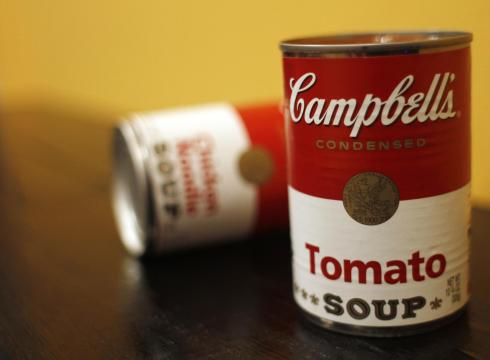
The Can of Soup with Better Value

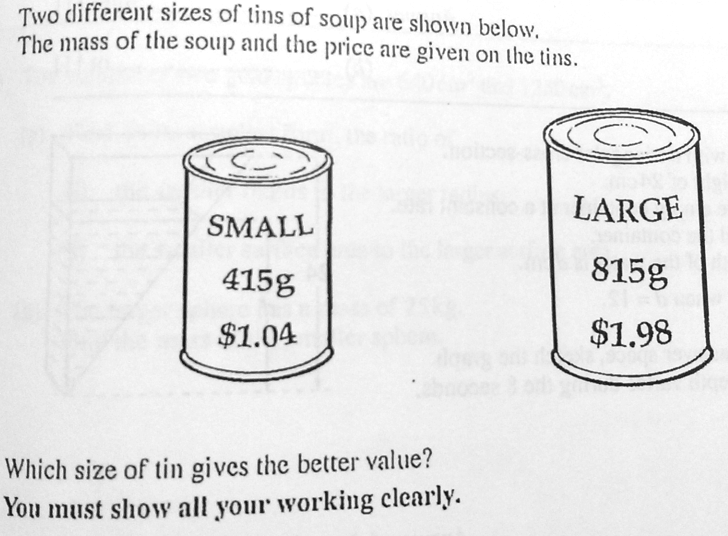
I saw this question when I was teaching a student. It's not new and I've seen it a long time ago, but it always tickles me whenever I read it. The link is here but I'll type it out here too:


Two different sizes of tins of soup are shown. The mass of the soup and price are given below:

SMALL can : 415 g @ $1.04

LARGE can: 815 g @ $1.98


Which size of tin gives the better value? Show your working properly.


There are a few ways to answer this question correctly to get the marks:

1. Find the cost per gram for each can of soup. Whichever gives you the lowest cost per gram gives the better value

2. Find the mass per unit dollar for each can of soup. This tells you how much soup you can get for each dollar spent. Whichever gives you the highest mass per unit dollar gives the better value


However, I was remarking to my student that even though the calculation is correct, it’s based on a few assumptions:


A. You really love the soup and want as much as your greedy hands can grab at the lowest cost your wallet can suffer

B. The expiry date of the soup are the same

C. You have enough money to buy both cans of soup


Let’s take a look at all the assumptions more critically than what a student should do in a national exam. Because, you know what, if you think too much in exams, you just might be marked wrong since the answer script don’t allow deviant though logical solutions. Th

A. You really love the soup and want to get as much as your greedy hands can grab at the lowest cost your wallet can suffer

This is fairly important because I’ve seen many occasions when marketers trick consumers into buying something that cost more absolutely but cost less on a per unit basis. To sell the higher priced item, you just calculate the amount of ‘savings’ you’ll get if you calculate it per unit mass, per unit volume, per unit whatever. It’s a marketing gimmick, IF you don’t need the product but get persuaded to buy something you don’t need for a ‘cheaper’ per unit cost.

I’ve fallen for this one every now and then. Typical example goes like this: Curry puff auntie says buy 1 curry puff at $1 but buy 3 at $2.40. You do your sums and realized that buying 3 curry puffs means each curry puff is at $0.80. You buy 3, then you can’t finish and you throw 2 away.  Well, if you really want 3 curry puffs (to share, for example), then it’s a steal to buy 3. If you really wanted one, spending $1 instead of $2.40 is a better deal.

I’ve seen many people eating at hawker centres and wasting one full bowl of rice because they’ve already paid for it since taking the rice (whether you’re eating it or not) gives a better value for your money. For goodness sake, if you don’t want to eat, then don’t waste lah.

B. The expiry date of the soup are the same

Sometimes, when the expiry date of the food is drawing near, stalls will try to sell it off as soon as possible, otherwise they can’t sell it past the expiry date anyway. You start to see discounts on them.  If you’re not discerning enough, you might have bought a bigger can of soup with a shorter expiry date. If you can’t finish it in time, you’re going to waste both the food and your money!

My wife tends to do that. I’ve read somewhere that when a woman shops, she buys things at a cheap price regardless of whether she needs it or not. However, when a man shops, he buy things he wants regardless of the cost. It’s quite true, at least to both of us. She won’t hesitate to buy 2 more bottles of stuff if there’s a discount, never mind that she might not be able to finish it before the expiry date.

I hope I’ve shared how the expiry dates of products can affect one’s perception of value.


C. You have enough money to buy both cans of soup

I think it’s important to consider both the unit price and also the absolute price. Things are almost always cheaper if you do bulk purchase, but you will tie up a lot of cash in ‘inventories’ under your balance sheet. If the goods are perishable, you’re practically burning money if you can’t consume them in time. If the goods are not perishable, you run the risk of having forgotten about it, rendering them unusable. I think your cash can be put to better use rather than to store them in the form of consumer products.

I always make the joke that in a zombie apocalypse, sticking to my wife will save my life because if I’m to live alone, I won’t bother stocking up on things. I just don’t like the idea of my cash tied up in some products stored in the store room. Personal preference.

So, in the end, which one is a more value buy? I wish I can say for sure that it's the cheapest one, but life's not that simple. If there's one advice I can share, it certainly isn't to buy the things you really want as cheap as possible, but to avoid buying things you don't need regardless of how cheap they are per unit basis or absolutely. No matter how cheap things are, if you don't want it, you really don't want it.

Can this be extended to investments? I'm sure it can be. As in real life, so it is in investment.